You’ve done the research. You’ve watched the walkaround videos, compared the variants and finally decided on the car. Then the dealership hands you a price quote and the number is significantly higher than what you saw on the brand’s website. Welcome to one of the most common and most frustrating moments in the Indian car-buying experience.
The difference between ex-showroom vs on-road car price is where that gap lives. It can run anywhere from ₹50,000 to over ₹3,00,000 depending on your city, your car and the add-ons the dealership has quietly folded in.
Understanding exactly what sits between these two numbers and what’s negotiable versus what isn’t is the difference between a confident purchase and a decision you second-guess on the drive home. This guide breaks it all down.
Table of contents
- What is Ex-Showroom Price?
- What is On-Road Price?
- Everything That Sits Between the Two
- How to Calculate the On-Road Price Before Visiting a Dealership
- Charges That Are Fixed vs. Negotiable Charges
- Common Dealer Add-Ons to Watch Out For
- Is the Dealer Quote Always Final?
- Protecting Your New Car from Day One
- Why Protect with CarzSpa
- Conclusion
- Frequently Asked Questions
What is Ex-Showroom Price?
The ex-showroom price is the manufacturer’s listed price for a vehicle at the dealership’s location before any government taxes, registration fees or insurance charges are applied.
What’s included: It includes the base cost of manufacturing the car, the automaker’s profit margin, dealer margins and the Goods and Services Tax (GST) along with the compensation cess.
Think of it as the price of the car itself, sitting statically in the showroom. The moment it needs to be registered in your name and driven out onto a public road, additional costs begin stacking up.
Ex-showroom prices are standardised across all dealerships of the same brand in a given city. However, they vary between states. A car’s ex-showroom price in Mumbai will differ from Ahmedabad or Chennai because of state-level logistics and tax structures baked into the baseline figure.
What is On-Road Price?
The on-road price is the final amount you actually pay to drive the car out of the showroom and onto a public road legally. It is the literal “cheque value” of your purchase.
This is the figure your bank uses to calculate your EMI if you are financing the car, and it is the number that catches first-time buyers off guard. There is no single universal on-road price for any car in India. The same variant can cost vastly different amounts in Delhi, Pune or Kochi because road tax rates and registration fees are determined entirely by individual state governments.
Everything That Sits Between the Two
Reviewing a dealership quote can feel like reading a foreign language. Here is a clear breakdown of every component that fills the gap between ex-showroom and on-road prices.
1. Road Tax & RTO Registration:
Road tax is a one-time state government levy calculated as a percentage of the ex-showroom price. For most mid-segment cars, road tax alone adds ₹50,000 to ₹1,50,000+ to your bill. Registration charges are the smaller, mandatory fees paid to the Regional Transport Office (RTO) to issue your permanent registration number and smart card RC.
2. Insurance Premium
While third-party insurance is legally mandatory, dealers bundle comprehensive insurance into their quotes to cover own-damage as well. First-year premiums are always the highest and range from ₹15,000 to ₹60,000+ depending on the engine capacity and the vehicle’s Insured Declared Value (IDV).

3. TCS (Tax Collected at Source)
If the car’s ex-showroom price is above ₹10 Lakh, the dealer is legally mandated to collect 1% TCS on behalf of the government. Good news: This is not a permanent loss. It reflects in your Form 26AS and can be claimed back as a tax credit when you file your Income Tax Returns (ITR).
4. Handling, Logistics and Fastag
Handling charges cover vehicle transport from the factory to the stockyard and the Pre-Delivery Inspection (PDI). FASTag is the mandatory electronic toll collection device, usually costing a fixed ₹400 to ₹600.
5. Optional Dealer Add-Ons
This is where dealerships make their highest margins. Extended warranties, essential accessories kits (mats, mudflaps) and basic showroom “paint protection packages” are frequently pre-loaded into your quote by default, even though they are completely optional.
How to Calculate the On-Road Price Before Visiting a Dealership
Walking into a dealership already knowing the numbers prevents you from being manipulated. Follow this procedural step-by-step math to estimate your budget from home.
- Fetch the Base Rate: Visit the official manufacturer’s website and locate the exact ex-showroom price for your specific variant and city. This is your starting baseline.
- Calculate the State Tax: Check your state’s current road tax slab (usually ranging from 8% to 20%). Multiply that percentage by your ex-showroom price to estimate the road tax.
- Get an Independent Insurance Quote: Before accepting the dealer’s high insurance premium, plug the car model into an online insurance aggregator. Use this independent quote as a benchmark to make the dealer match the price.
- Factor in Government Math: Add a standard ₹3,000–₹5,000 for RTO registration and smart card fees. If your ex-showroom cost crosses ₹10 Lakh, add exactly 1% of that price as TCS.
- Sum Up the Bare Essentials: Add roughly ₹10,000 for mandatory handling and FASTag. Avoid adding accessories or protection packages to this initial calculation to see the true, bare-minimum cost of the car.
The Cheat Sheet: Fixed vs. Negotiable Charges
Before haggling with a sales executive, use this table to understand what is legally set in stone and where you have room to negotiate.
| Charge Component | What It Covers | Legal Status | Can You Negotiate? |
|---|---|---|---|
| Ex-Showroom Price | Base car + GST | Fixed by Brand | No (but look for cash discounts) |
| Road Tax & RTO | State government levies | Fixed by Law | Absolutely No |
| TCS (If > ₹10L) | Tax collected at source | Fixed by Law | Absolutely No |
| Insurance Premium | Comprehensive car cover | Mandatory | Yes! You can buy cheaper online |
| Handling/ Logistics | Factory-to-dealer transit | Dealer Expense | Yes. Push back if excessive. |
| Extended Warranty | Extra years of coverage | Optional | Yes. Ask for it to be included free. |
| Accessories/ Car Paint Protection | Showroom mats, basic glazes | Optional | Yes. You can completely opt out. |
Note: The road tax percentage range is broad because it varies significantly across states. Insurance figures depend on the car’s insured declared value and the provider.
Common Dealer Add-Ons to Watch Out For
Dealerships are retail businesses and a massive portion of their net profit comes from the items quietly bundled into your final paperwork.
- Showroom Accessories: Items like seat covers, chrome garnishes and floor mats are often marked up by 100% to 200% over aftermarket prices. You are free to refuse the dealer’s kit and purchase these independently.
- The “Insurance Trap”: Dealerships will tell you that using their in-house insurance makes claims seamless. In reality, they just buy policies from regular insurers and add a massive commission. Forcing the dealer to match an external online quote can save you anywhere from ₹10,000 to ₹30,000 instantly.
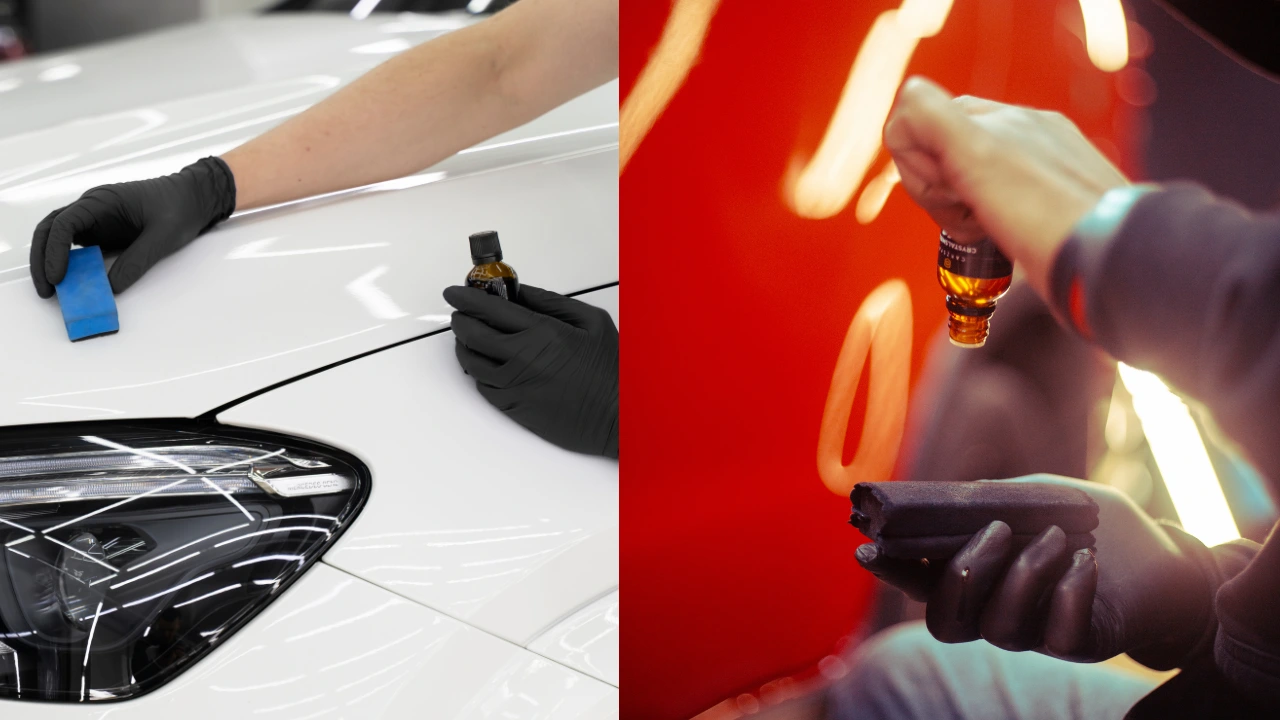
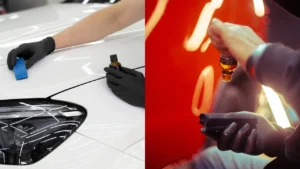
- Paint protection packages: Dealers frequently offer basic paint sealants or low-grade ceramic sprays as “paint protection.” These are not the same as a professionally applied ceramic coating or PPF coating from a specialist detailing studio. Understand what you’re being offered before paying for it.
Is the Dealer Quote Always Final?
The honest answer is: not always, but there are limits.
Government-mandated charges, road tax, registration and TCS are fixed. Insurance can be arranged independently. What remains negotiable is the dealer’s own margin and the discretionary add-ons they’ve included.
A few practical approaches that work in the Indian dealership context:
Get quotes from multiple dealerships of the same brand in your city. Ex-showroom prices will be identical, but on-road quotes may differ because of varying approaches to discretionary charges and add-ons.
Time your purchase toward the end of the month, quarter or financial year when dealerships are actively working to meet sales targets. Discounts, free accessories or extended warranty add-ons at no cost become more accessible during these windows.
Be specific in your negotiation. Rather than asking for a blanket discount, ask for specific line items to be removed or reduced. Dealers respond more readily to targeted, informed requests than to general price haggling.
And always ask for the final quote in writing, with every charge itemised, before you sign or pay a booking amount.
Expert Tip from CarzSpa
One of the most common places new car buyers lose money is the “Paint Protection Package” line item on a dealer’s quotation sheet. Showrooms frequently charge anywhere from ₹5,000 to ₹15,000 for basic Teflon coatings or quick polymer glazes.
These are temporary, low-grade sprays applied by untrained wash boys in a dusty delivery bay. They wear off after a couple of monsoon drives or regular washes, providing zero real protection against stone chips, bird droppings or micro-scratches.
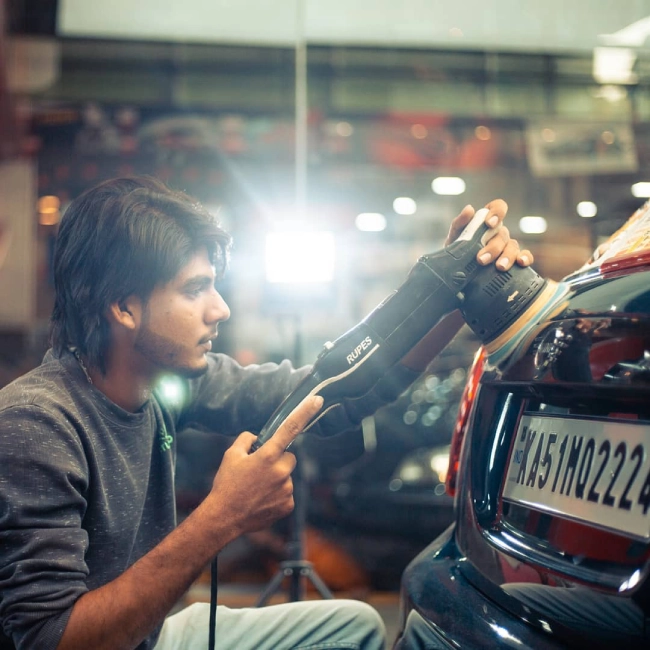
Protect Your Car From Day One
Once you’ve navigated the pricing and taken delivery, your focus must immediately shift to car paint protection. Indian roads are notoriously harsh—exposing your brand-new factory clear coat to intense UV rays, hard water, dust and flying debris. Here is how to shield your investment right out of the showroom:
- Regular Car Detailing: Beyond a basic wash, routine professional detailing deep-cleans and removes embedded contaminants, preventing the gradual degradation of your vehicle’s interior and exterior finish over time.
- Ceramic Coating or Graphene Coating: A premium car ceramic coating or advanced graphene coating chemically bonds to your paint to lock in that deep factory gloss, creating a hydrophobic layer that repels mud, UV rays and hard-water stains.
- PPF Coating: For absolute physical defence against stone chips, key scratches and road debris, paint protection film acts as a thick, self-healing and completely invisible armour for your car’s most vulnerable panels.
Why Protect with CarzSpa
Skipping the overpriced, temporary dealership glazes and bringing your new vehicle straight to a specialised car detailing service is the smartest post-purchase decision you can make.
Here is why CarzSpa is India’s trusted choice for automotive preservation:
- Expert Detailers & Applicators: Our highly trained technicians work in pristine, dust-free studios, ensuring flawless, contamination-free applications every single time.
- Exclusive Products: We utilise proprietary, industry-leading solutions, including ultra-hydrophobic CrystalShield Ceramic Coatings and highly durable Aegis Films—to deliver unmatched gloss and protection.
- Pan-India Presence: With over 150+ detailing studios across the country, premium automotive protection and reliable warranty support are always within your reach.
- Customised Solutions: We carefully assess your daily commute, parking environment and budget to recommend the exact protection package your vehicle genuinely needs.
Conclusion
The difference between ex-showroom and on-road prices isn’t a dealership trick, it’s mostly legitimate, government-mandated taxes. However, the gap between an informed and uninformed buyer is where real savings are lost. Know which charges are fixed and which are negotiable. Always demand an itemised quote and evaluate every showroom add-on independently.
Once you drive your new car home, your focus must immediately shift to protecting your investment. Factory paint is highly vulnerable to harsh Indian road conditions, but it is easily secured if you act early. From helping you navigate true vehicle costs to preserving its showroom finish with premium PPF coating, car ceramic coating and professional car detailing services, CarzSpa is here to protect your car from day one.
Frequently Asked Questions
1. What is the difference between ex-showroom and on-road price?
Ex-showroom is the manufacturer’s listed price before taxes and registration. On-road includes road tax, RTO registration, insurance and other charges; the total you actually pay to drive the car home.
2. Is road tax the same across all Indian states?
No. Road tax is a state government levy and varies considerably. The same car can have a different on-road price in different cities purely because of road tax rate differences.
3. Can I negotiate on-road price with the dealer?
Government charges like road tax and registration are fixed. However, discretionary add-ons, accessories and dealer margins are negotiable, especially toward the end of a financial quarter.
4. Is TCS refundable when buying a car above ₹10 lakh?
Yes. TCS collected at 1% on vehicles above ₹10 lakh ex-showroom is reflected in your Form 26AS and can be claimed as a credit against your income tax liability when filing returns.