There was a time when buying a sedan was almost a default choice for an Indian family. The boot was big, the rear seat was comfortable and the long, low-slung design gave the car a premium presence that SUVs simply could not match.
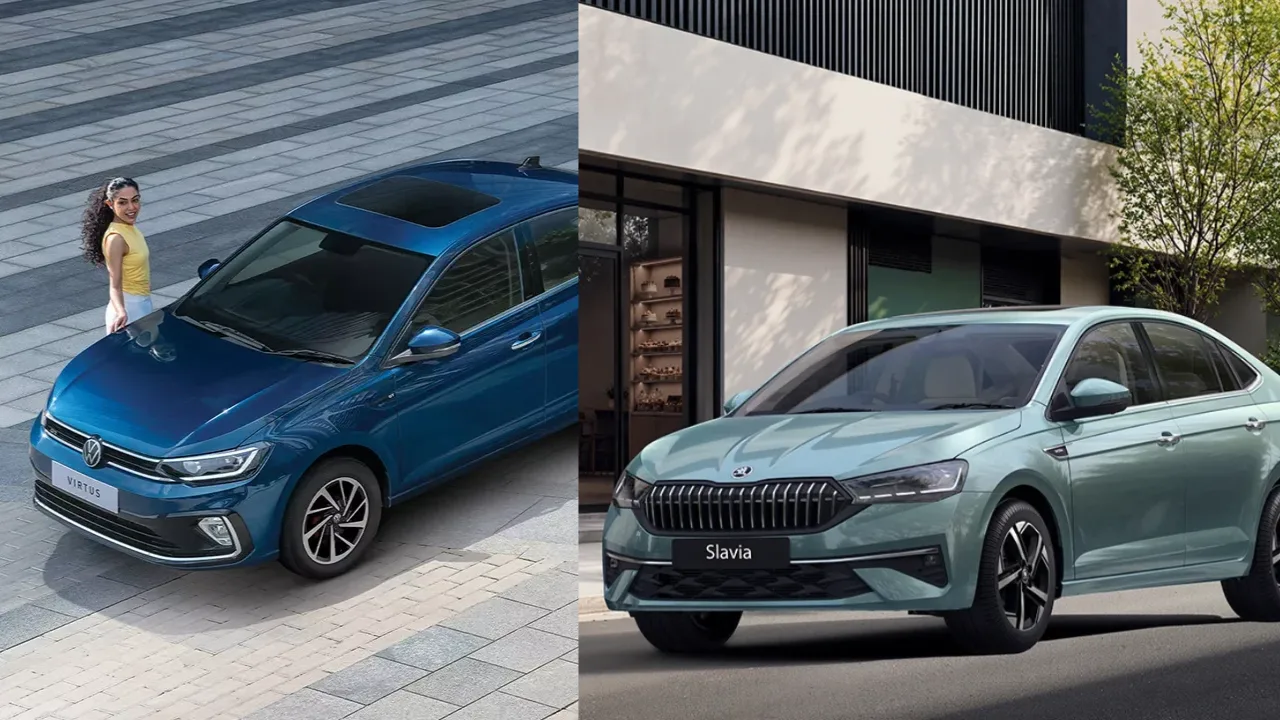
Today, SUVs dominate the market, but sedans like the Skoda Slavia and Volkswagen Virtus continue to appeal to buyers who want something different. Both offer spacious cabins, large boots, turbo-petrol engines, strong safety credentials and the kind of driving experience that makes a long highway journey enjoyable.
And this is what makes the Slavia vs Virtus comparison interesting. Both cars come from the same automotive group, share the MQB-A0-IN platform and offer similar engine choices, yet they have their own personalities.
So, which one should you buy? Having worked on thousands of cars, our experts at CarzSpa know that choosing a car is about more than specifications. Hence, we decided to break down the Skoda Slavia and Volkswagen Virtus across the aspects that actually matter to a buyer.
Table of contents
- Slavia vs Virtus – Quick Comparison
- Price and Variants
- Design and Road Presence
- Engine, Performance and Driving Experience
- Mileage and Everyday Running
- Comfort, Space and Practicality
- Features and Technology
- Safety and Reliability
- Which One Should You Buy?
- Why Choose CarzSpa for Your Slavia or Virtus?
- Conclusion
- Frequently Asked Questions
Slavia vs Virtus - Quick Comparison
Before getting into the details, here is a quick look at how the two sedans compare.
| Feature | Skoda Slavia | Volkswagen Virtus |
|---|---|---|
| Starting Price | ₹9.99 lakh onwards | ₹10.70 lakh onwards |
| Engine Options | 1.0L TSI, 1.5L TSI | 1.0L TSI, 1.5L TSI |
| 1.0L Power | 115 PS | 115 PS |
| 1.0L Torque | 178 Nm | 178 Nm |
| 1.5L Power | 150 PS | 150 PS |
| 1.5L Torque | 250 Nm | 250 Nm |
| 1.0L Automatic | 8-speed torque converter | 6-speed automatic |
| 1.5L Automatic | 7-speed DSG | 7-speed DSG |
| Boot Space | 521 litres | 521 litres |
| Ground Clearance | Around 179 mm | 179 mm |
| Safety Rating | 5-star Global NCAP | 5-star Global NCAP |
The numbers make it clear that these two cars are closely related. Both use 1.0-litre and 1.5-litre turbo-petrol engines, both produce the same peak power and torque figures, and both offer 521 litres of boot space. The biggest differences emerge when you look at their design, feature packaging, automatic transmission choices and overall character.
Price and Variants
Price is usually the first thing people look at when comparing two cars, and here the Slavia has a slight advantage at the entry level.
The new Skoda Slavia starts at ₹9.99 lakh ex-showroom and is available across six trims – Classic, Classic+, Signature, Sportline, Prestige and Monte Carlo. Depending on the variant, buyers can choose between the 1.0 TSI manual, 1.0 TSI automatic and the more powerful 1.5 TSI DSG.
The Volkswagen Virtus starts at ₹10.70 lakh and is offered in different combinations of its Chrome and Sport ranges. Its 1.0 TSI is available with manual and automatic transmissions, while the 1.5 TSI is paired with the 7-speed DSG. The GT Plus Sport 1.5 TSI DSG currently sits at around ₹19.19 lakh ex-showroom.
This means that the Slavia makes a particularly strong case for buyers entering the segment on a tighter budget, while the Virtus continues to appeal to buyers looking for a more performance-oriented GT experience.
Please note: Ex-showroom prices can change with variant updates, offers and manufacturer pricing revisions. Always confirm the final on-road price with the respective dealer before purchasing.
Design and Road Presence
This is where the Slavia and Virtus begin to feel different despite sharing much of their engineering.
The Skoda Slavia follows a more sophisticated European design language. Its clean lines, sharp lighting elements and understated proportions give it a premium appearance without trying too hard. The 2026 update adds new LED headlamps, redesigned LED tail lamps with sequential indicators and new alloy wheel designs. The Monte Carlo variant also brings a sportier visual identity.
The Volkswagen Virtus, on the other hand, has a more aggressive and sporty road presence. Its sharp shoulder lines, wider visual stance and GT styling elements give it a more youthful character. The GT Plus Sport takes this even further with darker exterior detailing and sporty black interiors.
So, which looks better?
That comes down to personal taste.
If you prefer an elegant sedan that looks premium without being too loud, the Slavia could appeal more to you. If you want a sedan with a stronger, sportier presence, the Virtus could be the better choice.
And whichever one you choose, remember that a new car’s paint will face everything from UV exposure and dust to road debris, bird droppings and accidental scratches from day-to-day driving.
Engine, Performance and Driving Experience
This is arguably the biggest reason why both the Slavia and Virtus remain popular among driving enthusiasts.
Both cars get a 1.0-litre TSI engine producing 115 PS and 178 Nm, while their 1.5-litre TSI versions produce 150 PS and 250 Nm. The 1.5-litre engine uses Volkswagen Group’s TSI technology and is paired with a 7-speed DSG automatic in both cars.
For regular city driving, the 1.0 TSI is more than adequate. It provides enough punch for overtaking and highway cruising without requiring you to spend significantly more on the larger engine.
But if performance is your priority, the 1.5 TSI is the engine to consider.
With 150 PS and 250 Nm, it delivers noticeably stronger acceleration and feels much more enthusiastic when you put your foot down. The DSG transmission also makes quick gear changes, making the 1.5-litre versions particularly enjoyable on open roads.
There is one important difference in the latest Slavia, though. The 2026 Slavia’s 1.0 TSI automatic now comes with an 8-speed torque-converter automatic, while the Virtus 1.0 TSI automatic continues with a 6-speed automatic. The Slavia’s 1.5 TSI continues with the 7-speed DSG.
Our verdict: For outright performance, the 1.5 TSI versions of both cars are the ones to choose. For relaxed city driving and everyday commuting, the 1.0 TSI makes more sense.
Mileage and Everyday Running
Performance is important, but so is the cost of living with your car.
The official mileage figures for the Volkswagen Virtus show approximately 20.08 km/l for the 1.0 TSI manual, 18.45 km/l for the 1.0 TSI automatic and 19.62 km/l for the 1.5 TSI DSG. These are certified figures, so real-world mileage will depend on traffic, driving style, road conditions and how often you use the accelerator.
The Slavia also uses the same basic engine family, so buyers can expect the 1.0 TSI to be the more sensible choice for regular commuting, while the 1.5 TSI prioritises stronger performance.
For someone driving mostly inside a city, the 1.0 TSI automatic can be a good middle ground. It gives you the convenience of an automatic without paying the premium associated with the 1.5 TSI.
If you frequently travel between cities or enjoy spirited highway driving, the 1.5 TSI becomes much more tempting.
Ultimately, don’t choose between the Slavia and Virtus purely on claimed mileage. Your daily route and driving habits will have a much bigger impact on fuel consumption.
Comfort, Space and Practicality
One of the biggest strengths of both these sedans is that they have not forgotten what makes a sedan practical.
The Slavia and Virtus both offer a 2,651 mm wheelbase and 521-litre boot space. This means both cars have enough room for family use, luggage and long-distance travel. The Virtus can expand its luggage capacity to 1,050 litres with the rear seats folded.
The Slavia has always had a reputation for offering a spacious cabin, and the updated model adds several comfort-focused touches. The 2026 Slavia introduces a segment-first rear-seat massage function, along with ventilated front seats on higher variants and other convenience features.
The Virtus takes a slightly sportier approach to its cabin, with features such as ventilated front seats, electric sunroof, digital instrumentation and a large touchscreen infotainment system available on higher variants.
For families, both are excellent options. The large boot, usable rear seat and sedan driving position make them particularly suitable for people who regularly travel with luggage.
If rear-seat comfort and premium touches are your priority, the Slavia gets a slight edge. If you prefer a more driver-oriented cabin, the Virtus remains a strong choice.
Features and Technology
Modern buyers expect their cars to do much more than simply take them from one place to another.
The 2026 Slavia gets a significant technology upgrade, including a 10.1-inch touchscreen infotainment system, wireless Android Auto and Apple CarPlay, a 10.25-inch digital cockpit and an AI Assistant powered by Google Cloud. It also gets a 360-degree Area View camera and Park Pilot on relevant variants.
The Virtus offers a 25.65 cm touchscreen infotainment system, wireless App-Connect with Android Auto and Apple CarPlay, an electric sunroof, ventilated seats and an eight-speaker audio system on higher variants.
This is one area where the Slavia’s latest update gives it an advantage. The new technology and comfort features make the 2026 car feel more feature-rich than before.
However, the Virtus still has an appeal of its own. Its cabin is straightforward, functional and focused on giving the driver the important information without making the experience unnecessarily complicated.
Safety and Reliability
When you’re spending ₹10 lakh or more on a car, safety should never be an afterthought.
Both the Skoda Slavia and Volkswagen Virtus have achieved a 5-star Global NCAP safety rating, making them among the more reassuring options in the premium sedan segment. Volkswagen states that the Virtus comes with 40 safety features, while Skoda says the new Slavia gets more than 25 active and passive safety features as standard, with higher variants offering more.
The Slavia comes with six airbags as standard, along with features such as electronic stability control and the 360-degree Area View camera on relevant variants.
The Virtus also offers multiple airbags, ESC, ABS, EBD, multi-collision braking and other safety technologies depending on the variant.
Both cars therefore make a strong case for buyers who place safety high on their priority list.
When it comes to reliability, however, remember that regular servicing, good driving habits and timely maintenance matter as much as the badge on the bonnet. A well-maintained car will always have a better chance of delivering a trouble-free ownership experience.
Which One Should You Buy?
After comparing both cars, there is no single answer that will work for every buyer.
Choose the Skoda Slavia if:
- You prefer a more elegant and sophisticated design.
- You want the latest comfort and technology features.
- Rear-seat comfort is important to you.
- You want the new 8-speed automatic with the 1.0 TSI.
- You want a premium sedan with a slightly lower starting price.
- You prefer features such as rear-seat massage and a 360-degree camera on higher variants.
Choose the Volkswagen Virtus if:
- You prefer a sportier exterior design.
- You enjoy driving and want a stronger performance-oriented character.
- You like the GT/GT Plus Sport styling.
- You want the proven 1.5 TSI + 7-speed DSG combination.
- You prefer Volkswagen’s straightforward cabin design.
- You want a sedan with strong highway and enthusiast appeal.
Both cars are extremely close mechanically, so your decision should ultimately come down to what you value more.
Why Choose CarzSpa for your Slavia or Virtus?
Buying a new Slavia or Virtus is a significant investment. And once you’ve spent months researching the right colour, variant and engine, protecting that new-car finish should also be part of your ownership plan.
At CarzSpa, we help car owners maintain the appearance and finish of their vehicles with professional detailing and paint protection solutions.
- 20+ years of detailing expertise: Our experience comes from working on thousands of cars across India.
- 150+ CarzSpa Detailing Studios: Our Pan-India presence makes professional car care more accessible.
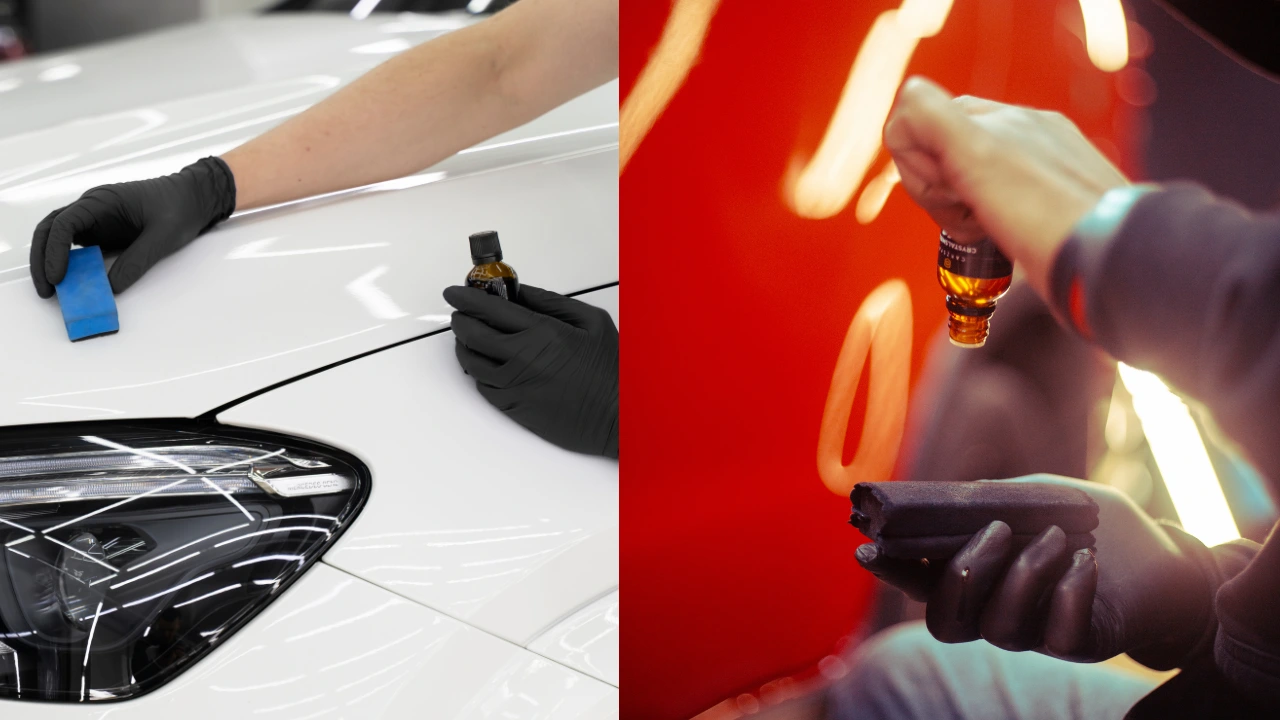
- Professional ceramic coating: ceramic coating for cars can help create a hydrophobic surface, enhance gloss and make regular cleaning easier.
- Premium coating options: For owners looking for advanced paint protection, options such as graphene and borophene coating provide a premium route to protecting and maintaining the vehicle’s finish.
- PPF installation: For areas most exposed to stone chips, scratches and road debris, PPF coating offers a physical protective layer over the original paint.
- Aegis PPF: CarzSpa installs Aegis PPF across its studios, offering self-healing and impact protection for owners who want stronger physical protection.
- Complete car paint protection: Whether you choose a coating or PPF, the objective is simple – keep your new Slavia or Virtus looking closer to new for longer.
Your new sedan is more than just a means of getting from point A to point B. It is something you have researched, saved for and chosen carefully. Protecting its original paint from day one can help preserve both its appearance and your ownership experience.
You’ve Chosen Your Sedan. Now, What Protection Does It Actually Need?
Whether you choose the Slavia or Virtus, the right protection depends on how you drive, where you park and what your car is exposed to. Answer 11 quick questions to find out whether your car needs PPF, ceramic coating, basic care or a combination.
Conclusion
The Slavia vs Virtus debate is difficult precisely because both cars get so many things right. They share engines, platform, dimensions, boot space and strong safety credentials, yet each has its own personality.
The Slavia is the more comfort- and feature-oriented choice, particularly after its 2026 update, while the Virtus continues to appeal to buyers who want a sportier and more driver-focused sedan.
If you prioritise premium features, rear-seat comfort and everyday usability, the Slavia deserves a serious look. If driving pleasure, sporty styling and the GT experience matter more, the Virtus could be the better choice.
Whichever one you choose, take a test drive, compare the variants carefully and choose the car that fits your lifestyle. And once you bring your new sedan home, protect it from day one with the experts at CarzSpa.
Frequently Asked Questions
1. Which is better, Slavia or Virtus?
Both are excellent sedans. Slavia is better suited to buyers prioritising comfort and features, while Virtus is ideal for buyers who prefer sporty styling and a more driver-focused experience.
2. Is Slavia safer than Virtus?
Both Skoda Slavia and Volkswagen Virtus have achieved a 5-star Global NCAP safety rating. Both offer strong safety equipment, including multiple airbags and electronic stability control.
3. Which has better performance, Slavia or Virtus?
The 1.5 TSI versions of both cars produce 150 PS and 250 Nm and use a 7-speed DSG. Their performance is therefore very closely matched.
4. Is ceramic coating worth it for a new Slavia or Virtus?
Yes. ceramic coating for cars can improve gloss, hydrophobicity and ease of cleaning while helping protect the paint from everyday environmental contaminants.
5. Should I get PPF on my new Slavia or Virtus?
If you regularly drive on highways or in areas with heavy road debris, PPF coating can be worthwhile for protecting vulnerable painted areas against stone chips, scratches and minor impacts.