Walk into any detailing studio in India and you’ll see “9H Ceramic Coating” plastered on banners, brochures and quote cards. It sounds impressive. It sounds scientific. And for most car owners spending anywhere between ₹15,000 and ₹80,000 on car paint protection, it sounds like a promise of near-indestructible paint.
But here’s what nobody tells you upfront: 9H is not what most people think it is. It doesn’t mean what the Mohs mineral scale means. It doesn’t make your car scratch-proof. And the “10H” or “12H” ceramic coatings you’ve seen advertised? Those ratings don’t officially exist.
This blog breaks it all down honestly, the real science behind the 9H rating, the myths that have been sold to Indian car owners for years and what actually matters when choosing a car ceramic coating that delivers genuine, lasting results.
Table of contents
- What Does 9H Actually Mean?
- The Pencil Hardness Scale vs. The Mohs Scale
- What 9H Ceramic Coating Can and Cannot Do
- Common Misconceptions About 9H Ceramic Coating
- What Actually Determines Ceramic Coating Quality?
- Why Graphene Coating Is Changing the Game
- How to Choose the Best Ceramic Coating for Your Car
- Why Choose CarzSpa?
- Conclusion
- Frequently Asked Questions
What Does 9H Actually Mean?
The “9H” in ceramic coating comes from the pencil hardness scale, a standardised test used in the paint and coatings industry to measure how resistant a surface is to scratches. The scale runs from 6B at the softest end to 9H at the hardest. A coating rated 9H simply means it survived contact with a 9H pencil without being scratched during a controlled lab test.
That’s it. That’s the whole claim.
The test, formally known as ASTM D3363 or the Wolff-Wilborn test, was originally developed for industrial coatings, think machinery and factory floors, not your Maruti Swift or Tata Nexon. It works by pressing pencil leads of increasing hardness against a coated surface at a 45-degree angle under fixed pressure. The hardest pencil that doesn’t leave a mark determines the hardness rating.
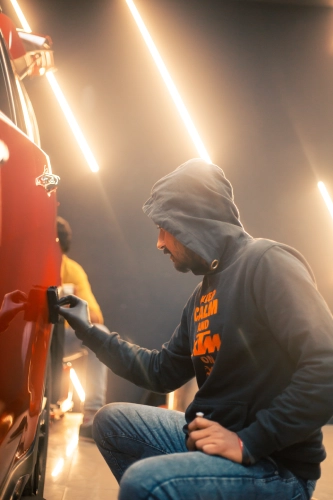
So when a detailing studio tells you their car ceramic coating is 9H rated, what they’re actually saying is: in a lab, on a test panel, their coating passed a pencil scratch test. That’s a useful data point. It’s just not the whole story and it’s nowhere near as dramatic as the marketing makes it sound.
The key thing to understand is that 9H is the maximum on this scale. There is no grade above it in the standard system. Which makes the next section very important.
The Pencil Hardness Scale vs. The Mohs Scale
This is where the confusion and frankly, a lot of the misleading marketing, begins.
Most people who hear “9H” mentally connect it to the Mohs hardness scale, the one used to classify minerals and gemstones. On the Mohs scale, diamond sits at 10, sapphire at 9 and quartz at 7. If a 9H ceramic coating were on the Mohs scale, it would sit closer to 3, roughly equivalent to calcite, a mineral you can scratch with a copper coin.
Not quite the diamond-like protection being implied in those banners.
These are two completely separate measurement systems. The pencil hardness scale measures resistance to a pencil lead under a standardised force. The Mohs scale measures the relative ability of one mineral to scratch another. They share a similar notation but have nothing else in common.
This mix-up isn’t accidental. The similarity between “9H on the pencil scale” and “9 on the Mohs scale” is precisely what makes the marketing so effective. It creates the impression of near-mineral hardness without technically lying, because technically, the rating is accurate. It’s just being framed in a way that triggers the wrong mental reference.
Understanding this distinction is the first step to making a smarter decision about car ceramic coating protection for your vehicle.
What 9H Ceramic Coating Can and Cannot Do
A genuine 9H-rated coating does offer real benefits. Let’s be clear about that. The problem isn’t the coating; it’s the gap between what it can do and what it’s been sold as.
What it genuinely does:
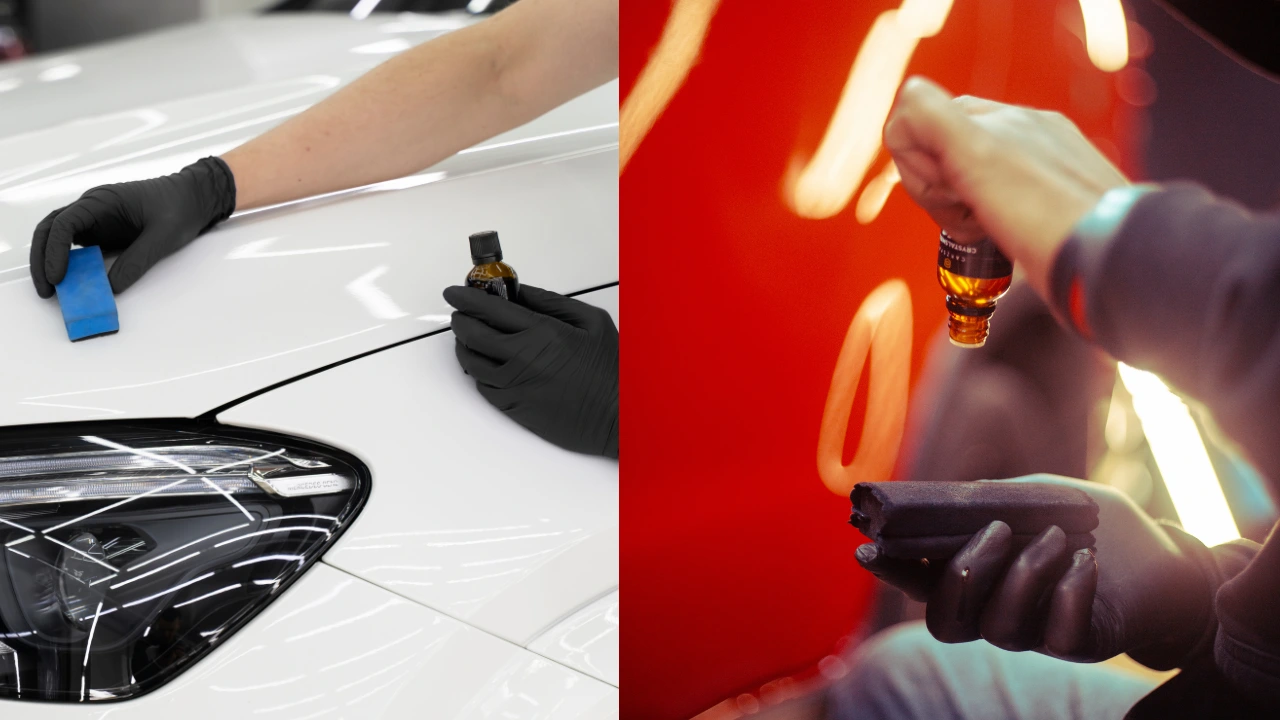
A properly applied ceramic coating creates a semi-permanent bond with your car’s clear coat, forming a protective layer that resists light surface scratches and swirl marks from improper washing, UV oxidation that fades paint over time, water spots and mineral deposits from hard water, a particularly real problem across many Indian cities, chemical contaminants like bird droppings, tree sap and industrial fallout and general road grime that sticks to unprotected paint.
The hydrophobic effect is also real and genuinely useful. Water beads and rolls off a coated surface, taking dirt with it. This makes washing faster, less abrasive and less likely to cause the swirl marks that build up over time on untreated paint.
What it cannot do:
A ceramic coating will not stop rock chips on the highway. It will not prevent a key scratch, a parking lot scrape or damage from a shopping cart. It will not protect against dents or collision damage. And it will not last forever without proper maintenance, regardless of what the “lifetime warranty” on a ₹5,000 walk-in coating claims.
If your primary concern is protection against physical impact, stone chips and road debris especially, car paint protection film (PPF) is a more appropriate solution, often used alongside ceramic coating for comprehensive coverage.
Common Misconceptions About 9H Ceramic Coating
| The Myth | The Reality |
|---|---|
| 9H makes your car completely scratch-proof. | It is scratch-resistant, raising the threshold for minor marks, but heavy force or improper washing will still scratch it. |
| A higher 'H' rating automatically means a better coating. | Hardness is just one property; a coating's formulation, chemical resistance, and flexibility to prevent micro-cracking matter much more. |
| All 9H coatings deliver the exact same results. | Real-world performance varies widely based on SiO₂ concentration, the number of layers applied, and the quality of surface preparation. |
| A 9H ceramic coating is entirely maintenance-free. | Regular washing with pH-neutral shampoo and proper upkeep are mandatory to protect the coating against India's harsh UV rays and hard water. |
What Actually Determines Ceramic Coating Quality?
Since the hardness number alone isn’t the full picture, here’s what you should actually be evaluating when choosing a car ceramic coating:
- SiO2 Concentration: Professional-grade coatings typically contain between 80% and 97% silicon dioxide. Consumer spray products may contain as little as 10–15%. Higher concentration generally means stronger bonding and longer-lasting hydrophobic performance. Ask for the technical data sheet.
- Surface Preparation: This is the most underrated factor in coating performance. Paint correction, clay bar decontamination and a proper IPA (isopropyl alcohol) wipe-down before application are non-negotiable. A coating locked over swirl marks and contamination is a coating that won’t bond properly, regardless of its hardness rating.
- Number of Layers: A single-layer application of even the best formula will not match the performance of a properly applied multi-layer system. Each additional layer adds depth, cross-linking strength and wear resistance.
- Third-Party Certification: The most trustworthy hardness claims come from independent labs, such as SGS, Intertek and Bureau Veritas. If a brand claiming to be the best ceramic coating brand can’t point you to a named lab’s certificate, that claim is self-reported and unverified.
- Warranty Terms: A genuine manufacturer warranty should clearly state what’s covered, what maintenance is required to keep it valid and where you can make a claim across India. Vague “lifetime” warranties with no maintenance clauses are red flags, not reassurances.
- Ceramic coating price alone should never be your deciding factor. A ₹4,000 walk-in coating and a ₹25,000 multi-layer professional application are not the same product applied at different price points. They are fundamentally different service offerings with different outcomes.
Why Graphene Coating Is Changing the Game
While the detailing world has long debated 9H claims, a newer technology has been steadily gaining ground among serious car enthusiasts and professional installers: graphene coating.
Graphene is a single-layer carbon structure that is both extraordinarily strong and highly flexible, which is precisely what makes it interesting for automotive applications. Unlike conventional SiO2-based ceramic coatings that can become brittle at high hardness levels, graphene-enhanced formulations combine hardness with elasticity, allowing the coating to flex with the panel rather than micro-cracking under thermal stress.
In practical terms, graphene coating offers better heat dissipation than standard ceramic coatings, which is particularly relevant in India’s climate where car surfaces can reach extreme temperatures during summer months. It also demonstrates stronger resistance to water spotting, one of the most common real-world complaints about standard ceramic coatings in hard-water cities like Delhi, Ahmedabad and Bengaluru.
It is not a magic solution and the same principles apply: preparation quality and application expertise determine the outcome as much as the coating chemistry itself. But for car owners looking beyond the 9H debate and asking what the next level of paint protection looks like, graphene is a very credible answer.
How to Choose the Best Ceramic Coating for Your Car
Armed with the right information, here’s a practical framework for making a smart decision:
Ask for the SiO2 percentage or the coating’s technical data sheet before committing. A credible detailer won’t hesitate to share this.
Request third-party certification details, the lab name, test date and certificate number for any hardness claims made. If the hardness claim goes above 9H, ask for evidence. The absence of evidence is the evidence.
Insist on a proper paint preparation process before coating. If a studio quotes you a same-day coating with no mention of paint correction or decontamination, walk away.
Understand what the ceramic coating price includes: preparation, number of layers, coating brand and warranty terms. A detailed breakdown is a sign of a professional operation.
Ask about maintenance requirements and whether the studio offers follow-up services. A coating that isn’t maintained won’t deliver its promised lifespan.
And choose a brand and installer with a verifiable track record, not just a social media presence with impressive-looking before-and-after reels.
Why Choose CarzSpa?
CarzSpa Detailing Studios don’t sell the 9H story. We explain it.
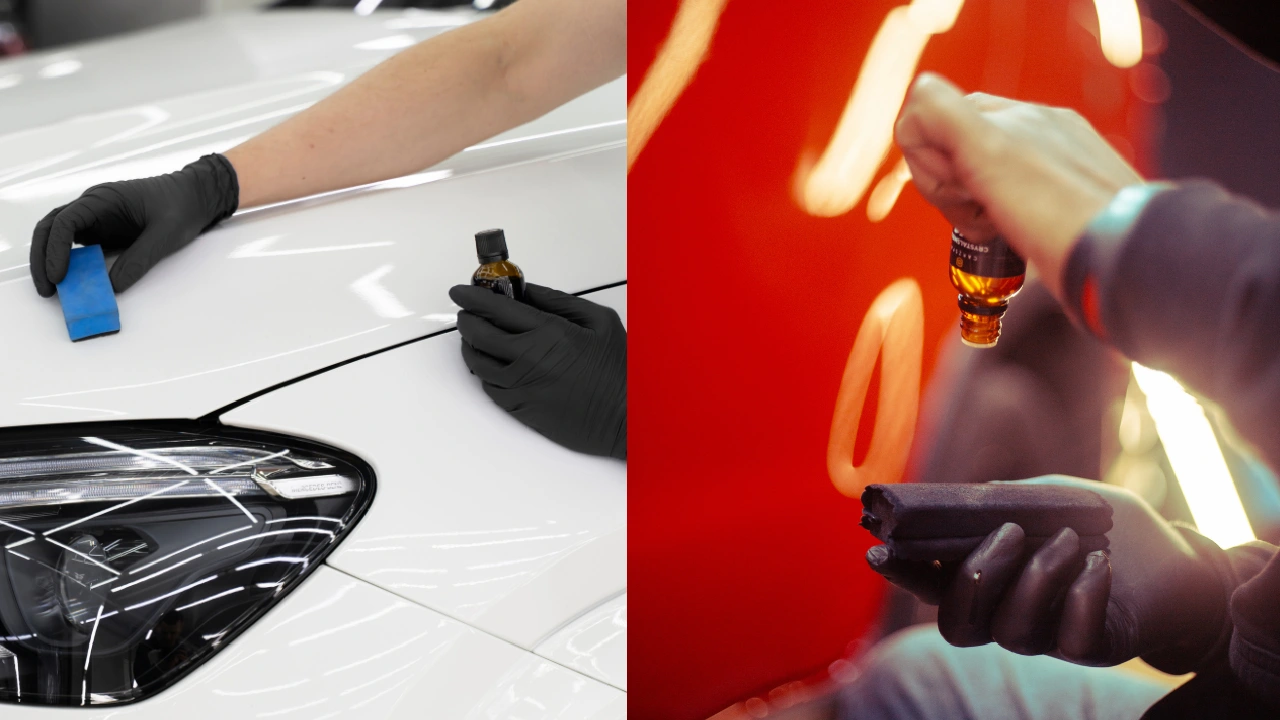
Every ceramic coating application at CarzSpa begins with a thorough paint decontamination and correction process, because we know that no coating, regardless of its rating, performs on unprepared paint. Our certified detailers are trained to assess each vehicle individually, recommend the right level of protection and apply coatings in controlled environments that give the chemistry a genuine chance to perform.
CarzSpa offers a curated range of coating solutions, including advanced graphene coating options for car owners who want next-generation protection, backed by the kind of warranty transparency that lets you understand exactly what you’re covered for and where across India.
If you’re evaluating ceramic coating price against long-term value, our teams across 125+ detailing studios will walk you through the full picture: what the coating does, what it won’t do, how to maintain it and why the installer matters as much as the product. Because the best ceramic coating brand applied poorly will always underperform an honest, well-executed coating done right.
Conclusion
So what does 9H actually mean for your car? It means the coating passed a pencil scratch test in a lab. That’s a real and useful benchmark, but it’s only one piece of the story.
The 9H rating doesn’t make your car scratch-proof. The scale stops at 9H, which means anything claiming higher is stepping outside the standard. And the true performance of any car ceramic coating depends far more on the SiO2 formulation, the preparation quality, the number of layers applied and the expertise of the installer than on a single hardness number printed on a brochure.
What you should walk away with is a simpler framework: ask questions, demand transparency and evaluate coatings on the full picture rather than one marketed number. Good car paint protection is real. It’s just not the unbreakable force field it’s sometimes sold as.
CarzSpa is here to give you the honest version and back it with professional installation at 125+ studios across India.
Frequently Asked Questions
1. Is 9H ceramic coating scratch-proof?
No. 9H ceramic coating is scratch-resistant, not scratch-proof. It resists light surface scratches and swirl marks but cannot prevent damage from key scratches, rock chips or heavy abrasion.
2. What is the difference between 9H and 10H ceramic coating?
The pencil hardness scale officially stops at 9H. Any “10H” claim falls outside recognised international standards and is not backed by certifiable independent testing.
3. Does 9H refer to the Mohs hardness scale?
No. 9H refers to the pencil hardness scale, not Mohs. On the Mohs scale, a 9H coating would rate around 3, equivalent to calcite, far from diamond-level hardness.
4. How long does 9H ceramic coating last?
A professionally applied ceramic coating typically lasts 2–5 years depending on the product, number of layers, maintenance routine and environmental conditions including India’s hard water and UV exposure.
5. Is graphene coating better than ceramic coating?
Graphene coating combines hardness with flexibility, offering better heat dissipation and water spot resistance. It is a strong upgrade for Indian conditions, though preparation quality and installer expertise remain equally critical.
Share: