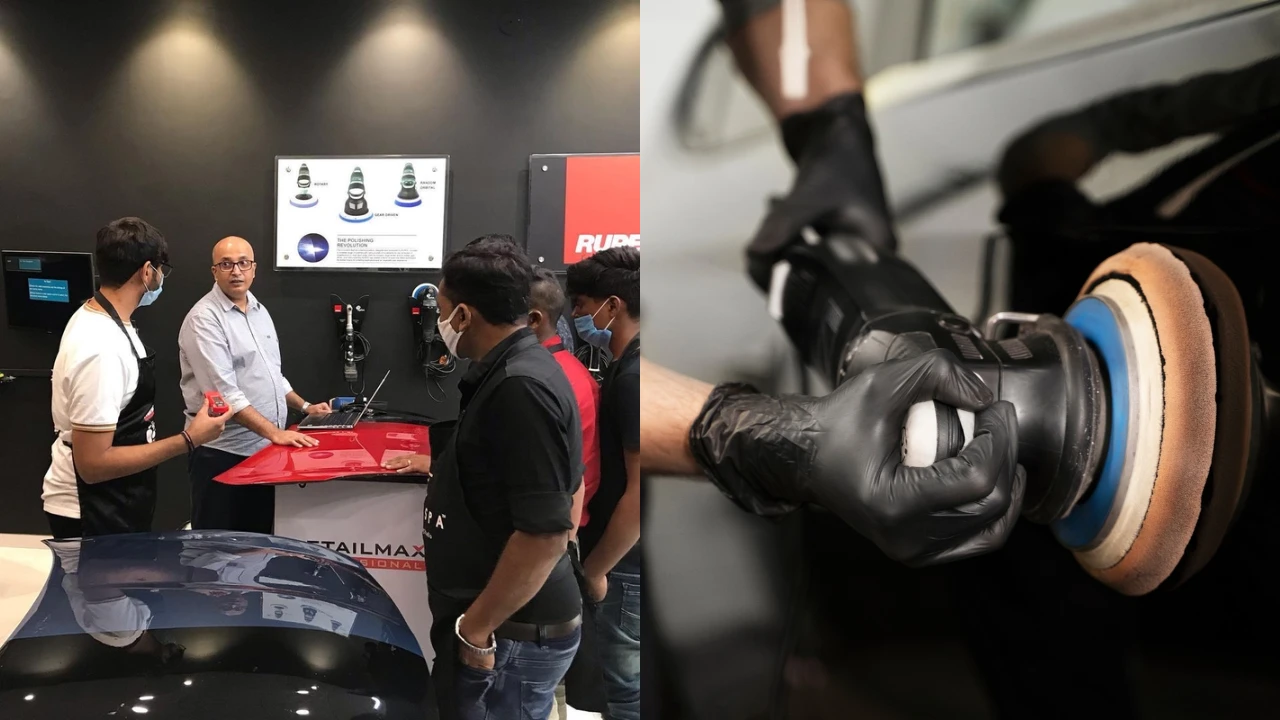
Starting a car detailing business may look straightforward from the outside. You set up a studio, buy the necessary equipment, hire a few people and start accepting cars. But professional detailing involves considerably more than washing and polishing vehicles. From understanding paint surfaces and learning machine polishing to applying PPF coating and managing customer expectations, there is a lot to learn before you can confidently offer these services.
The good news is that you do not necessarily need an automobile engineering degree or years of workshop experience. What you need is the right training, practical exposure and a clear understanding of how a detailing business operates. Let’s look at the skills and training required.
Table of contents
- Do You Need Professional Training to Start a Car Detailing Business?
- Technical Skills Every Car Detailer Must Learn
- Understanding Different Car Detailing Services
- Business and Operational Training You Should Not Ignore
- How to Choose the Right Car Detailing Training Programme
- Can an Automobile Franchise Help You Learn the Business?
- Why Start Your Car Detailing Business as a CarzSpa Franchise?
- Conclusion
- Frequently Asked Questions
Do You Need Professional Training to Start a Car Detailing Business?
Yes. If you intend to build a professional detailing studio rather than operate a basic car wash, proper training is essential.
Car detailing is a skill-based industry. Customers trust detailers with vehicles that can cost anywhere between a few lakhs and several crores. A minor mistake while using a polishing machine, handling chemicals or installing paint protection film can damage the vehicle and cost the business considerably.
More importantly, customers are not simply paying for the products used on their cars. They are paying for the knowledge, technique and workmanship behind the service.
You do not need to be an expert in every detailing service before starting your business. However, you should understand how these services work, what equipment they require, how much time they take and what results customers can reasonably expect.
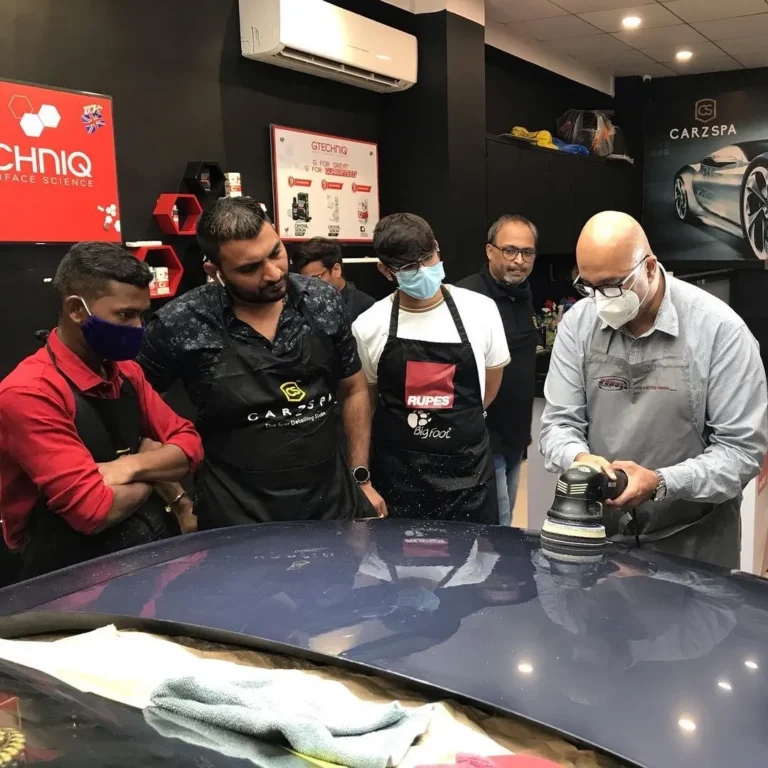
Professional training helps you develop this foundation. It also allows you to understand the difference between a properly executed detailing service and an ordinary car cleaning job.
If you are entering the industry without prior experience, structured training can significantly reduce the learning curve.
Technical Skills Every Car Detailer Must Learn
Technical training is the foundation of any successful detailing operation. Even if you eventually hire experienced technicians, understanding the actual work will help you maintain quality and supervise your team.
Here are some of the essential skills you should learn.
1. Car Washing and Surface Preparation
It may sound basic, but washing a car professionally requires more knowledge than most people realise.
You must understand the correct washing sequence, two-bucket washing method, suitable cleaning agents, microfiber products and safe drying techniques. You should also learn how to identify contaminants such as tar, industrial fallout, tree sap and iron particles.
Surface preparation is particularly important because the quality of every subsequent detailing service depends on it. Poor preparation can affect polishing results, ceramic coating application and PPF installation.
2. Paint Inspection and Machine Polishing
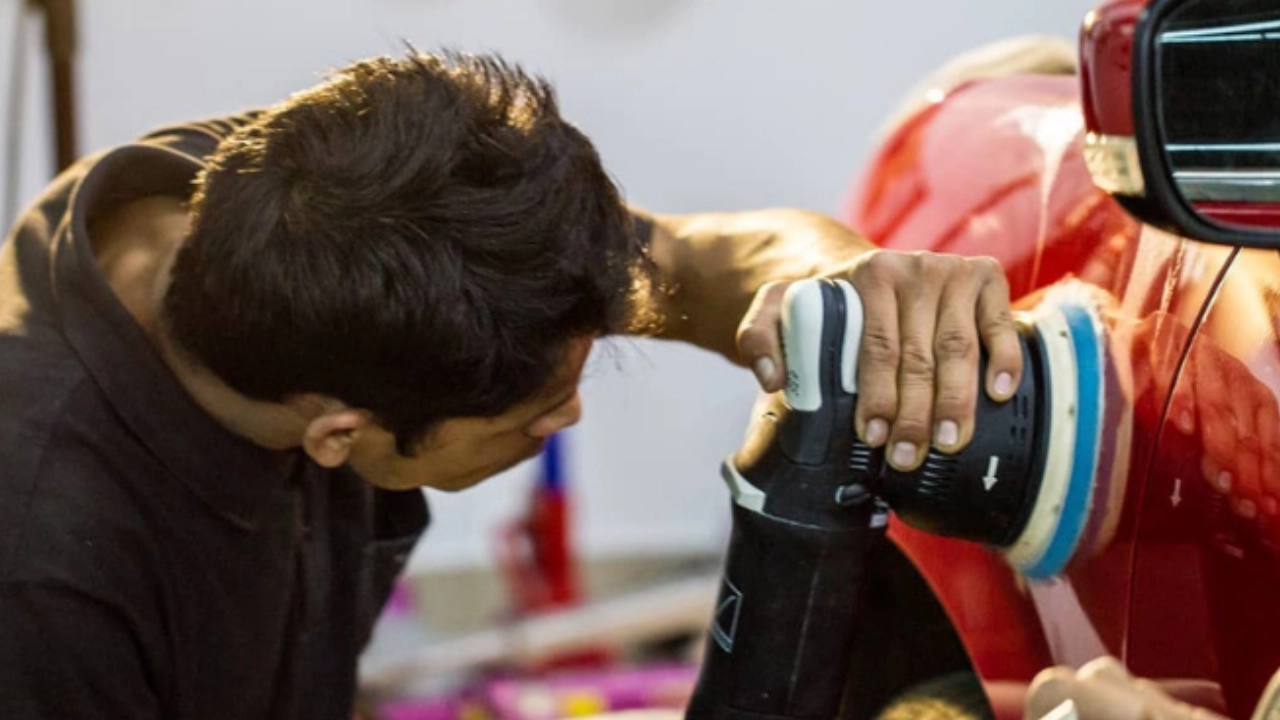
Machine polishing is one of the most important skills in professional detailing.
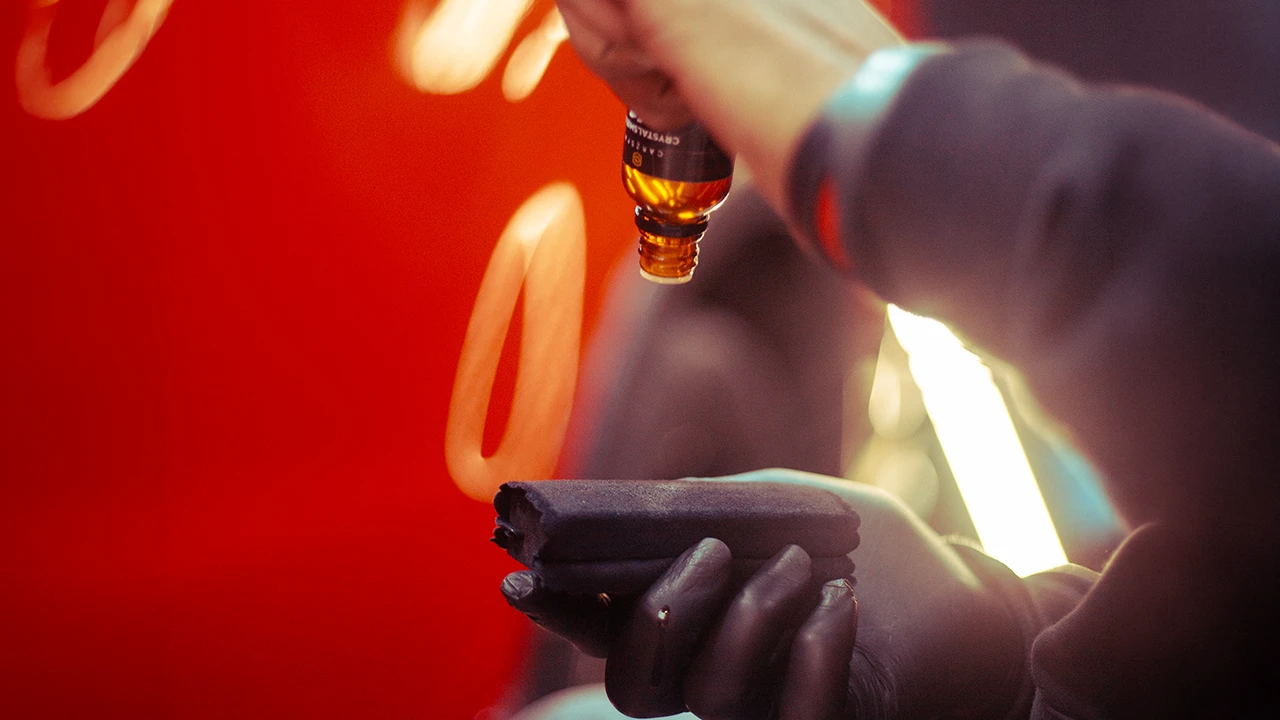
You need to understand different types of automotive paint, clear coat thickness, paint defects and the limitations of paint correction. Training should cover the use of dual-action and rotary polishing machines, suitable pads, compounds and polishes.
More importantly, you must learn when to polish and when not to. Excessive polishing can remove too much clear coat and permanently compromise the paint.
A trained detailer knows how to assess the surface before choosing the right correction process.
3. PPF Coating and Installation
PPF coating is among the more specialised services offered by professional detailing studios. It involves applying a transparent protective film over a vehicle’s painted surfaces to protect them from stone chips, scratches and everyday road damage.
Learning PPF installation requires patience, precision and considerable hands-on practice.
Your training should cover film handling, surface preparation, cutting patterns, slip solutions, installation techniques, edge wrapping and post-installation inspection. You should also understand the differences between film materials, thicknesses, topcoats and product warranties.
Remember, knowing how to apply a film on a flat panel is not the same as installing it neatly around complex bumpers, curves and edges. Practical experience across different vehicle types is essential.
4. Ceramic Coating Application
Another important skill is understanding ceramic coating for cars.
Ceramic coatings are liquid protective products applied to automotive surfaces to improve gloss, hydrophobic behaviour and resistance to certain environmental contaminants.
Training should cover paint correction before application, panel preparation, coating application, levelling, curing and aftercare. You should also learn how different coatings behave and why application conditions matter.
A poorly applied coating can leave high spots, uneven patches and visible marks. Correct application techniques help avoid these problems and deliver consistent results.
5. Interior Detailing
Exterior detailing is only one part of the business. Customers also expect professional interior care.
You should learn intensive interior cleaning, including fabric and leather cleaning, carpet extraction, dashboard treatment, stain removal, odour management and safe cleaning of delicate surfaces.
Different materials require different cleaning methods. Using an unsuitable chemical on leather, screens or interior trims can cause permanent damage.
Training should therefore focus on identifying materials, selecting appropriate products and using equipment such as extractors, steam cleaners and detailing brushes safely.
Understanding Different Car Detailing Services
Technical skills alone are not enough. You must also understand the services you intend to offer and how they fit into your business model.
A professional studio may provide several car detailing services, each catering to a different customer requirement.
| Service | What You Need to Understand |
|---|---|
| Paint correction | Paint inspection, defect removal, polishing techniques and finish quality |
| Ceramic coating | Surface preparation, application, curing and maintenance |
| PPF installation | Film selection, cutting, fitting, edge wrapping and inspection |
| Interior detailing | Material identification, cleaning chemicals and equipment handling |
| Glass treatment | Surface preparation, water-repellent application and safe cleaning |
| Headlight restoration | Surface correction, restoration methods and protection |
It is equally important to know what each service cannot do. Ceramic coating does not prevent stone chips, and PPF does not make a vehicle completely scratch-proof. Being transparent about limitations builds customer trust and reduces disputes.
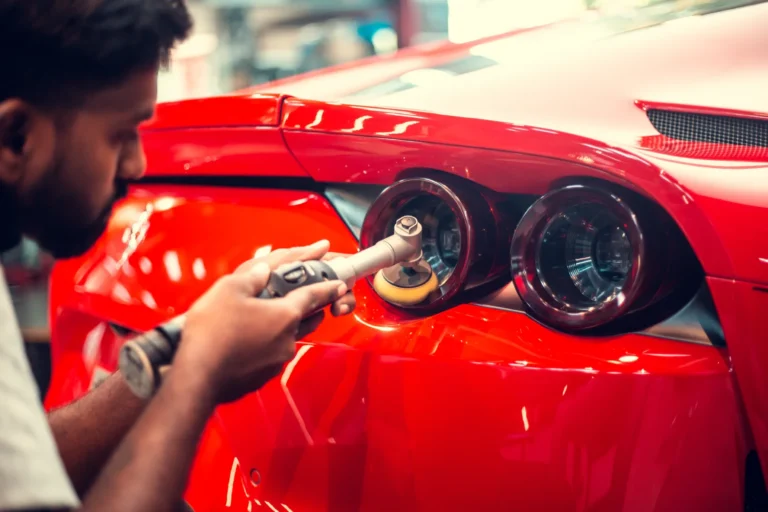
Business and Operational Training You Should Not Ignore
Here is something many first-time entrepreneurs overlook: knowing how to detail a car does not automatically mean you know how to run a detailing business.
A detailing studio needs trained technicians, standard operating procedures, customer management, inventory control and financial planning. Without these, even technically good work can become difficult to scale.
1. Customer Consultation and Service Recommendations
You should learn how to inspect a customer’s vehicle, understand their expectations and recommend suitable services.
For example, a new car owner may be interested in PPF, while someone with an older vehicle may benefit more from paint correction and ceramic coating.
The recommendation should depend on the vehicle’s condition, usage, budget and expectations. Training in customer communication also helps you explain service limitations, pricing and maintenance requirements without making unrealistic promises.
2. Studio Operations and Workflow Management
A detailing studio must operate systematically.
You should understand vehicle intake, inspection reports, job cards, service scheduling, technician allocation, quality checks and vehicle handover.
Training should also cover studio hygiene, equipment maintenance, chemical storage and safety practices.
These processes become especially important when multiple vehicles are being handled simultaneously. Without a defined workflow, delays, inconsistent results and customer complaints can quickly become routine.
3. Financial Planning and Pricing
Before opening your studio, you should understand the costs involved in running it.
These include rent, interiors, equipment, chemicals, salaries, electricity, marketing and other recurring expenses. You should also learn how to calculate service costs, determine margins and price packages competitively.
A common mistake among new entrepreneurs is to price services only by looking at competitors. Your pricing must account for the quality of products, technician expertise, time involved and operating expenses.
4. Sales and Marketing
Even a well-equipped studio needs a steady flow of customers.
You should learn the basics of local marketing, social media communication, lead management, customer follow-ups and online reputation management.
Before-and-after photographs, educational content, customer testimonials and service demonstrations can help build credibility. You should also understand how to convert enquiries into bookings without resorting to aggressive selling.
How to Choose the Right Car Detailing Training Programme
Not all training programmes offer the same depth of learning. Some focus mainly on product demonstrations, while others provide structured technical and business education.
Before enrolling, consider the following factors:
- Practical, hands-on training: Choose a programme where you work on actual vehicles rather than simply watching demonstrations. Detailing is a practical skill, and repeated application is necessary to develop confidence.
- Coverage of multiple services: Look for training that covers washing, paint correction, ceramic coating, PPF installation and interior detailing. Even if you plan to specialise later, a broader understanding will help you make better business decisions.
- Experienced trainers: Check the trainers’ industry experience, technical knowledge and ability to explain why a particular process is followed.
- Exposure to different vehicles: Training on different paint finishes, body styles and interior materials helps prepare you for real-world situations.
- Business and operational guidance: A programme that also explains studio setup, equipment requirements, pricing and customer management can be more useful than one focused exclusively on application techniques.
- Post-training support: Find out whether you can seek guidance when you encounter technical challenges after completing the programme.
Do not choose a course simply because it is inexpensive or promises to make you an expert in a few days. The quality of training and the amount of practical exposure matter far more.
Can an Automobile Franchise Help You Learn the Business?
Starting independently gives you complete control over your business. However, it also means figuring out several things yourself, from selecting products and equipment to developing service procedures and training employees.
This is where an automobile franchise can offer an alternative.
A well-established franchise model may provide access to structured training, technical guidance, standardised processes, brand support and an established service portfolio. Instead of building every aspect of the business from scratch, you get a framework to work with.
For someone entering the detailing industry without prior experience, this can make the initial learning process more organised.
However, not every franchise offers the same level of support. Before investing, understand exactly what the franchisor provides. Ask about technical training, employee development, studio setup, product supply, marketing assistance and ongoing operational support.
Also remember that a franchise does not eliminate the need for your involvement. You must still understand your customers, manage your team, monitor service quality and work towards building a profitable operation.
The right car detailing franchise should provide a combination of training, systems and business support rather than simply allowing you to use an established brand name.
Why Start Your Car Detailing Business as a CarzSpa Franchise?
Starting a detailing studio under an established brand can help you access the technical knowledge and operational experience required to enter the industry.
With nearly two decades of experience in professional car detailing, CarzSpa offers aspiring entrepreneurs a franchise model backed by an established network and detailing expertise.
Some reasons to consider the opportunity include:
- Structured technical training: Learn professional detailing techniques, service processes and application methods through training designed to prepare you for real studio operations.
- Exposure to multiple services: Understand services such as paint correction, ceramic coating, PPF installation and interior detailing, allowing you to cater to different customer requirements.
- Established service standards: Work with defined processes and quality standards instead of developing every procedure independently.
- A recognised brand: Build your business with the support of an established detailing brand rather than starting with an unfamiliar name in the market.
- Exclusive Aegis PPF installation: CarzSpa studios offer exclusive installation of Aegis PPF, giving franchise partners access to a dedicated paint protection film portfolio.
- Product and technical support: Benefit from the brand’s experience in professional detailing products, application methods and service execution.
- A pan-India network: Be part of a network of 150+ detailing studios across India, with exposure to a larger professional ecosystem.
- Ongoing learning: Continue developing your knowledge as products, techniques, customer expectations and detailing technologies evolve.
For entrepreneurs who want to enter the industry with a structured business model, a CarzSpa franchise offers an opportunity to learn the trade while building a professional detailing studio.
You can explore the CarzSpa franchise opportunity to understand the model and its requirements.
Conclusion
Starting a car detailing business requires more than an investment in equipment, products and studio interiors. You need technical skills, practical experience and an understanding of how to manage customers, employees and everyday operations. While you can develop these capabilities independently, structured professional training can make the process considerably easier. If you are new to the industry, consider learning from experienced professionals or exploring an established car detailing franchise. The objective should be to build a business that delivers consistent workmanship, earns customer trust and can grow sustainably. Get the right training before you invest, and you will be better prepared for the challenges of running a detailing studio.
Frequently Asked Questions
1. Do I need an automobile degree to start a car detailing business?
No. An automobile engineering degree is not mandatory. However, professional training and practical experience in detailing techniques are important.
2. How long does car detailing training take?
It depends on the programme and services covered. Basic training may take a few days, while developing proficiency in specialised services requires continued practice.
3. Can I start a car detailing business without experience?
Yes. You can enter the industry without prior experience, provided you undergo proper training and understand the technical and operational requirements.
4. What skills are required to install PPF?
PPF installation requires surface preparation, film handling, cutting, fitting, edge wrapping and post-installation inspection skills.
5. Is joining a car detailing franchise better than starting independently?
A franchise can offer structured training, established processes and brand support. However, the right choice depends on your investment capacity, business goals and preferred level of independence.
Share: