Ceramic coatings have come a long way from being premium paint protection products to becoming an important part of professional car care. But as technology advances, newer formulations are changing what customers can expect from ceramic coating for cars. One such development is borophene, a material attracting attention for its distinctive properties and potential applications in protective coatings.
Often discussed alongside graphene, borophene is being explored as a way to improve the performance of ceramic coating formulations. But does a borophene ceramic coating actually offer more advanced protection or is it simply another material being used to market premium products? Let’s understand what borophene is, how it works and what it could mean for your car’s paint.
Table of contents
What Is Borophene Ceramic Coating?
To understand borophene ceramic coating, it helps to first understand the material behind it.
Borophene is a two-dimensional form of boron. In simple terms, it consists of boron atoms arranged in an extremely thin, sheet-like structure. It has attracted scientific interest because of its unusual physical, mechanical and electronic properties.
In automotive detailing, borophene is being explored as an advanced material for ceramic coating formulations. The idea is to combine its material properties with the protective characteristics of a coating to improve surface performance.
Traditional ceramic coatings generally rely on silicon-based chemistry to create a protective layer over automotive paint. Advanced formulations may incorporate additional materials, including graphene or borophene, to modify certain characteristics of the coating.
However, it is important to understand that the presence of borophene alone does not determine how well a coating performs. The complete formulation, application process and quality of the product matter just as much.
How Is Borophene Different from Graphene?
Graphene has been one of the most discussed materials in advanced ceramic coating formulations. It is a two-dimensional material made of carbon atoms arranged in a hexagonal structure.
Borophene, on the other hand, is made from boron atoms. Although both materials have an extremely thin, sheet-like structure, their atomic arrangements and material properties are different.
One of the reasons borophene is attracting attention is its potential for high mechanical strength and thermal stability. These properties make it an interesting material to explore in advanced protective formulations.
Some coating manufacturers are now combining borophene with graphene rather than treating them as competing technologies. The objective is to bring together the properties of both materials in a single formulation.
For instance, CarzSpa’s Apex ceramic coating combines borophene and graphene. This approach reflects the industry’s movement towards exploring material combinations rather than relying on a single ingredient to deliver every performance benefit.
It is worth remembering that laboratory properties do not automatically translate into identical performance on a car. The finished coating must be evaluated as a complete product.
What Protection Does Borophene Coating Offer?
The purpose of any ceramic coating is to protect the vehicle’s paint while making it easier to maintain. A borophene coating aims to build on these familiar benefits through an advanced material formulation.
Here are some of the areas where a well-developed borophene-based ceramic coating can offer value.
1. Improved Surface Hardness
Surface hardness is an important consideration when choosing a ceramic coating. A properly formulated coating creates a protective layer over the clear coat, helping reduce the likelihood of minor surface marks during everyday cleaning and maintenance.
Borophene’s material properties make it an interesting addition to advanced coating formulations. However, actual scratch resistance depends on the complete product and should not be judged by the ingredient name alone.
A ceramic coating cannot make automotive paint scratch-proof or prevent damage from deep scratches.
2. Better Thermal Stability
Vehicles are regularly exposed to heat from direct sunlight, hot weather and engine operation. In countries like India, where cars can remain parked outdoors for extended periods, thermal stability is an important consideration.
Borophene is being explored for its thermal properties and its use in advanced formulations may help improve certain heat-related characteristics.
For context, some product formulations highlight a higher temperature resistance for borophene-based technology than conventional graphene-based formulations. Such figures should always be understood in the context of the specific material or product test, rather than as a guarantee that the entire coating or car paint can withstand the same temperature under every condition.
3. Hydrophobic Behaviour
One of the most noticeable benefits of ceramic coating is its water-repellent behaviour.
A hydrophobic surface encourages water to bead and roll off instead of spreading across the paint. This can help reduce water retention and make routine washing easier.
Borophene-based formulations can be developed to deliver this familiar ceramic coating benefit. However, hydrophobic performance depends on the complete coating chemistry, application and maintenance.
4. Gloss and Surface Appearance
A professionally applied ceramic coating can enhance the visual depth and gloss of automotive paint.
The coating forms a thin layer over the prepared surface, helping create a smoother-looking finish. When applied after suitable paint correction, it can make the vehicle appear cleaner and more reflective.
It is important to remember that ceramic coating does not remove existing scratches, swirl marks or oxidation. Surface correction must be completed before application if these defects need to be addressed.
Is Borophene Ceramic Coating Better Than Traditional Ceramic Coating?
The short answer is that it can offer a more advanced formulation, but the material alone does not make it automatically better.
Traditional ceramic coatings have already established their place in automotive paint protection. They offer benefits such as gloss enhancement, hydrophobic behaviour and resistance to certain environmental contaminants.
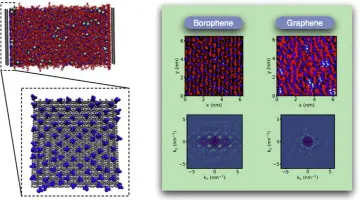
A borophene ceramic coating introduces an additional material into this category, with the potential to improve selected performance characteristics. Formulations combining borophene and graphene are particularly interesting because they explore the properties of both materials.
But customers should look beyond the technology being advertised.
Consider the coating’s actual specifications, expected life, application requirements, aftercare instructions and product testing. A well-formulated conventional coating applied correctly may deliver a better result than an advanced coating installed poorly.
The same applies to professional detailing businesses. Introducing a premium coating requires more than adding a new product to the service menu. Technicians must understand surface preparation, application conditions, curing and customer aftercare.
What Should You Consider Before Choosing a Borophene Coating?
Before investing in a premium coating, ask a few practical questions.
- Understand the formulation: Find out whether the product uses borophene alone or combines it with other materials such as graphene.
- Check the performance claims: Look for clear product specifications and understand the conditions under which claimed results were measured.
- Consider its expected life: A coating’s life expectancy is not necessarily the same as its warranty period. Understand both before making a decision.
- Evaluate the installation process: Surface preparation, paint correction, application and curing can significantly influence the final result.
- Understand its limitations: Ceramic coatings do not prevent stone chips or make paint completely scratch-proof. If impact protection is the priority, consider paint protection film (PPF).
- Choose an experienced installer: Even a premium formulation needs proper application to deliver consistent results.
Ultimately, the best coating is not necessarily the one with the most advanced-sounding ingredient. It is the one that offers a suitable combination of formulation, performance, application quality and aftercare.
Why Choose Apex at CarzSpa?
CarzSpa’s Apex is a premium ceramic coating formulation that combines borophene and graphene. It brings together two advanced materials in a single formulation, offering an option for car owners looking beyond conventional ceramic coatings.
Here are a few reasons to consider Apex:
- Borophene and graphene combination: Apex brings together both materials instead of relying on a single advanced ingredient.
- Advanced coating formulation: Its material combination is designed to explore the performance benefits associated with borophene and graphene.
- Professional application: CarzSpa’s detailing expertise helps ensure that paint inspection, surface preparation and coating application receive the attention they require.
- A complete detailing approach: The coating can be applied after appropriate paint correction, helping achieve a cleaner and more refined finish.
- Expert guidance: CarzSpa professionals can assess the vehicle’s condition and help customers understand whether Apex is suitable for their requirements.
For customers considering advanced ceramic coating for cars, Apex offers an opportunity to explore a formulation that combines two materials, attracting considerable attention in the surface protection industry.
Conclusion
Borophene is an interesting development in the evolution of ceramic coating technology. Its material properties have encouraged manufacturers to explore new formulations, including combinations with graphene. However, the real value of a borophene ceramic coating depends on more than the ingredient itself. Formulation quality, product performance, application expertise and maintenance all contribute to the final result.
If you are considering an advanced coating for your vehicle, look beyond marketing claims and understand what the product actually offers. And if you want to explore a borophene and graphene combination, CarzSpa’s Apex is worth considering.
Frequently Asked Questions
1. What is borophene ceramic coating?
It is a ceramic coating formulation that incorporates borophene, a two-dimensional form of boron, to explore additional performance benefits.
2. Is borophene better than graphene?
They have different material properties. Neither is automatically better in every application. Their performance depends on the formulation and intended use.
3. Does borophene coating prevent scratches?
It can help resist certain minor surface marks, but it cannot prevent deep scratches, stone chips or all forms of paint damage.
4. Does borophene ceramic coating improve gloss?
A professionally applied coating can enhance gloss and surface appearance. Paint correction may be needed beforehand to address existing defects.
5. Is Apex a borophene ceramic coating?
Apex at CarzSpa combines borophene and graphene in its ceramic coating formulation.