The race to build the fastest car in the world has always been about more than simply adding horsepower. Aerodynamics, tyres, weight, cooling, stability and even the shape of the smallest body panel can become critical when a car is travelling at more than 400 km/h.
Electric hypercars are challenging traditional petrol-powered machines, while manufacturers such as Bugatti, Koenigsegg and Hennessey continue to push internal-combustion technology to extraordinary limits.
So, we’ve looked at the top 10 fastest cars in the world using published top-speed figures, while clearly distinguishing between independently recorded speeds, manufacturer claims and projected figures.
Buckle up. This gets seriously fast.
Table of contents
What Makes a Car One of the Fastest in the World?
Once a car starts approaching 400, 450 or even 500 km/h, everything changes. Aerodynamic drag increases dramatically with speed, tyres experience enormous loads and the smallest stability issue can become a serious problem.
That’s why the world’s fastest hypercars combine several engineering disciplines:
- Power: Massive horsepower is necessary to overcome aerodynamic resistance.
- Aerodynamics: Low drag is essential for achieving extreme top speeds.
- Weight: Lower weight improves acceleration and power-to-weight ratio.
- Tyres: Specially engineered tyres need to withstand enormous rotational forces.
- Stability: A car travelling at 450+ km/h needs predictable aerodynamic behaviour.
- Cooling: Engines, batteries, transmissions and brakes generate huge amounts of heat.
- Testing: High-speed runs need enormous stretches of controlled track and sophisticated data acquisition.
So when we talk about the fastest cars in 2026, the number alone doesn’t tell the whole story.
Top 10 Fastest Cars in the World at a Glance
| Rank | Car | Top Speed | Status |
|---|---|---|---|
| 1 | Koenigsegg Jesko Absolut | ~531 km/h* | Projected |
| 2 | Hennessey Venom F5 | 500+ km/h* | Target/claimed |
| 3 | YANGWANG U9 Xtreme | 496.22 km/h | Recorded |
| 4 | Bugatti Chiron Super Sport 300+ | 490.48 km/h | Recorded |
| 5 | SSC Tuatara | 474.8 km/h | Recorded |
| 6 | Koenigsegg Agera RS | 447.19 km/h | Recorded average |
| 7 | Bugatti Tourbillon | 445 km/h | Manufacturer claim |
| 8 | Hennessey Venom GT | 435.31 km/h | Recorded |
| 9 | Rimac Nevera R | 430 km/h | Manufacturer figure |
| 10 | Bugatti W16 Mistral | 420+ km/h | Manufacturer claim |
*Projected or targeted figures are clearly identified and should not be confused with independently verified production-car records.
1. Koenigsegg Jesko Absolut
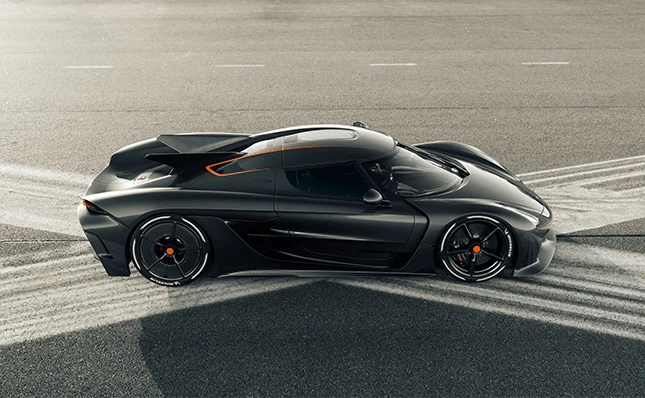
Top Speed: Approximately 531 km/h projected
Power: 1,600 hp
Engine: 5.0-litre twin-turbo V8
Best For: Chasing the ultimate theoretical top speed
If there is one car that makes the phrase “fastest car in the world” particularly complicated, it’s the Koenigsegg Jesko Absolut. This Swedish hypercar was designed almost entirely around one objective: maximum speed.
Koenigsegg says the Jesko Absolut has a drag coefficient of just 0.278 Cd, a frontal area of 1.88 square metres and 1,600 hp. The company says its simulations indicate the car is capable of extraordinary speeds beyond those of any fully homologated car before it.
The oft-repeated 531 km/h (330 mph) figure comes from theoretical calculations rather than a completed official record run.
Why it’s so special
- 1,600 hp from a twin-turbo V8
- Extremely low aerodynamic drag
- Designed specifically for top-speed performance
- Lightweight carbon-fibre construction
- Advanced nine-speed Light Speed Transmission
- One of the most ambitious hypercar projects ever created
Performance: Approximately 531 km/h projected.
2. Hennessey Venom F5
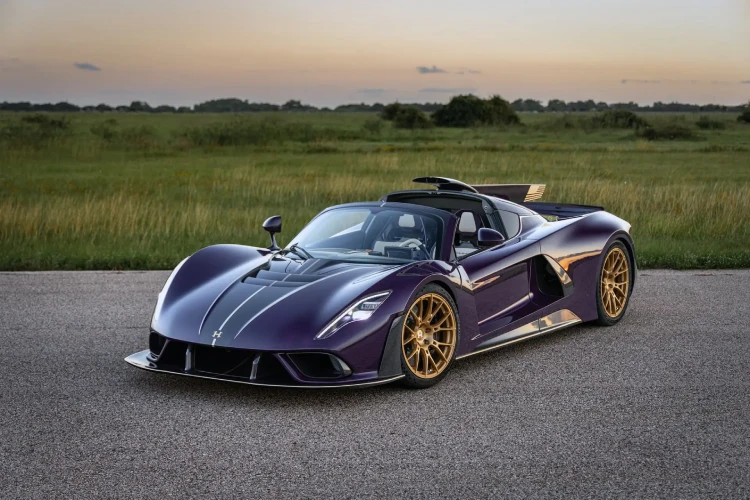
Top Speed: 500+ km/h targeted
Power: 1,817 hp
Engine: 6.6-litre twin-turbo V8
Best For: Extreme American hypercar performance
America has never been particularly shy about horsepower. The Hennessey Venom F5 takes that philosophy to another planet.
Its 6.6-litre twin-turbo V8, known as Fury, produces a claimed 1,817 hp and 1,617 Nm of torque. Hennessey has engineered the car with a target of exceeding 500 km/h (311 mph) in a validated two-way speed run.
The Venom F5 has demonstrated enormous performance, but its 500+ km/h figure is not yet an independently verified production-car record. Hennessey itself describes the two-way 500 km/h run as the goal.
Why it’s so special
- 1,817 hp twin-turbo V8
- Carbon-fibre chassis
- 500+ km/h target
- 0–300 km/h in a claimed 8.4 seconds
- Extremely low weight
- Developed specifically for extreme performance
Performance: 500+ km/h targeted.
3. YANGWANG U9 Xtreme
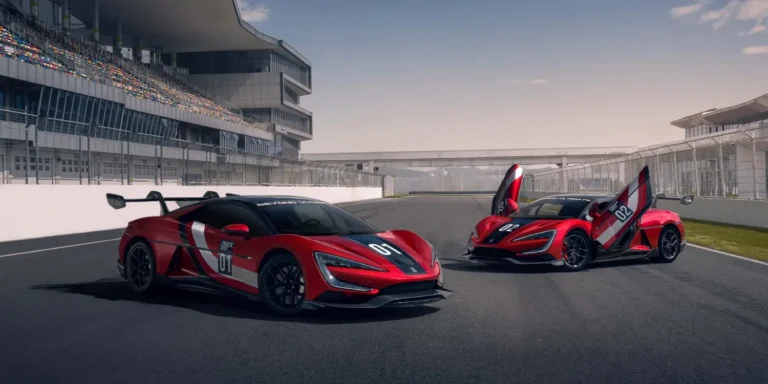
Top Speed: 496.22 km/h
Power: Approximately 3,000 hp
Powertrain: Quad-motor electric
Best For: The fastest verified production-car run
If someone asked you to name the company currently sitting at the top of the production-car speed charts, you might take a common name; but you’d be wrong.
The YANGWANG U9 Xtreme, from BYD’s luxury performance brand, reached 496.22 km/h at the ATP Papenburg test track in Germany on September 14, 2025. BYD says this made it the world’s fastest production car.
That’s faster than the famous 490.484 km/h run of the Bugatti Chiron Super Sport 300+. And yes, it’s electric. The U9 Xtreme uses a highly developed quad-motor setup and takes the already extreme U9 platform to another level. It also subsequently set an electric super sports car lap record at the Nürburgring, completing the Nordschleife in 6:59.157.
Why it’s so special
- 496.22 km/h recorded top speed
- Quad-motor electric powertrain
- Around 3,000 hp
- Carbon-fibre construction
- Active suspension technology
- World’s fastest production-car speed run according to BYD
Performance: 496.22 km/h recorded.
4. Bugatti Chiron Super Sport 300+
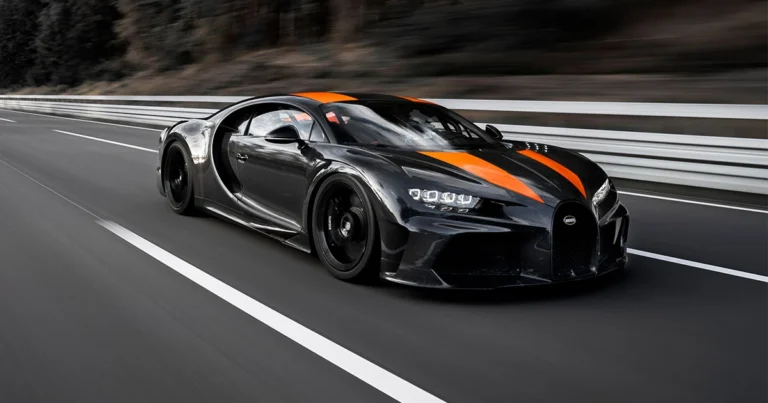
Top Speed: 490.484 km/h
Power: 1,600 PS
Engine: 8.0-litre quad-turbo W16
Best For: The iconic 300-mph milestone
For years, the phrase “fastest car in the world” almost automatically meant Bugatti. And the Chiron Super Sport 300+ is the car responsible for one of the biggest milestones in modern automotive history.
In 2019, a Chiron Super Sport 300+ achieved 304.773 mph, or 490.484 km/h, becoming the first production-based car to break through the 300-mph barrier.
The car produces 1,600 PS from its legendary 8.0-litre W16 engine, while its extended longtail body was specifically developed to improve high-speed aerodynamics. Bugatti eventually produced just 30 examples of the Chiron Super Sport 300+.
Why it’s so special
- First production car beyond 300 mph
- 1,600 PS W16
- 490.484 km/h recorded
- Aerodynamically optimised longtail body
- Limited to 30 units
- One of the most famous hypercars ever built
Performance: 490.484 km/h recorded.
5. SSC Tuatara
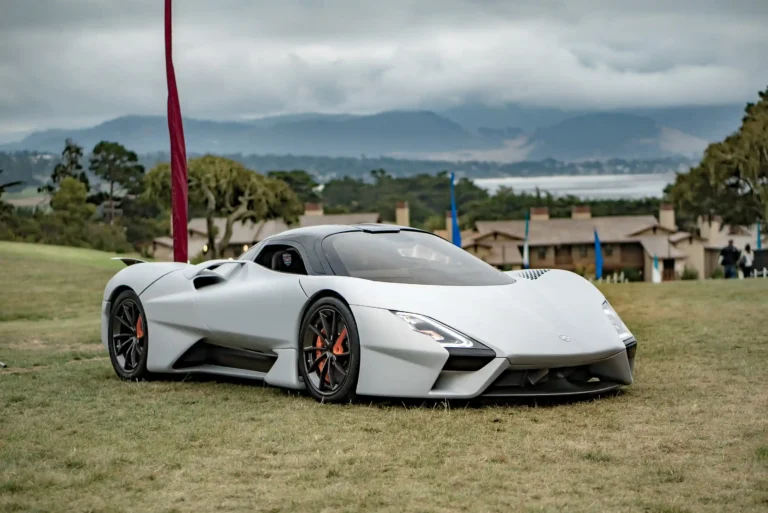
Top Speed: 474.8 km/h
Power: Up to 1,750 hp
Engine: Twin-turbo V8
Best For: American high-speed engineering
In May 2022, SSC Tuatara recorded a top speed of 295 mph (474.8 km/h) at Kennedy Space Centre in Florida. The run used dual VBOX GNSS systems and an additional Life Racing GPS unit for data acquisition. That puts the Tuatara firmly among the fastest production cars ever tested.
The current SSC configuration is rated at up to 1,750 hp, while SSC continues to offer a road-legal high-speed configuration.
Why it’s so special
- 474.8 km/h recorded
- Up to 1,750 hp
- Twin-turbo V8
- Extremely low drag coefficient
- Road-legal configuration
- American alternative to Europe’s hypercar giants
Performance: 474.8 km/h recorded.
6. Koenigsegg Agera RS
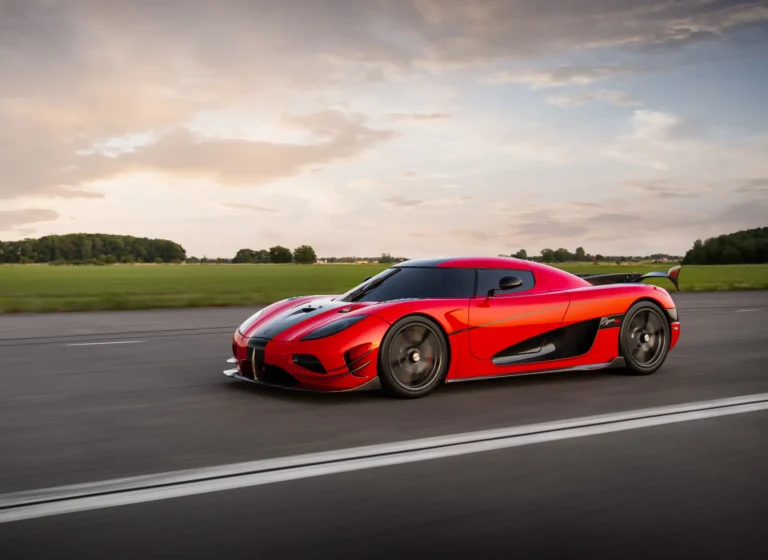
Top Speed: 447.19 km/h average
Power: Around 1,360 hp in record specification
Engine: 5.0-litre twin-turbo V8
Best For: Proven high-speed performance
Before the current generation of hypercars started flirting with 500 km/h, the Koenigsegg Agera RS was the car to beat.
In 2017, the Agera RS recorded an 1verage top speed of 447.19 km/h over runs in both directions in Nevada. Koenigsegg’s official footage records a peak of 457.94 km/h during the runs. That two-way average is particularly significant because it helps reduce the effect of wind and gradient.
The Agera RS therefore wasn’t simply a theoretical speed machine. It actually went out and proved its capabilities.
Why it’s so special
- 447.19 km/h two-way average
- 457.94 km/h peak during the run
- Twin-turbo V8
- Lightweight carbon-fibre construction
- Multiple production-car speed records
- One of Koenigsegg’s most important models
Performance: 447.19 km/h average recorded speed.
7. Bugatti Tourbillon
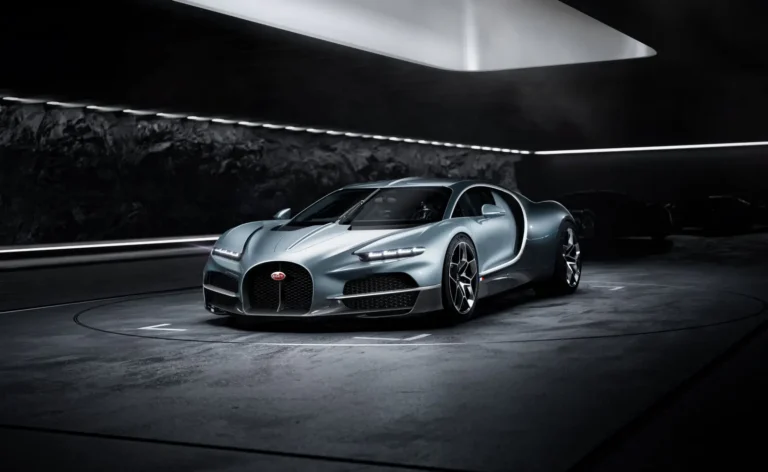
Top Speed: 445 km/h
Power: 1,800 PS
Engine: 8.3-litre naturally aspirated V16 + electric motors
Best For: The future of Bugatti performance
The Tourbillon is Bugatti Chiron’s successor and set some serious expectations to meet. Instead of continuing with the quad-turbo W16, Bugatti created an entirely new hybrid powertrain centred around an 8.3-litre naturally aspirated V16 and electric motors.
The result is a claimed 1,800 PS and a top speed of 445 km/h. Bugatti has specifically highlighted the aerodynamic challenge of creating a car capable of travelling at 445 km/h while maintaining sufficient downforce and stability.
Why it’s so special
- Naturally aspirated V16
- Hybrid powertrain
- 1,800 PS
- 445 km/h claimed top speed
- New-generation Bugatti design
- Combines extreme performance with luxury
Performance: 445 km/h claimed.
8. Hennessey Venom GT
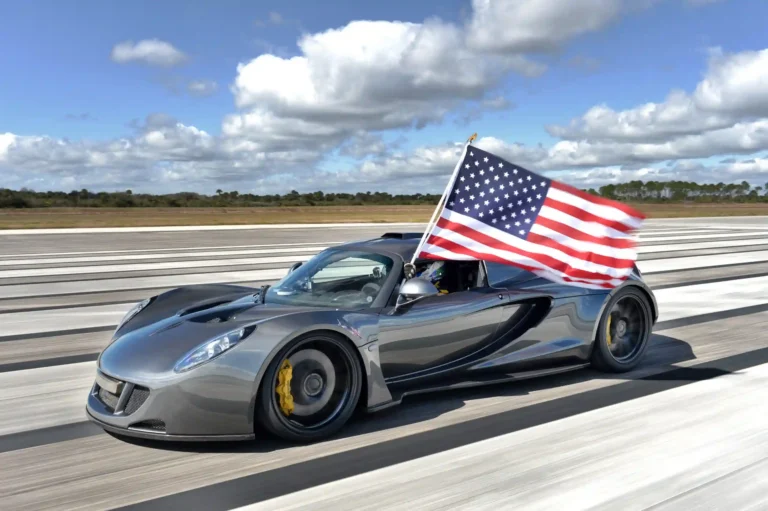
Top Speed: 435.31 km/h
Power: 1,244 bhp
Engine: 7.0-litre twin-turbo V8
Best For: Lightweight, old-school hypercar madness
Before the Venom F5, there was the Venom GT. And it was already absolutely ridiculous.
In 2014, the Hennessey Venom GT reached 270.49 mph (435.31 km/h) at the Kennedy Space Centre’s Shuttle Landing Facility. Hennessey says the speed was independently documented using Racelogic VBOX equipment. Based on a lightweight Lotus-derived chassis but equipped with a monstrous American V8, the Venom GT took a very different approach to performance.
Less weight. More power. A lot more courage.
Why it’s so special
- 435.31 km/h recorded
- 7.0-litre twin-turbo V8
- 1,244 bhp
- Extremely lightweight construction
- Carbon-fibre bodywork
- Only a tiny number were produced
Performance: 435.31 km/h recorded.
9. Rimac Nevera R
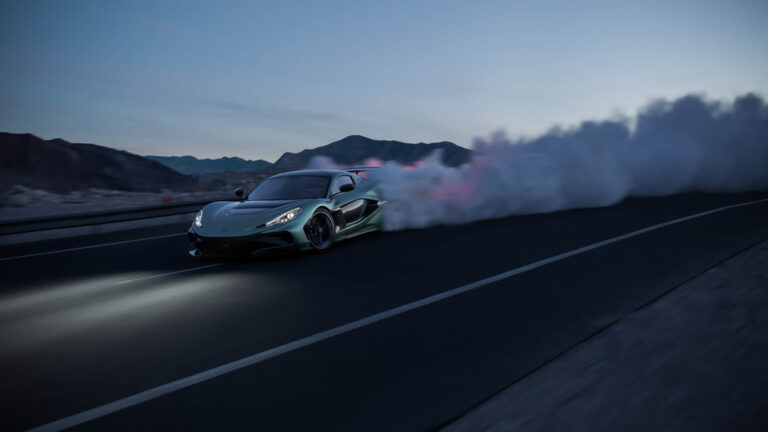
Top Speed: 430 km/h
Power: 2,107 hp
Powertrain: Four electric motors
Best For: Extreme electric acceleration and speed
The standard Rimac Nevera was already one of the fastest-accelerating cars ever built. The Rimac Nevera R takes things even further.
Rimac lists the Nevera R with 2,107 hp, 2,340 Nm of torque and a top speed of 430 km/h. Its claimed 0–100 km/h time is just 1.72 seconds, while 0–300 km/h takes 7.89 seconds. And unlike a traditional hypercar, it achieves all of this with four electric motors, independently driving each wheel.
That allows Rimac’s torque-vectoring system to constantly manage power across the four wheels.
Why it’s so special
- 2,107 hp
- Four independent electric motors
- 430 km/h top speed
- 0–100 km/h in 1.72 seconds
- 0–300 km/h in 7.89 seconds
- Carbon-fibre monocoque
Performance: 430 km/h manufacturer figure.
10. Bugatti W16 Mistral
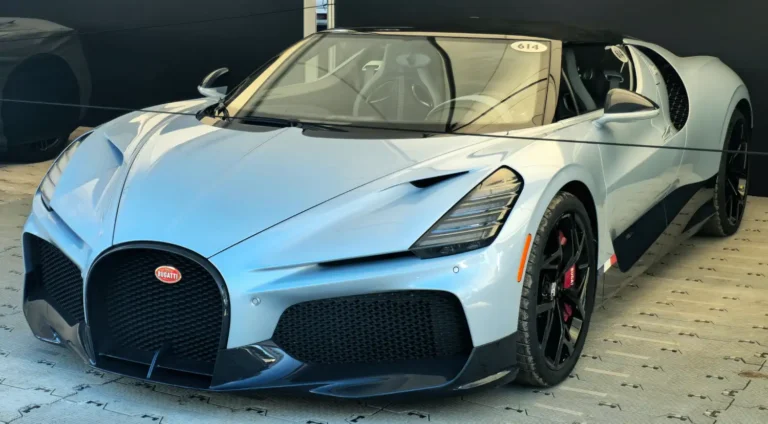
Top Speed: 420 km/h
Power: 1,600 PS
Engine: 8.0-litre quad-turbo W16
Best For: Open-top hypercar performance
The Bugatti W16 Mistral is ultimate open-top roadster and uses the brand’s iconic 8.0-litre W16 engine producing 1,600 PS. Bugatti says it is capable of 420 km/h in Top Speed mode.
Getting an open-top car to these speeds is an enormous aerodynamic challenge. Bugatti’s engineers had to carefully balance airflow, cooling, stability and occupant protection.
Why it’s so special
- 1,600 PS W16
- Open-top hypercar
- 420 km/h capability
- Final road-going appearance of the W16
- Extremely limited production
- Combines extreme speed with grand-touring luxury
Performance: 420 km/h claimed capability.
Why Choose CarzSpa for High-Performance Cars?
When you own a hypercar or a high-performance luxury car, keeping it looking as good as it drives requires specialised attention. After all, a car capable of 400+ km/h deserves more than a quick wash!
- Protect the paint with PPF: PPF coating can help shield vulnerable areas from stone chips, road debris and minor scratches, especially useful on low-slung performance cars.
- Preserve the factory finish: A quality paint protection film can provide a physical protective layer while helping maintain the original paintwork underneath.
- Enhance gloss with ceramic coating: A professional car ceramic coating can provide hydrophobic protection, making the surface easier to maintain while enhancing the finish.
- Professional detailing expertise: High-performance and luxury cars require careful handling of their paint, carbon-fibre components, wheels and interiors. Professional car detailing services help maintain these specialised finishes.
- Complete paint protection: From car paint protection to detailing, CarzSpa offers solutions designed around premium and performance vehicles.
- Specialised luxury-car care: When your car represents years of engineering and craftsmanship, it deserves technicians who understand that it isn’t just another car in the workshop.
Because when your car can cross 400 km/h, “good enough” shouldn’t be the standard for how you maintain it.
Conclusion
The contest for the title of fastest car in the world has entered a fascinating new era.
The numbers keep getting bigger. 400 km/h was once unimaginable for a road car. Then 450. Then 500. What comes next? We’ll have to wait and see.
One thing is certain: whether your car does 100 km/h or 400, its paint deserves protection. Explore CarzSpa’s paint protection film and detailing services, and give your car the care it’s built for. Just don’t expect to test it on the Mumbai–Pune Expressway.
Frequently Asked Questions
1. What is the fastest car in the world in 2026?
The YANGWANG U9 Xtreme currently holds the production-car top-speed record based on its recorded 496.22 km/h run at ATP Papenburg in Germany.
2. Which is the fastest petrol car in the world?
The Bugatti Chiron Super Sport 300+ recorded 490.484 km/h, making it the fastest production-based petrol-powered car among the verified speeds discussed here.
3. Is the Koenigsegg Jesko Absolut the fastest car ever?
The Jesko Absolut is projected to reach around 531 km/h according to calculations and simulations, but that figure has not been established through an equivalent official top-speed run.
4. What is the fastest electric car in the world?
The YANGWANG U9 Xtreme has recorded 496.22 km/h, making it the fastest production electric car based on its Papenburg run.
5. How fast is the Bugatti Chiron Super Sport 300+?
The Chiron Super Sport 300+ reached 490.484 km/h (304.773 mph) during its record-setting run in 2019. Bugatti produced 30 examples of the special edition.