During the summer, your car’s window glass starts acting like a magnifying glass, trapping solar energy inside a metal box. Most Indian car owners assume that “blacker” windows mean a cooler car. That is the first mistake. Darkness does not equal heat rejection. In fact, cheap dark films often absorb heat and radiate it right back into your face. To truly lower your cabin temperature, you need to understand the science of TSER (Total Solar Energy Rejection).
So, can a car window film actually fix this? And if yes, by how much? That’s exactly what this blog answers. You’ll learn the science behind heat rejection, what the numbers on film spec sheets really mean, how different film types compare and what Indian law says about what you can and cannot install on your car.
By the end, you’ll know exactly what to look for and what to ignore when choosing a sun control film for your car.
Table of contents
- What is Window Film Heat Rejection?
- The Science Behind Window Film Heat Rejection
- Types of Car Window Films and Their Heat Rejection Performance
- How Much Cooler Does it Actually Make Your Car?
- Additional Benefits of Car Window Films Beyond Cooling
- What to Look for When Choosing a Film
- Legal Compliance in India – CMVR, RTO Rules & What ‘Approved’ Really Means
- Car Window Film Cost vs. Value Breakdown
- Why Choose Aegis Sun Protection Films
- Conclusion
- Frequently Asked Questions
What is Window Film Heat Rejection?
Heat rejection, simply put, is the ability of a window film to stop solar energy from entering your car’s cabin. But here’s the part that most people get wrong: heat rejection has nothing to do with how dark a film looks.
A film’s darkness refers to its Visible Light Transmission (VLT), i.e. the percentage of visible light that passes through it. A film with 20% VLT looks dark. A film with 70% VLT looks nearly clear. But VLT alone tells you nothing about how much heat a film blocks.
This is the most common misconception Indian car owners carry when they walk into a detailing studio. They ask for a ‘dark film’, thinking it will keep the car cooler. Sometimes it does, but only because darker films block more visible light, which contributes about 44% of solar heat. The remaining heat comes from infrared radiation (about 53%) and UV (about 3%), neither of which you can see.
The right way to measure a film’s heat-blocking ability is through its Total Solar Energy Rejected (TSER), the metric that accounts for the full solar spectrum.
The Science Behind Window Film Heat Rejection
How Heat Enters Your Car
Solar heat enters your car through three mechanisms:
- Radiation: Direct solar energy passing through the glass, the biggest contributor and the one that window films combat most effectively.
- Conduction: Heat transferring through the glass itself, warming the interior surfaces like the dashboard and seats.
- Convection: Hot air currents that enter when windows are opened or circulate within the cabin once the interior heats up.
Window films primarily target radiation, the largest and most controllable heat source.
What's Actually Heating Your Car?
Sunlight that hits your car is composed of three types of energy:
Infrared (IR) radiation — ~53% of solar heat: Invisible to the eye but felt as heat. This is the primary driver of cabin temperature and the main target of quality window films.
Visible light — ~44% of solar heat: The light you can see. Blocking it (via darker films) does reduce heat, but at the cost of visibility.
Ultraviolet (UV) — ~3% of solar heat: Causes skin damage and fades your car’s interior over time. Almost all quality films block 99% of UV.Type your paragraph here
The Three Key Metrics You Must Know
When evaluating any sun control film for cars, look for these three numbers on the spec sheet:
| Metric | Full Form | What It Means |
|---|---|---|
TSER | Total Solar Energy Rejected | % of all solar energy blocked — the most honest heat-rejection figure. A 50% TSER means half the sun’s total energy is stopped. |
IRR | Infrared Rejection Rate | % of infrared radiation blocked. High IRR (e.g. 90%) sounds impressive but only addresses 53% of total solar heat — don’t rely on this number alone. |
VLT | Visible Light Transmission | % of visible light that passes through. Higher VLT = clearer film. Must be ≥70% for windshields and ≥50% for side windows as per Indian law. |
Expert Tip: Don’t get misled by ‘90% IR rejection’ claims. That only tells you about 53% of the sun’s energy. Always ask for the TSER figure; that’s the number that tells you how much cooler your car will actually feel.
Types of Car Window Films and Their Heat Rejection Performance
Not all car window films or sun protection films are equal. Here’s how the four main types compare across performance, longevity, and suitability for Indian conditions:
Dyed Films
The most basic and affordable category. Dyed films absorb solar energy but re-radiate a good portion of it inward. They fade over time, especially under intense UV exposure, and offer the lowest heat rejection.
Metalised Films
Use tiny metallic particles to reflect solar energy outward. Better heat rejection than dyed films, but the metallic content interferes with GPS, mobile signals and toll transponders, a significant downside for modern connected cars.
Carbon Films
Carbon window films use carbon particles for solid heat rejection with zero signal interference. They have a matte finish that looks premium and lasts significantly longer than dyed options.
Ceramic Films
Ceramic window films use nano-ceramic technology to block maximum infrared heat while maintaining crystal-clear visibility and zero signal interference. They’re the top choice for Indian summers.
Film Type Comparison Table:
| Film Type | TSER | IRR | UV Block | Signal Safe? | Lifespan |
|---|---|---|---|---|---|
Dyed | 15–25% | 20–30% | 70–80% | Yes | 1–3 yrs |
Metalized | 30–45% | 40–60% | 99% | No | 3–5 yrs |
Carbon (K70) | 35% | 40% | 99% | Yes | 5 yrs |
Ceramic (CX70) | 50% | 90% | 99% | Yes | 10 yrs |
Ceramic (IRX) | 55%+ | 99% | 99% | Yes | 10 yrs |
How Much Cooler Does it Actually Make Your Car?
Let’s get to the number everyone is here for. Based on real-world testing and industry data, here’s what you can expect from a good quality car sun control film:
- Cabin air temperature: 5–10°C cooler compared to an untinted car in the same conditions
- Dashboard surface temperature: up to 20–25°C cooler, the single most dramatic improvement
- Steering wheel temperature: 10–15°C cooler, making it comfortable to grip immediately after parking
- Seat surface temperature: 8–12°C cooler, especially relevant for leather seats that trap radiant heat
- AC cool-down time: cabin can reach a comfortable temperature 30–40% faster than an untinted car
On a 42°C afternoon in Ahmedabad or Chennai, an untinted car parked in direct sun can reach 65–70°C inside. A quality ceramic film can bring that down to 55–58°C before the AC even kicks in and cool to comfort in roughly half the time.
Factors That Affect Real-World Results
- Film quality: A ceramic film with 50% TSER will outperform a dyed film with 20% TSER significantly.
- Glass surface area: SUVs and MPVs have more glass and benefit more from full-car coverage, including rear and side windows.
- Parking conditions: Direct sun exposure makes the difference most obvious. Shaded parking reduces the gain but UV protection continues.
Additional Benefits of Car Window Films Beyond Cooling
UV Protection for Interior
Quality sun protection films block over 99% of both UVA and UVB rays. This protects passengers from cumulative UV exposure during daily commutes — a real concern for people who drive during peak daytime hours. It also preserves your car’s interior: leather seats, dashboards and fabric upholstery all degrade significantly faster when exposed to UV radiation. A car with good window films retains its interior quality and resale value, for years longer than one without.
Glare Reduction for Safer Driving
Sunlight directly in your eyes isn’t just uncomfortable — it’s dangerous. Window films reduce glare during sunrise and sunset commutes and cut down headlight glare during night driving. This reduces eye fatigue on long drives and improves reaction times in high-glare situations.
Shatter Resistance & Safety
Premium safety glazing films hold shattered glass together in the event of an accident or impact. Rather than exploding inward, the glass stays bonded to the film, significantly reducing the risk of lacerations for passengers. This is a safety feature that most buyers don’t think about until they need it.
What to Look for When Choosing a Film?
- TSER first: This is your most reliable number. Look for 40%+ for carbon films and 50%+ for ceramic films.
- IRR: Useful, but always read it alongside TSER. A 90% IRR with a 50% TSER is excellent. A 90% IRR claim with no TSER disclosure is a red flag.
- UVR: Any quality film should block 99% of UV rays. Accept nothing less.
- VLT: Must comply with Indian legal limits, i.e. 70% for windshields and rear glass, 50% for side windows.
- Warranty: Ceramic films should carry at least a 10-year warranty. Carbon films typically offer 5 years.
Professional vs. DIY Installation
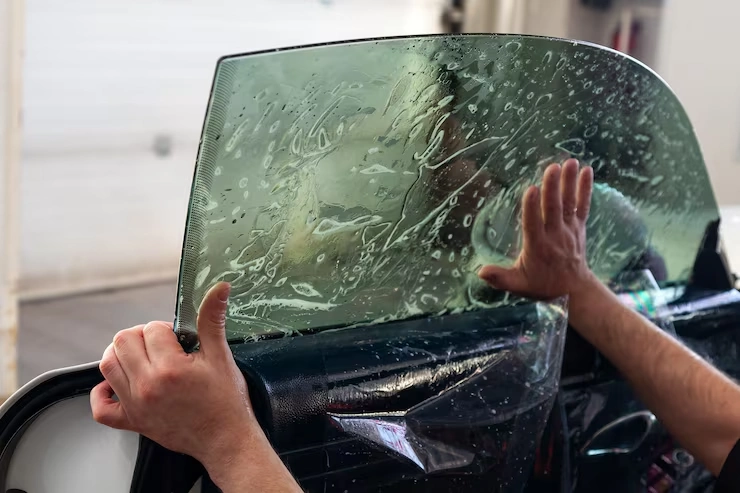
DIY film kits exist, but professional installation is strongly recommended for three reasons: proper fitting avoids bubbles and edge peeling, certified installers ensure VLT compliance and most manufacturer warranties require professional installation to be valid. Poor installation reduces a film’s effectiveness regardless of its specs.
Brand and Certification
Choose legal sun film for cars in India that are BIS-certified under IS: 2553 (Part 2) and compliant with CMVR Rule 100(2). This ensures the film has been tested for Indian road and climate conditions and meets regulatory standards.
Legal Compliance in India - CMVR, RTO Rules & What 'Approved' Really Means
Understanding RTO tint rules is essential before you install anything on your car.
The Legal Framework
• CMVR Rule 100(2) under the Central Motor Vehicles Rules, 1989, governs window film usage in India.
• IS: 2553 (Part 2) – 1992 is the Indian Standard that defines safety glazing requirements for automotive glass.
• The Supreme Court judgment of 2012 banned black films on all vehicle glass, with the intent to prevent crimes and improve road safety.
• A 2024 Kerala High Court judgment (2024:KER:68346) further clarified the rules around safety glazing films.
VLT Limits You Must Follow
| Glass Position | Minimum VLT Required | Notes |
|---|---|---|
Front Windshield | 70% | No dark films. Factory UV-cut glass + compliant film only. |
Rear Windshield | 70% | Same standard as front. |
Side Windows | 50% | Slightly more flexibility for privacy. |
What Does 'RTO-Approved' Actually Mean?
When an installer tells you a film is ‘car window film RTO-approved’, it means the film has been certified to meet the VLT standards above and has received BIS certification under IS: 2553. Always ask your installer for proof of compliance, not just a verbal assurance.
Consequences of Non-Compliance
• Fines ranging from ₹1,000 to ₹5,000 depending on state
• On-the-spot removal of the film during traffic checks
• Repeat offences can result in higher penalties or licence issues
Aegis Sun Protection Films are fully compliant with CMVR Rule 100(2) and IS: 2553 (Part 2) – 1992. Download the Aegis Safety Glazing Film Compliance certificate from CarzSpa to understand exactly what’s covered.
Car Window Film Cost vs. Value Breakdown
Here’s an honest look at what RTO-approved sun control films cost in India, using Aegis film pricing as a benchmark:
| Film | Type | Medium Car (Full) | Large Car (Full) |
|---|---|---|---|
Aegis K70 | Carbon | ₹9,000 | ₹11,000 |
Aegis CX70 | Ceramic | ₹15,750 | ₹19,250 |
Aegis IRX | Premium Ceramic | ₹27,000 | ₹33,000 |
Long-Term Savings
- Fuel efficiency: By reducing the AC load, a quality film can improve fuel efficiency by up to 10%.
- AC system longevity: Less continuous demand on your compressor means fewer breakdowns and longer service intervals.
- Interior preservation: Preventing UV-induced fading and cracking preserves your car’s interior, directly supporting its resale value.
- Warranty: Aegis CX70 and IRX come with a 10-year warranty — meaning this is a one-time investment for the life of most car ownership periods.
Why Choose Aegis Sun Protection Films?
India’s heat is not the same as any other country’s heat. The combination of intense UV, high ambient temperatures, dense traffic and year-round sun exposure demands a film that is specifically engineered for these conditions. Aegis Sun Protection Films are built by the same team behind Aegis Paint Protection Films, India’s best PPF brand and designed specifically for the Indian climate.
What Sets Aegis Safety Glazing Films Apart
- Aegis IRX: 99% IR rejection, 70% VLT, 10-year warranty, the highest-performance film in the Aegis range, ideal for those who want maximum cooling with full legal compliance.
- Aegis CX70: 90% IRR, 50% TSER, 99% UV block, 10-year warranty, the most popular ceramic option balancing performance and price.
- Aegis K70: 40% IRR, 35% TSER, 99% UV block, 5-year warranty, premium carbon film with matte aesthetics and solid everyday performance.
- 100% CMVR compliant: All Aegis films are certified under CMVR Rule 100(2) and IS: 2553 (Part 2) – 1992. No guesswork, no legal risk.
- No signal interference: Non-metallic construction ensures perfect GPS, mobile, and radio reception.
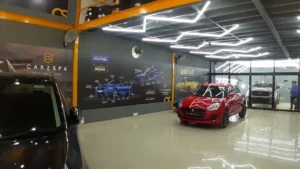
- Expert installation: Available exclusively at CarzSpa Detailing Studios across 150+ locations in India and Nepal.
Conclusion
A quality car window film is not a luxury upgrade in India, it’s a practical investment in daily comfort, safety and long-term value. The right film, properly installed, can bring your cabin temperature down by 5–10°C, protect you and your car’s interior from UV damage, improve AC efficiency and keep you legally compliant on Indian roads.
Remember, Heat rejection is not about darkness, it’s about technology. Always check TSER, not just IRR. Ceramic films offer the best performance and professional installation is essential for performance, compliance and warranty validity; always choose a certified film and installer.
Visit a CarzSpa Detailing Studio near you to get your car windows protected with Aegis Sun Protection Films.
Frequently Asked Questions
1. Why is window tint illegal in India?
Tinted windows are restricted in India primarily to enhance public safety and prevent crime, based on a 2012 Supreme Court ruling. The law prohibits aftermarket tinted films and dark sun-films because they obstruct visibility, preventing law enforcement from identifying vehicle occupants and increasing the risk of accidents, particularly at night.
2. Which brand sun film is best for cars?
The best car sun films for heat rejection and durability are high-end ceramic window films, with Aegis (specifically CX70 and IRX), leading in performance and reputation. These brands provide excellent UV protection (99%), high heat rejection, and better night visibility.
3. Can I install sun film myself?
While a DIY installation is possible, it will not yield the desired or expected results. Always get experts to install sun protection film on your car windows.
4. Is a darker film always better for heat?
No. A clear ceramic window film often rejects significantly more heat (IR) than a cheap, dark dyed film. Heat rejection depends on the film’s technology (TSER), not its darkness (VLT).
5. Does window film help my car’s AC?
Yes. By blocking the solar load, sun protection films allow your AC to reach the desired temperature faster and run more efficiently, which can improve your fuel economy.