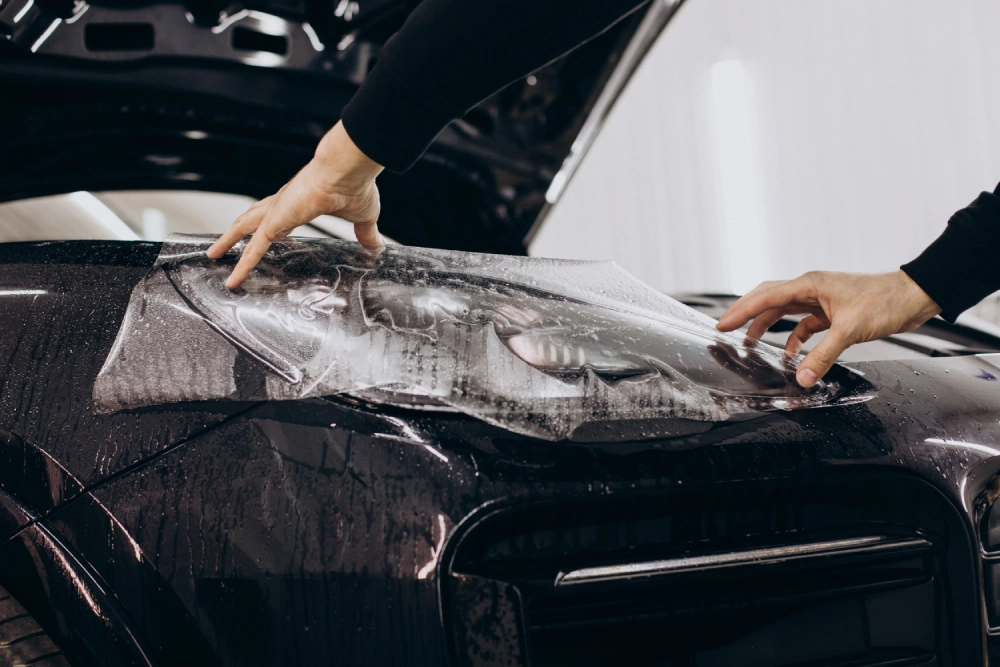
Someone recently asked, “I’m planning to sell my Honda City in two years. A friend says I should get PPF done now. But do Indian buyers even care about PPF car protection when buying used?” It’s a fair question. Split right down the middle, some said it’s a waste of money, while others said it directly helped them get a better price.
So, does PPF increase car resale value? The answer is: it depends. Not in the film. On the buyer, the car, and how the story is told at the time of sale. This blog breaks all of that down: the ROI math, the real-world buyer psychology in India, when PPF coating genuinely adds value, and when it doesn’t. No marketing spin. Just the honest answer.
Table of contents
- Why Original Paint is Considered Valuable in the Used Car Market
- How Paint Protection Film (PPF) Increases Car Resale Value
- How Does the ROI with Car PPF Work Out?
- When Does PPF Help with Resale Value?
- What Happens if the PPF is Poorly Installed?
- Partial vs. Full-Body PPF – How it Affects Resale Value?
- PPF vs. Ceramic Coating for Resale Value
- The Best Ways to Protect Car Paint in India
- Why Choose Aegis Paint Protection Film
- Conclusion
- Frequently Asked Questions
Why Original Paint is Considered Valuable in the Used Car Market
Open any listing on Cars24, Spinny, or OLX. One of the consistently used phrases in high-priced listings isn’t ‘low mileage’ or ‘single owner.’ It’s original paint. In India, original paint is shorthand for one thing: non-accidental.
The moment a professional evaluator spots a repainted panel, even if it was repainted for something as minor as a parking scratch, the mental calculation shifts. Accident? Frame damage? What else is hidden? The negotiation starts from a lower base, and it’s hard to recover from.

This is the fundamental reason why car paint protection isn’t just about aesthetics. In the Indian resale market, a car with untouched, factory-original paint commands a genuine premium over an identical car with even minor repainting. The condition of the exterior doesn’t just affect how the car looks; it determines how the buyer feels about what they can’t see.
This is exactly the gap that paint protection film fills. It takes every stone chip, every monsoon scratch, every parking lot graze and absorbs it into the film instead of the paint. The paint underneath stays factory-original for the life of the film.
How Paint Protection Film (PPF) Increases Car Resale Value
Understanding how paint protection film increases car resale value requires understanding what a used car buyer is actually buying. They’re not buying metal and rubber. They’re buying confidence, confidence that they’re not inheriting someone else’s problems.
The Paint Under the Film is Untouched
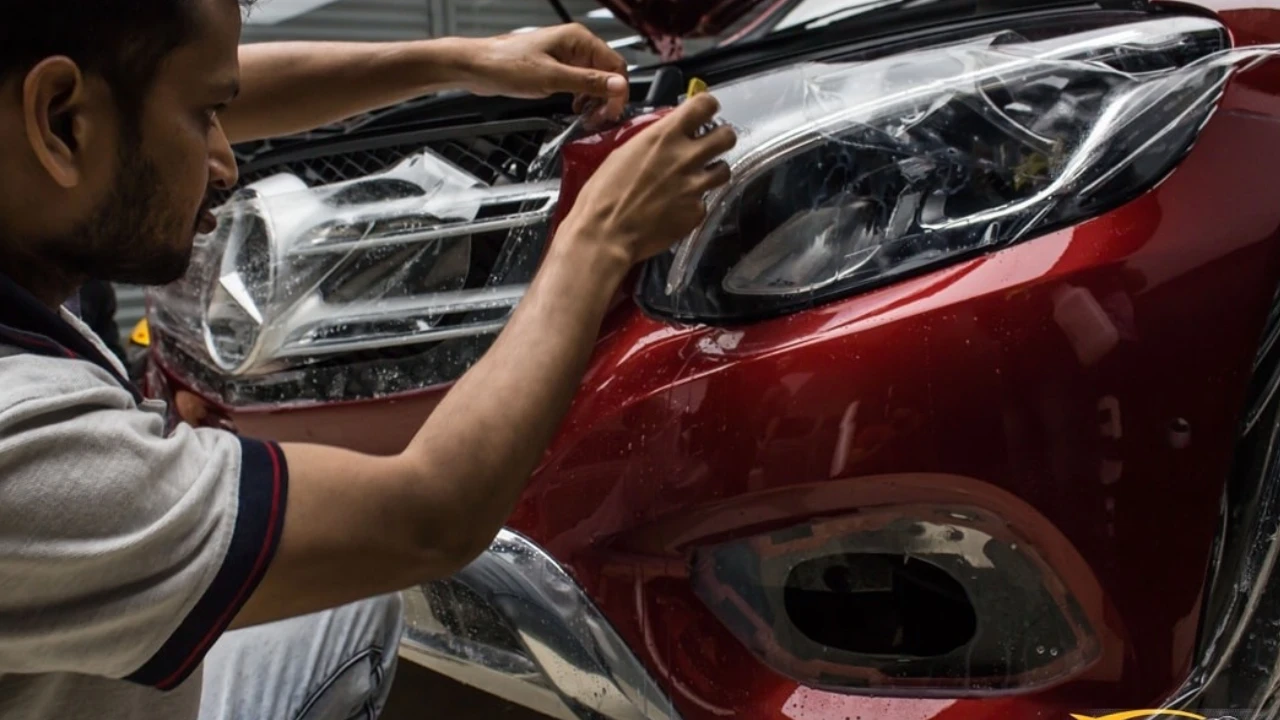
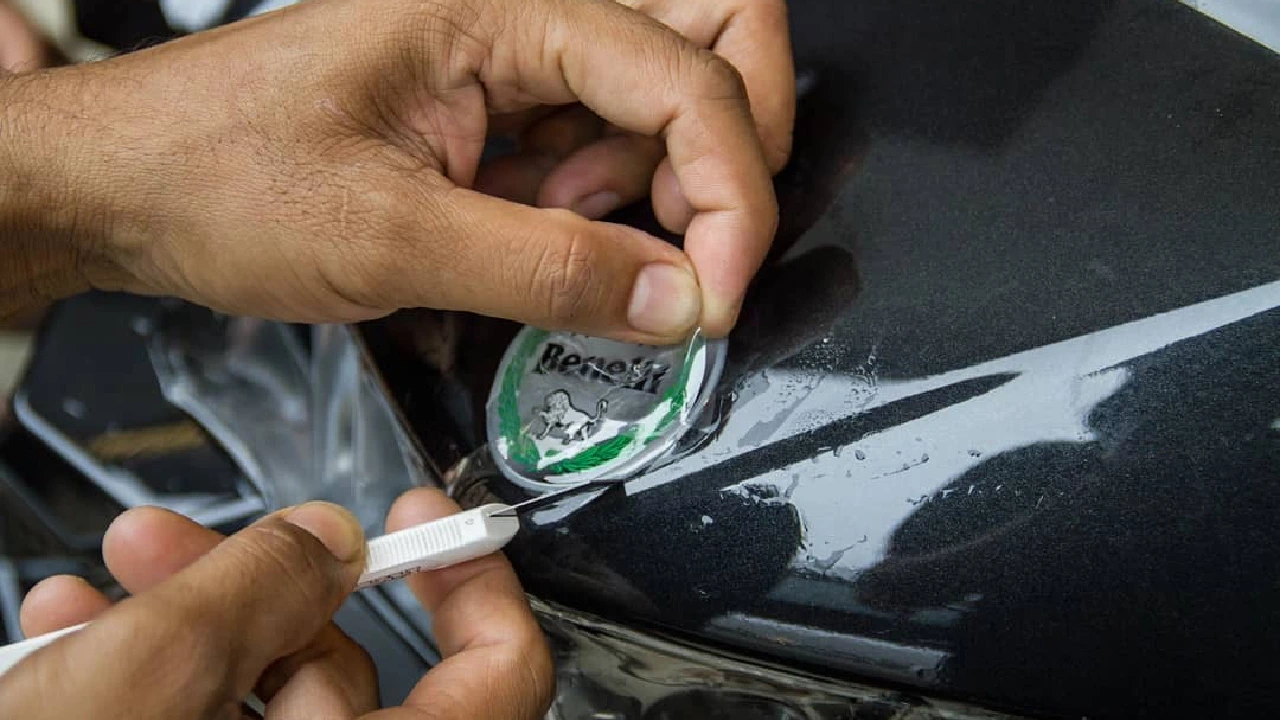
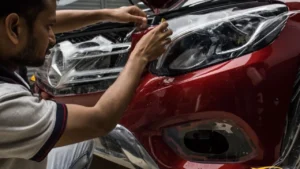
This is the most direct benefit. A good quality PPF for cars takes the daily damage like chips from highway gravel, scratches from tight parking, bird droppings and India’s intense UV and holds all of it in the film. When the film is removed, the paint underneath looks exactly like it did the day you drove out of the showroom.
It Eliminates the Repainting Problem
Without protection, most car owners end up repainting at least one or two panels before selling, to hide the scratches they accumulated over the years of use. But even a professional respray flags as ‘non-original’ under a paint thickness gauge, which most serious buyers and professional platforms now use. PPF cost upfront eliminates this problem.
This is car value protection working exactly as it should: the investment you made at purchase becomes a selling point at resale.
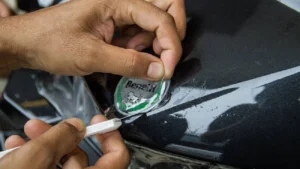
Expert Tip: If you install PPF, keep the warranty card and brand documentation. At the time of sale, showing a named brand warranty (especially from one of the best PPF brands in India) tells the buyer the car was maintained well.

How Does the ROI with Car PPF Work Out?
This is where the honest conversation happens. One perspective that comes up repeatedly is that you spend ₹1 lakh on PPF and gain only ₹10–20k at resale. That framing is incomplete, but it’s not wrong. Let’s do the actual math.
Consider a 5-year ownership scenario for a mid-size SUV, say a Hyundai Creta or a Tata Harrier:
| Expense | Without PPF | With Full-Body PPF |
|---|---|---|
PPF installation cost | — | ₹80,000 – ₹1,10,000 |
Repainting panels (2x over 5 yrs) | ₹25,000 – ₹35,000 | ₹0 |
Paint condition at sale | Faded, chips visible, 1–2 repainted panels | Factory original, zero chips |
Resale offer (same car, same km) | Base market rate | ₹1,00,000 – ₹1,50,000 above base |
Net position | Spent ₹30k, lost resale premium | ~₹0–50k net gain + 5 yrs of pristine paint |
The math doesn’t always produce a clear profit and that’s worth being honest about. What PPF coating reliably does is prevent value erosion. It stops the quiet depreciation that happens every time a scratch gets added, every time a panel gets touched up. In that sense, it’s not just a resale strategy; it’s a car value protection tool.
When Does PPF Help with Resale Value?
PPF’s resale benefit is real, but conditional. Here’s when it actually works in your favour and when it might not.
PPF Helps When:
- The buyer is a car enthusiast or someone who understands paint protection; they will actively value it.
- You’re selling a premium or semi-premium car (₹15 lakh+) where original paint commands a serious premium.
- You can show warranty documentation from one of the best PPF brands. Proof that it was installed professionally, not a random market job.
- You installed PPF on a new car, not on a car that already had existing paint damage.
PPF May Not Help When:
- The buyer doesn’t know what PPF is; they may see it as something to factor out of the price.
- The film has yellowed or lifted at the edges due to poor installation or a cheap brand, which actively hurts the visual impression.
- You’re selling to a dealer or aggregator platform (like Cars24 in bulk-buy mode), they typically don’t price in PPF separately.
- The car is a high-volume, entry-level model where buyers are primarily driven by price, not condition premium.
What Happens if the PPF is Poorly Installed?
A bad PPF job can hurt your resale value, not help it. Here’s what to watch out for:
- Yellowing: Low-quality TPH films or poorly stored TPU films can yellow over 2–3 years, making the car look aged and neglected.
- Edge lifting: Film that peels away from edges or around mirrors looks like the car has been in an accident or poorly repaired.
- Paint damage on removal: If the film wasn’t installed with a proper slip solution or was applied to freshly painted surfaces without a cure time, removal can peel the actual paint, the exact opposite of what you paid for.
- Bubbling or orange peel: Poor installation technique leaves visible texture differences between filmed and unfilmed areas.
This is why one must always have an expert installer involved, besides choosing one of the best PPF brands in India.
Expert Tip: Always ask for a brand warranty, not just a studio warranty. A brand-backed warranty for 7–10 years means the film was tested and the installer is certified. That’s what you want to show a buyer at resale.
Partial vs. Full-Body PPF - How it Affects Resale Value?
Not everyone who asks about paint protection film price is ready to commit to a full-body installation. That’s completely understandable, since full-body PPF on a mid-size car can run ₹80,000 to ₹1.5 lakh depending on the brand and coverage. So does partial PPF still help at resale?
The short answer: yes, but less predictably.
The panels that matter most at resale are the ones a buyer looks at first and the ones that take the most damage. The bonnet takes the most stone chips. The front bumper gets the most scrapes. The door edges and handles accumulate the most contact scratches.
A partial protection package covering the bonnet, front bumpers, headlights, and door edges, often called a partial or zone PPF, protects the highest-visibility, highest-risk areas at roughly 40–50% of full-body cost. For most Indian driving conditions, this covers the panels that would otherwise require repainting or touch-up before a sale.
Full-body PPF has an additional advantage: it creates a uniform visual impression. When a buyer looks at the car and every panel has that same deep gloss and zero imperfections, there’s no inconsistency to pick at. The car looks like it was protected from day one, because it was.

PPF vs. Ceramic Coating for Resale Value
This is one of the most common comparisons when people research automotive paint protection options. Here’s the direct answer:
| Particulars | PPF | Ceramic Coating |
|---|---|---|
Protection from scratches/chips | ✅ Yes – physical barrier | ❌ No – hardness only |
Protection from stone chips | ✅ Yes | ❌ No |
Keeps paint ‘original’ | ✅ Yes – paint untouched | Partial – paint still exposed |
Gloss enhancement | ✅ Yes (glossy PPF) | ✅ Yes |
Matte finish option | ✅ Yes (matte PPF) | Limited |
Cost | Higher (₹50k–₹1.5L) | Lower (₹15k–₹60k) |
Best for resale | ✅ Stronger case | Supportive but secondary |
For the specific goal of protecting resale value through paint condition, PPF for cars is the more direct tool. Ceramic coating enhances the surface and makes maintenance easier, but it doesn’t prevent the physical damage that gets noticed during a resale inspection. Many serious car owners use both PPF coating as a physical shield and ceramic coating over it for enhanced gloss and easier cleaning.
If you’re choosing one and resale value is the primary goal, go with car paint protection film. If you already have PPF and want to maximise the visual impression further, add ceramic on top.
The Best Ways to Protect Car Paint in India
If you’re looking for the best ways to protect car paint in India, the environment has to be your starting point. India’s roads and climate create a combination of challenges that most other markets don’t face at the same intensity.
The primary threats to your paint in Indian conditions:
- Stone chips and road debris: Highway driving at speed is particularly aggressive on the bonnet and front bumper.
- UV radiation: India’s proximity to the equator and long sunny seasons accelerate paint oxidation and fading faster than in temperate climates.
- Bird droppings and tree sap: Highly acidic, and in India’s heat, they etch into the clear coat within hours if not addressed.
- Monsoon and water spotting: Hard water deposits from rain and washing can etch the surface over time.
- Dust and sand: Micro-abrasions from accumulated fine dust, especially during dry seasons, are a slow but constant threat.
This is why PPF for new cars in India makes the most strategic sense. Apply it before the first stone chip, before the first UV cycle, before the first bird dropping has a chance to etch the surface. The film then absorbs every one of those threats for the duration of your ownership.
For cars that already have some paint wear, the approach changes. A paint correction and decontamination process should precede PPF installation; the film will lock in whatever condition the paint is in when it’s applied. On a well-maintained older car, this can still deliver a significant resale benefit. On a car with heavy swirl marks or chips already present, the benefit diminishes.
Why Choose Aegis Paint Protection Film
When you are ready to protect your car’s exterior and preserve its resale value, the brand you choose matters as much as the decision to get the PPF done. Here is why Aegis Paint Protection Film is the standout choice for your vehicle:
- Engineered for Indian Conditions: Designed to withstand intense UV rays, severe heat, monsoon humidity, and highway debris.
- Premium Material Quality: Made from high-grade Thermoplastic Polyurethane (TPU) that prevents yellowing and maintains crystal-clear optical clarity for years.
- Advanced Self-Healing Topcoat: Automatically repairs minor scratches and swirl marks using ambient heat.
- Certified Pan-India Network: Applied exclusively at 150+ CarzSpa Detailing Studios nationwide, ensuring precise, standardised application without the risk of bubbles or lifting.
- Long-Term Warranty Coverage: Backed by a comprehensive manufacturer’s warranty of up to 10 years, providing documented proof that protects your vehicle’s value.
- Resale Asset Value: A verifiable warranty card serves as an asset that shows prospective buyers the car was cared for from day one.
Conclusion
So, does PPF increase car resale value? Yes, but it’s not magic. It works when the paint condition it preserves is original and verifiable, when the buyer understands what they’re looking at, and when the film was installed by a certified professional using a quality brand.
The strongest case for PPF coating at resale isn’t that it adds a premium; it’s that it prevents the discounts. Every repainted panel, every faded bonnet, every visible stone chip chips away at your negotiating position. PPF eliminates those vulnerabilities.
For anyone looking to get the best resale value of your car, the smartest move is to apply PPF on a new car and keep the documentation. Five years later, when you’re showing a buyer paint that looks like it did on Day 1, that documentation doesn’t just tell them what was done, it tells them how much you cared for the car. In the Indian used car market, that perception of care is worth more than almost any other factor.
Frequently Asked Questions
1. Does PPF coating directly increase the resale price of my car?
Not always directly, but it prevents paint-related deductions. Cars with original, undamaged paint consistently close at higher prices than identical cars with repainted panels, and PPF is the most reliable way to ensure that.
2. Is PPF worth it?
Yes, if the paint is in good condition. A paint correction before PPF installation locks in a clean surface. On a well-maintained 2–to 3-year-old car, the resale benefit is still real.
3. Should I remove PPF before selling or keep it on?
Removing it to reveal pristine paint is the stronger move for most buyers as it creates a visible proof point. If the film is from a premium brand with a transferable warranty, keeping it on can be a bonus for the new buyer.
4. How much does the PPF coating price range in India?
Partial coverage (bonnet + bumpers) starts around ₹25,000–₹40,000. Full-body PPF from quality brands ranges from ₹65,000 to ₹2.8 lakh, depending on car size and film type.
5. Does matte PPF affect resale value differently than glossy?
Matte PPF appeals to a more specific buyer, so it can limit your audience. For maximum resale flexibility, glossy PPF has a broader appeal. That said, on a matte-finish car, matte PPF is the correct choice.
Share: