
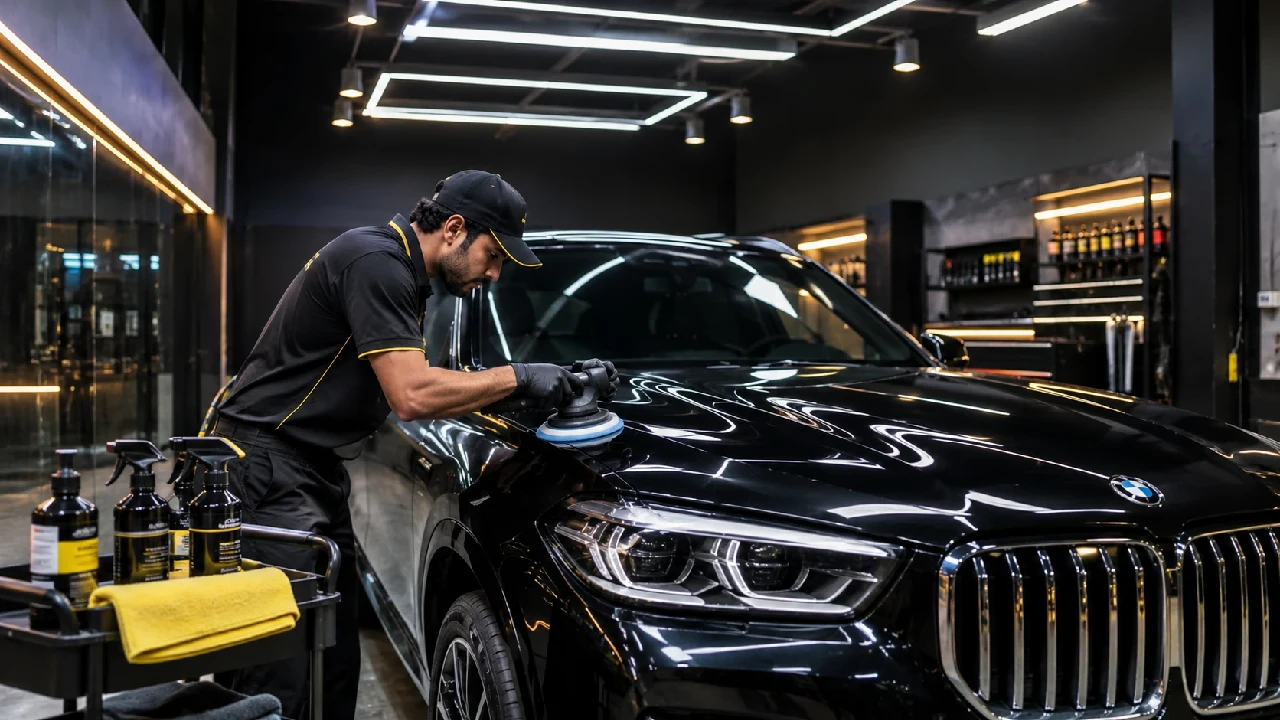
If you are passionate about automobiles and have ever considered starting a business of your own, the car detailing industry is worth exploring. After all, owning a car is no longer just about getting from one place to another. More car owners today are paying attention to how their vehicles look, how well they are maintained and how they can protect their investment over the years.
This growing awareness has created opportunities for professional car detailing studios offering everything from deep cleaning and paint correction to ceramic coatings and Paint Protection Film (PPF).
But does having a passion for cars automatically make you a successful detailing business owner? Not quite.
Like any other business, a car detailing studio requires the right location, trained professionals, quality products, customer service and sound financial planning. In this blog, we explore the key factors that can determine whether your car detailing business becomes a sustainable venture or just another workshop competing on price.
Table of contents
Why Is Car Detailing Becoming a Business Opportunity in India?
For a long time, car care in India largely revolved around regular washing, polishing and occasional servicing. Professional car detailing was often seen as something reserved for luxury car owners or automobile enthusiasts. That perception is gradually changing.
Today, more customers are exploring services such as interior deep cleaning, paint correction, ceramic coating and PPF. New car buyers want to preserve their vehicle’s factory finish, while existing owners are increasingly willing to invest in professional treatments to maintain their cars.
There are a few reasons behind this shift:
- Growing awareness of vehicle care: Car owners are becoming more familiar with paint protection, interior restoration and professional detailing techniques.
- Increasing demand for premium services: Services such as ceramic coating and PPF offer opportunities beyond conventional washing and polishing.
- A growing used-car market: Owners looking to sell their vehicles have an additional reason to maintain their car’s appearance and interior condition.
- Expansion beyond major metros: As organised automotive services become more visible, smaller cities are also developing opportunities for professional car detailing studios.
The industry is also relatively fragmented, with independent workshops and organised service providers competing for customers. This creates room for businesses that can differentiate themselves through technical expertise, consistent quality and customer trust.
However, opportunity should not be confused with guaranteed profitability. A successful car detailing business needs to understand its local market and build a service model that customers are willing to return to.
8 Key Factors That Determine the Success of a Car Detailing Business
Starting a detailing studio is one thing. Building a business that attracts customers consistently, maintains service quality and generates sustainable revenue is another.
Here are eight factors every aspiring entrepreneur should consider before entering the industry.
1. Understanding Your Market and Target Audience

Before investing in equipment or finalising a location, understand who your potential customers are.
A car detailing studio in an affluent urban neighbourhood may attract luxury car owners looking for premium paint protection services. A studio in a developing residential area may see more demand for interior cleaning, polishing, regular detailing and affordable protection packages.
The services you offer, the prices you charge and even the size of your studio should reflect the local market.
Start by studying:
- Vehicle ownership patterns: What types of cars are commonly used in your target area? Are there more hatchbacks, sedans, SUVs or luxury vehicles?
- Customer spending capacity: How much are local car owners likely to spend on vehicle maintenance and appearance?
- Existing competition: Are there established detailing studios, local garages or car washes already serving the area?
- Service demand: Is there a stronger demand for regular detailing, paint correction, ceramic coating or PPF?
- Customer awareness: Do people understand professional detailing, or will you need to educate them about the benefits?
This exercise helps you identify a realistic customer base rather than relying on assumptions about how many cars pass through the neighbourhood.
A business that understands its customers from the beginning has a much better chance of getting its service mix and pricing right.
2. Choosing the Right Location

Location can make a significant difference to the success of a car detailing studio. Even a technically excellent business may struggle if customers find it difficult to access.
Ideally, your studio should be located within a catchment that has a healthy concentration of car owners and sufficient demand for professional car care.
Some factors to evaluate include:
- Accessibility: Customers should be able to reach the studio without navigating difficult roads or congested entry points.
- Visibility: A property on a reasonably prominent road can improve brand visibility and generate walk-in enquiries.
- Customer catchment: Consider proximity to premium residential areas, commercial hubs, automobile dealerships and affluent neighbourhoods.
- Parking and vehicle movement: Your property should allow customers to drop off and collect vehicles without inconvenience.
- Rental economics: A high-visibility location is useful only if the rent is sustainable in relation to the expected business volume.
Do not select a property simply because it looks impressive. A larger studio with high fixed costs may become a financial burden if the local demand does not justify it.
It is also important to evaluate the property’s practical suitability. Water supply, drainage, electrical capacity, ventilation and sufficient working space are essential for professional detailing operations.
3. Investing in the Right Infrastructure and Equipment
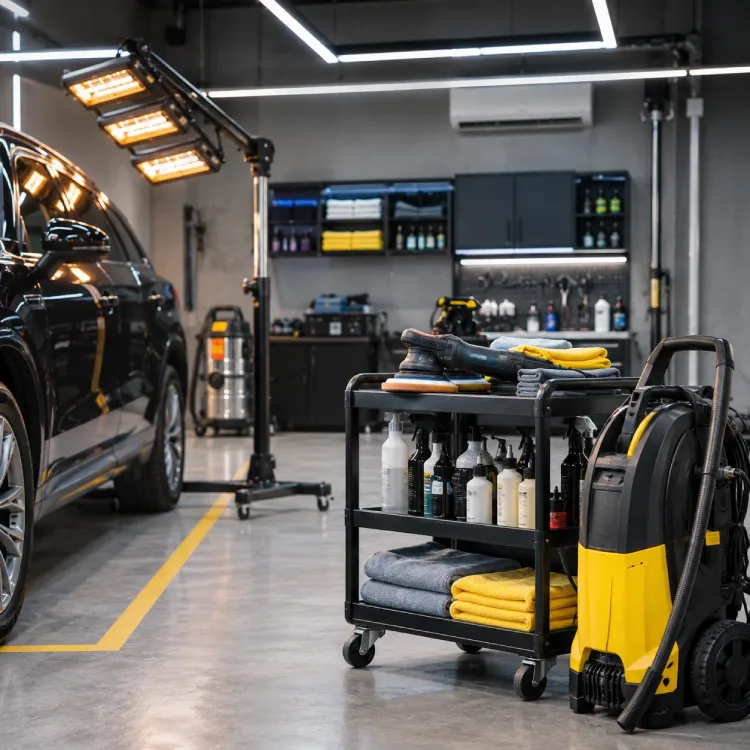
A professional car detailing studio needs more than a pressure washer and a few bottles of cleaning products. The quality of your infrastructure and equipment directly influences how efficiently your team can work and the standard of service you can deliver.
Some essential requirements include:
- Dedicated detailing bays: Adequate space to work around vehicles safely and comfortably.
- Professional lighting: Proper detailing lights help technicians identify scratches, swirl marks, paint defects and imperfections.
- Polishing equipment: Dual-action and rotary polishers, along with suitable pads and compounds, are essential for paint correction.
- Cleaning equipment: Pressure washers, wet-and-dry vacuum cleaners, steam cleaners and extractors support different detailing processes.
- Application tools: Specialised tools are needed for services such as ceramic coating and PPF installation.
- Storage and inventory: Chemicals, films, microfiber towels and other consumables must be stored properly and managed efficiently.
You should also plan the studio layout carefully. The washing area, detailing bays, product storage and customer reception should work together without disrupting operations.
The objective is not to buy the most expensive equipment available. It is to invest in reliable, professional-grade tools that match the services you intend to offer.
Cutting corners on equipment or using unsuitable products may reduce initial expenses, but it can lead to inconsistent results, rework and dissatisfied customers later.
4. Building a Skilled and Trained Team
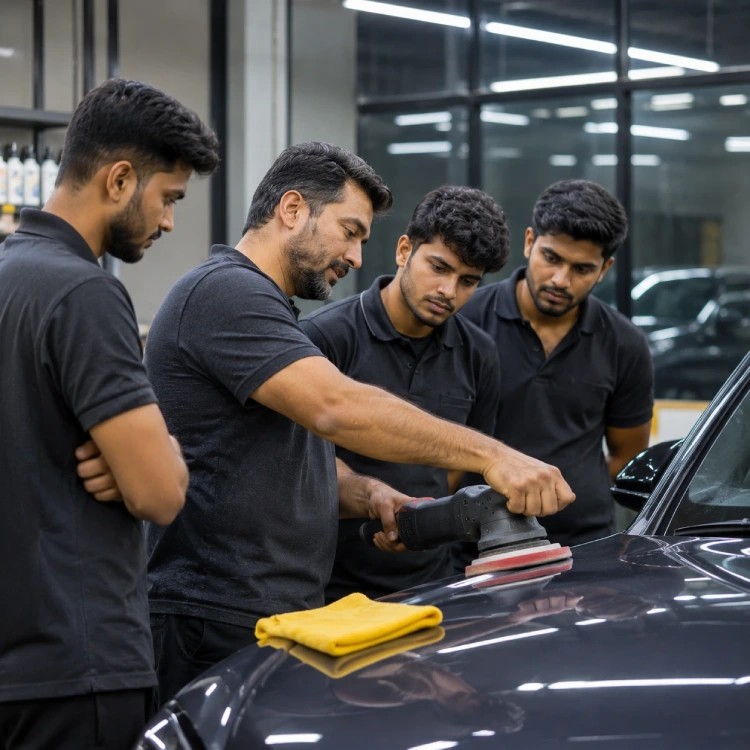
This is arguably one of the most important factors in the detailing industry.
A car detailing business is only as good as the people performing the work. A technician who does not understand paint behaviour, machine polishing, product application or surface preparation can cause damage that may cost the business far more than the service revenue.
Professional car detailing requires both technical knowledge and hands-on experience.
Your team should be trained in:
- Safe washing and decontamination techniques.
- Paint inspection and defect identification.
- Machine polishing and paint correction.
- Interior cleaning and upholstery care.
- Ceramic coating preparation and application.
- PPF installation techniques.
- Equipment handling, product usage and workplace safety.
- Customer communication and service explanation.
Training should not end after the initial onboarding process. Products, techniques and customer expectations continue to evolve. Regular skill development and quality assessments help maintain service standards.
As an entrepreneur, you do not necessarily need to be the most experienced detailer in the studio. But you must understand the work well enough to hire the right people, evaluate their performance and ensure that customers receive the service they have paid for.
5. Offering the Right Mix of Services
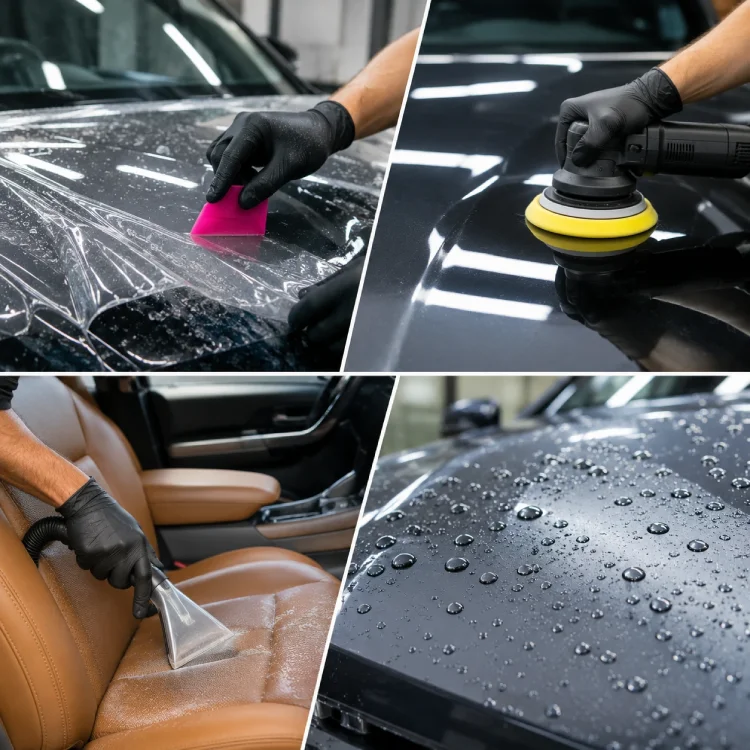
A common mistake new detailing businesses make is focusing on just one or two services. This can limit the customer base and make revenue dependent on a small number of high-value bookings.
A better approach is to build a balanced service portfolio that caters to different customer needs and budgets.
For example:
| Service Category | Typical Offerings | Business Purpose |
|---|---|---|
| Regular car care | Premium washing, exterior cleaning | Frequent customer visits |
| Interior detailing | Deep cleaning, upholstery and dashboard care | Addresses everyday maintenance needs |
| Paint correction | Polishing, swirl and scratch removal | Specialised, skill-based service |
| Ceramic coating | Long-term surface protection treatments | Premium service opportunity |
| PPF installation | Partial and full-body paint protection | Higher-value specialised service |
The idea is to create multiple entry points for customers. Someone who initially visits for interior cleaning may later consider paint correction or ceramic coating after understanding the condition of their vehicle.
Premium services such as ceramic coating for cars and paint protection film can also increase the average value of a booking. However, they require trained technicians, suitable infrastructure and genuine products.
A balanced portfolio allows the business to serve customers across different price points while gradually building demand for specialised services.
6. Maintaining Consistent Service Quality

Getting a customer through the door is only the beginning. The real challenge is delivering an experience that makes them comfortable returning.
In car detailing, customers are trusting you with something they have invested a considerable amount of money in. They expect their vehicle to be handled carefully, the promised service to be delivered and the final result to match their expectations.
This is why consistency matters.
A successful studio should have clearly defined processes for every service, including:
- Vehicle inspection before work begins.
- Documenting existing scratches, dents and paint imperfections.
- Explaining the recommended service and its limitations.
- Following standard procedures during application.
- Conducting a final quality inspection.
- Handing over the vehicle with clear maintenance instructions.
Standard Operating Procedures (SOPs) are particularly useful when multiple technicians work on different vehicles. They ensure that the service does not depend entirely on the individual working on a particular day.
It is equally important to be honest with customers. Do not promise that ceramic coating will make a car scratch-proof or that PPF will prevent every possible type of damage.
Setting realistic expectations builds trust. And in a service business, trust is one of the strongest drivers of repeat customers and referrals.
7. Managing Finances and Pricing

A detailing studio may generate good revenue and still struggle financially if its costs are not managed properly.
Before starting the business, prepare a realistic financial plan covering both the initial investment and ongoing operational expenses.
Initial investment may include:
- Property deposit and rental expenses.
- Civil work, flooring, lighting and studio interiors.
- Equipment and machinery.
- Initial inventory of chemicals, films and consumables.
- Branding, signage and launch marketing.
- Registrations, licences and other setup costs.
Recurring expenses may include:
- Rent and utilities.
- Employee salaries.
- Chemicals and consumables.
- Equipment maintenance.
- Marketing and customer acquisition.
- Software, administration and other operating expenses.
Pricing also needs careful consideration. Charging too little to attract customers can leave you with insufficient margins, particularly for services that involve expensive materials and several hours of skilled labour.
Instead, calculate the cost of delivering each service, including material consumption, technician time and overhead allocation. Then establish prices that are competitive while allowing the business to remain financially sustainable.
Keep track of a few important numbers every month:
- Number of vehicles serviced.
- Average billing value per vehicle.
- Revenue generated by each service category.
- Material and labour costs.
- Repeat customer percentage.
- Monthly operating expenses.
- Profitability after all operating costs.
A business owner who understands these numbers can make better decisions about pricing, staffing, marketing and future expansion.
8. Marketing and Customer Retention

Even the best detailing studio needs customers to survive. And in a competitive market, simply opening a studio and waiting for people to discover it is rarely a good strategy.
Marketing should begin before the studio opens and continue throughout its operations.
Some effective approaches include:
- Google Business Profile: Maintain an updated listing with accurate contact details, photographs, service information and genuine customer reviews.
- Social media: Share before-and-after transformations, detailing videos, educational content and customer experiences.
- Local partnerships: Build relationships with automobile dealerships, used-car dealers, premium car clubs and other relevant businesses.
- Referral programmes: Encourage satisfied customers to recommend your studio to friends and family.
- Customer follow-ups: Send service reminders, maintenance guidance and relevant offers after a vehicle has been serviced.
- Transparent communication: Share realistic service benefits, pricing information and examples of your work to build confidence.
But customer acquisition is only half the job. Retention is equally important.
Maintain customer records, track previous services and follow up at appropriate intervals. A customer who has invested in a protective treatment may need maintenance guidance or additional services later.
Over time, a loyal customer base can become one of the most valuable assets of your business. It reduces the pressure to constantly acquire new customers and creates opportunities for referrals and repeat bookings.
Should You Start Independently or Choose a Franchise?
Once you have understood the operational requirements, the next big decision is whether to establish an independent detailing studio or partner with an established franchise brand.
Both models have their advantages. The right choice depends on your experience, available capital, business knowledge and willingness to build systems from scratch.
| Factor | Independent Studio | Franchise Studio |
|---|---|---|
| Brand identity | Build your own brand | Operate under an established brand |
| Business model | Develop your own processes | Follow an established operating framework |
| Training | Arrange training independently | Training and technical guidance may be provided |
| Product sourcing | Identify and manage suppliers | May get access to approved products and suppliers |
| Marketing | Plan and execute independently | May receive brand and marketing support |
| Operations | Build your own SOPs | Follow established operating standards |
| Business flexibility | Greater freedom in decision-making | Must follow franchise guidelines |
An independent studio offers greater control over branding, pricing and operations. However, you are also responsible for building customer trust, sourcing products, hiring and training technicians, developing processes and generating enquiries.
A franchise can provide a more structured starting point, particularly for entrepreneurs who are new to the detailing industry. But not all franchises offer the same level of support.
Before choosing one, evaluate the following:
- What training is provided, and does it include hands-on technical sessions?
- Is there assistance with location selection and studio setup?
- Are operational processes and service standards clearly documented?
- What marketing support is available?
- Are products and consumables readily accessible?
- What are the franchise fees, royalties and other recurring charges?
- Is there ongoing support after the studio becomes operational?
Do not choose a franchise only because of its brand name or projected returns. Understand exactly what support you will receive and what responsibilities will remain yours.
How CarzSpa Supports Entrepreneurs Entering the Detailing Industry
Starting a car detailing business from scratch can involve a steep learning curve. From selecting the right property and setting up the studio to hiring technicians and building a customer base, there are several things an entrepreneur must get right.
This is where an established detailing network can make a difference.
With over 20 years of experience in the industry, CarzSpa has built a network of 150+ detailing studios across 80+ cities, helping bring professional car care and paint protection services to customers across India.
Its franchise model is designed to support entrepreneurs across different stages of setting up and operating a detailing studio.
Some of the support areas include:
- Location guidance: Assistance in evaluating and selecting a suitable property for the studio.
- Studio design and setup: Guidance on layout, detailing bays, lighting, equipment placement and infrastructure.
- Technical training: Hands-on training in professional detailing, paint correction, ceramic coating and PPF installation through AutoFresh Academy.
- Business and operational training: Guidance on inventory, studio operations, customer handling and service processes.
- Marketing support: Branding material, promotional guidance and support for establishing a local digital presence.
- Product access: Access to CarzSpa’s detailing and protection product ecosystem, including CrystalShield ceramic coatings and Aegis PPF.
The brand’s experience is backed by its founder, Mr. Anckur Sama, who has spent nearly two decades working in the detailing industry and has mentored detailing professionals across different markets.
For someone entering the industry for the first time, having access to established training, operating processes and ongoing guidance can reduce the learning curve. Of course, the success of the studio will still depend on the franchise owner’s involvement, local execution and ability to manage the business effectively.
If you are considering entering the industry, explore the CarzSpa franchise opportunity to understand the model, support structure and requirements.
Conclusion
The car detailing industry offers an interesting opportunity for entrepreneurs who are willing to combine business discipline with a genuine understanding of automobiles. But passion alone is not enough. The right location, trained technicians, suitable infrastructure, a balanced service portfolio, financial planning and consistent customer experience all play a role in long-term success.
Whether you choose to build an independent studio or partner with an established franchise, approach the opportunity with a clear business plan. Understand your market, invest in quality and focus on earning customer trust. Ultimately, a successful detailing business is not built by the number of cars it services in a day, but by how many customers choose to come back.
FAQs
1. Is car detailing a profitable business in India?
It can be, provided there is sufficient local demand, the right service mix, controlled operating costs and consistent service quality. Profitability varies by location, investment and business management.
2. How much investment is required to start a car detailing business?
The investment depends on the studio’s size, location, infrastructure, equipment and services offered. A basic setup costs considerably less than a professional studio offering premium coating and PPF services.
3. Do I need prior experience to start a car detailing business?
Not necessarily. However, understanding the industry and ensuring that your technicians receive proper hands-on training are essential for delivering professional services.
4. Which services should a new car detailing studio offer?
A balanced portfolio can include exterior and interior detailing, paint correction, ceramic coating and PPF installation. The final mix should reflect local demand and available technical expertise.
5. Is a car detailing franchise better than starting independently?
A franchise can offer brand recognition, training, operating systems and marketing support. An independent studio offers greater flexibility. The better option depends on your experience, resources and business goals.
Share: