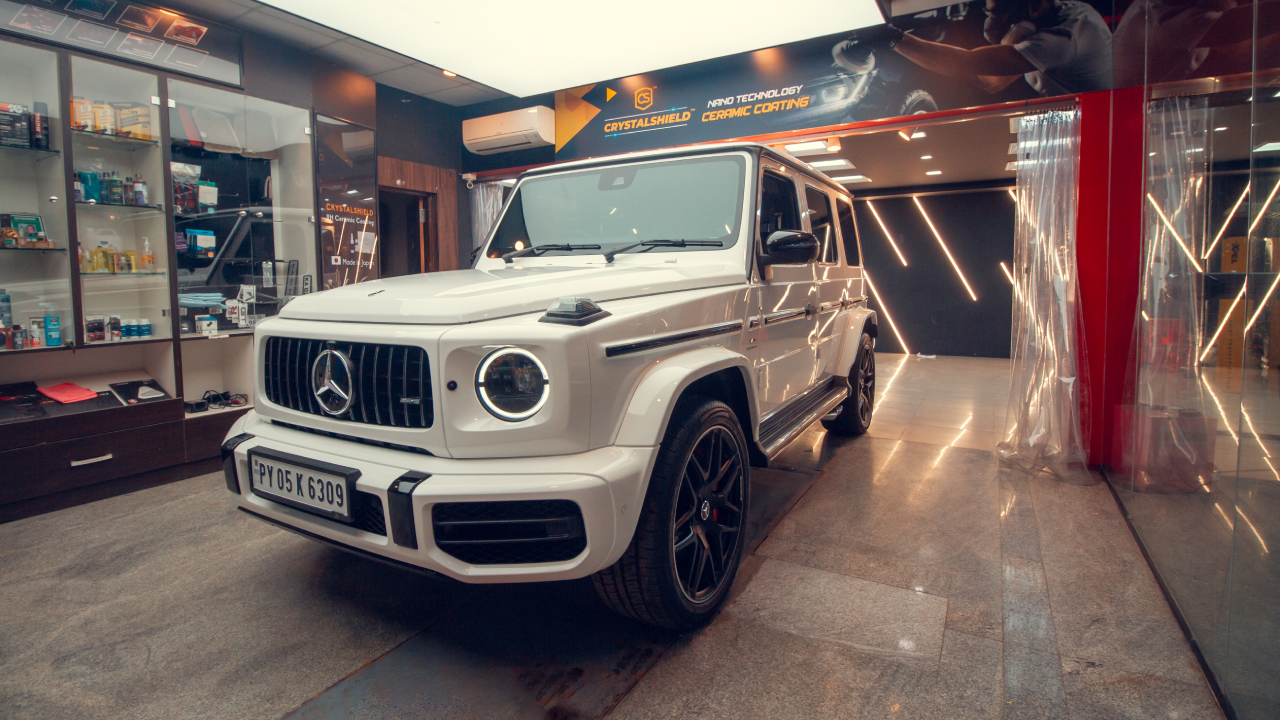
White has always been India’s favourite car colour. It reflects heat, hides minor scratches better than darker shades, and commands strong resale value. Whether you own a Creta, Fortuner, or a Mercedes, that pristine white finish is what drew you in. But here’s the reality: white paint isn’t invincible. Stone chips on the bonnet, yellow stains from tree sap, and those dreaded black scratches on bumpers can ruin that clean aesthetic fast.
You’ve probably heard about paint protection film for white car owners, but you’ve also heard the horror stories. The film turns yellow. The edges collect dirt. It costs more than a repaint. So, is PPF on a white car worth it, or is it an expensive mistake? This guide cuts through the noise, addresses the yellowing myth head-on, and gives you the truth about when PPF for white cars makes sense and when it doesn’t.
Table of Contents
- What is Paint Protection Film (PPF)?
- The Yellowing Question: Myth vs Reality for White Cars
- Benefits of PPF on White Cars
- The Edge Problem: Why Installation Quality Matters on White
- PPF vs Ceramic Coating: What’s Best for White Cars?
- Cost-Benefit Analysis: Does PPF Make Sense for Your White Car?
- Why Choose Aegis PPF for White Cars
- Maintenance Tips for White Car PPF in India
- To Conclude…
- Frequently Asked Questions
What is Paint Protection Film (PPF)?
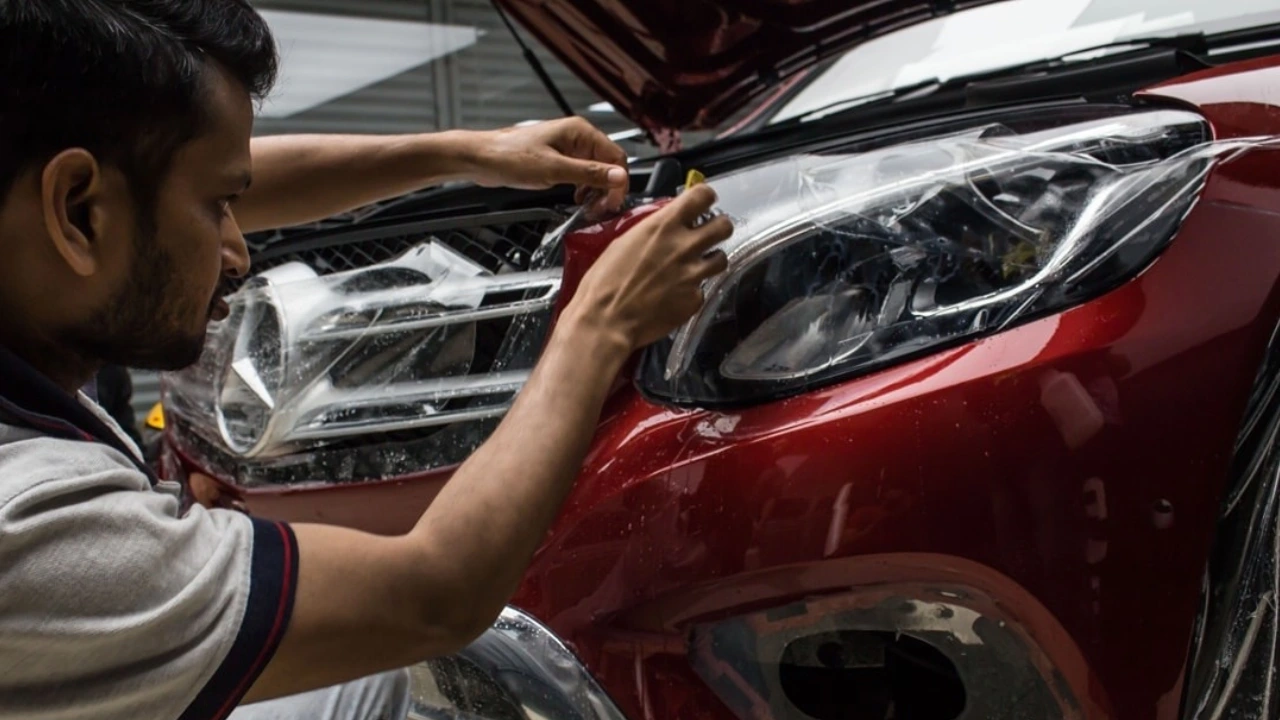
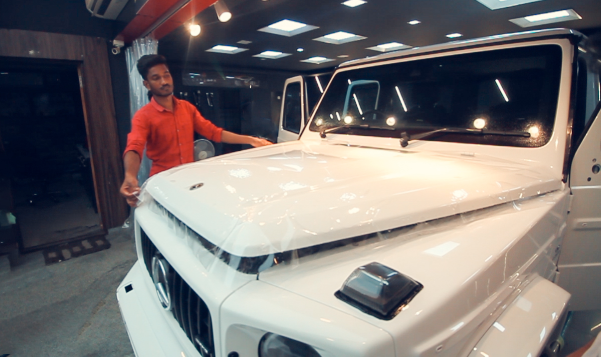
Paint protection film, often called clear bra or PPF, is a transparent, self-healing layer made from high-grade Thermoplastic Polyurethane (TPU). When applied to your car’s painted surfaces, it acts as an invisible shield against rock chips, scratches, bird droppings, and UV damage.
Unlike wax or sealants that wash away, or ceramic coatings that only offer chemical resistance, car PPF is a physical barrier. It absorbs the impact of road debris, self-heals minor scratches with heat, and protects your original factory paint from the elements. For white car owners specifically, this means protection without altering that clean, bright aesthetic you paid for.
The Yellowing Question: Myth vs Reality for White Cars
Let’s address the elephant in the room. This is the number one concern stopping white car owners from getting PPF for car protection, and rightfully so. Nobody wants their pristine white Seltos to look like it’s wearing a dirty, yellowed plastic cover.
Why Does PPF Yellow?
Yellowing happens due to oxidation when the film’s polymer structure breaks down under UV exposure, heat, and environmental pollutants. India’s intense sun, combined with pollution and dust, accelerates this process. However, here’s the crucial truth: not all PPF yellows equally.
The Material Matters: TPU vs TPH/PVC
- Old-generation films (TPH/PVC): These were notorious for yellowing within 1-2 years. If someone tells you their PPF on a white car turned yellow quickly, they likely had an inferior product.
- Modern TPU films: High-quality TPU films contain advanced UV stabilisers and anti-yellowing additives. Premium films maintain clarity for 5+ years when maintained properly.
The Honest Reality for Indian Conditions
Even the best paint protection film on white car owners will show some yellowing if you:
- Park exclusively in direct sunlight for years
- Never wash or maintain the film
- Live in highly polluted urban areas with no garage
But here’s the trade-off: The yellowing happens gradually over 5+ years with quality film, while unprotected white paint suffers permanent rock chip damage, staining, and oxidation within months. You’re choosing between very slow yellowing (that’s reversible by film replacement) versus permanent paint damage.
Expert Tip: If yellowing is your absolute dealbreaker, consider partial PPF coverage on high-impact areas (bonnet, bumper, fenders) rather than full-body. This minimises visible yellowing while protecting vulnerable zones.
Benefits of PPF on White Cars
Beyond the yellowing concern, car paint protection through PPF offers white car owners specific advantages that other colours don’t experience as dramatically.
1. Rock Chip and Stone Chip Protection
White paint shows black chips instantly. That dark primer or metal underneath creates a stark contrast. PPF for white car owners means the film takes the hit, not your paint. The self-healing TPU absorbs impacts and recovers from minor damage with heat.
2. Stain Resistance Against Bird Droppings and Tree Sap
Bird droppings and tree sap are acidic and etch into white paint, leaving yellow stains that are nearly impossible to remove without paint correction. The non-porous surface of paint protection film allows you to wipe these contaminants away immediately without staining.
3. Protection Against Yellow Oxidation of Paint Itself
Here’s the irony: people fear PPF yellowing, but white paint itself oxidises and yellows over time from UV exposure, especially on lower panels and roofs. Quality car PPF contains UV inhibitors that actually prevent your white paint from yellowing underneath.
4. Easier Cleaning and Maintenance
The hydrophobic topcoat on modern PPF makes water bead up and roll off. Dust and grime don’t stick as aggressively, making your weekly wash faster. For white car owners who wash frequently to maintain that clean look, this is a significant time-saver.
5. Preserved Resale Value
White cars have strong resale value in India, but only when the paint is flawless. Buyers scrutinise white cars more carefully because every imperfection shows. PPF on white car protects the original paint, and when removed before sale, reveals factory-fresh white paint that commands premium pricing.
The Edge Problem: Why Installation Quality Matters on White
This is the aspect most blogs ignore, but it’s critical for white car owners. Poor PPF installation is far more visible on white than on any other colour.
The Black Outline Issue
When the PPF for a white car is installed with improper edge wrapping or cutting, dirt, grime, and pollutants accumulate at the film’s edges. Over time, this creates a visible black or grey outline around protected panels. On white cars, this outline screams “cheap PPF job” and looks worse than having no film at all.
Why This Happens
- Improper edge wrapping: Installers cut the film on the panel instead of wrapping edges around, leaving exposed adhesive
- Lifting edges: Poor adhesion causes edges to lift, creating gaps where dirt accumulates
- Visible seams: Overlapping film pieces create lines that collect contaminants
The Solution: Professional Installation Only
This is non-negotiable for white cars. You need:
- Edge wrapping technique: Film wrapped around panel edges, not cut on the surface
- Computer-cut templates: Pre-cut patterns specific to your car model for seamless coverage
- Certified installers: Professionals trained in tension control and edge sealing
With brands like Aegis PPF and professional installation at CarzSpa studios, the film becomes truly invisible on white cars, with no visible edges or outlines even after years.
PPF vs Ceramic Coating: What's Best for White Cars?
This is the debate in every white car owner group. Let’s settle it with facts.
| Feature | Paint Protection Film (PPF) | Ceramic Coating |
|---|---|---|
Physical Protection | Superior. Absorbs rock chips, scratches, and impacts | Minimal. Only protects against minor swirls |
Self-Healing | YES. Minor scratches disappear with heat | NO. Scratches are permanent |
Stain Resistance | Excellent. Non-porous surface repels contaminants | Good. Hydrophobic, but can still stain |
Yellowing Risk | Possible after 5+ years with quality film | No yellowing risk |
Thickness | 150-190 microns (substantial barrier) | <1 micron (nano-coating) |
Lifespan | 5-10 years | 2-5 years |
Cost | Higher initial investment | Lower cost |
Ideal For | High-impact areas, luxury cars, highway driving | Full-body protection, chemical resistance, gloss enhancement |
The Verdict for White Car Owners
Choose PPF if:
- You do highway driving (high stone chip risk)
- You own a luxury white car (expensive paint repair costs)
- You hate seeing black chips on your white bonnet
- You want self-healing scratch protection
Choose Ceramic Coating if:
- You mostly drive in city conditions (low impact risk)
- Yellowing is an absolute dealbreaker for you
- Your white car is budget/mid-range, where repaint costs are reasonable
- You want enhanced gloss and hydrophobic properties without thickness
Expert Recommendation: Apply CrystalShield Marvel ceramic coating over your paint protection film for a white car. This adds another layer of hydrophobic protection, enhances gloss, and makes maintenance even easier.
Cost-Benefit Analysis: Does PPF Make Sense for Your White Car?
Let’s do the math that most blogs avoid. This is specific to Indian car ownership economics.
Segment 1: Budget Cars (₹5-10 Lakhs)
Examples: Maruti Swift, Hyundai i20, Tata Nexon
- Full PPF Cost: ₹75,000 – ₹90,000
- Single Panel Repaint Cost: ₹8,000 – ₹12,000
- Full Car Repaint Cost: ₹30,000 – ₹40,000
Reality Check: For budget white cars, full PPF doesn’t make economic sense. A bonnet repaint costs less than ₹12,000, while bonnet PPF alone is ₹15,000+. However, partial car PPF on the bonnet and bumper (₹25,000-₹30,000) can be justified if you do heavy highway driving.
Segment 2: Mid-Range Cars (₹10-25 Lakhs)
Examples: Hyundai Creta, Kia Seltos, Toyota Fortuner
- Full PPF Cost: ₹90,000 – ₹1,10,000
- Single Panel Repaint Cost: ₹12,000 – ₹18,000
- Full Car Repaint Cost: ₹50,000 – ₹70,000
Reality Check: This is the sweet spot. If you plan to keep your white Creta/Fortuner for 5+ years, PPF for white car protection pays for itself by avoiding multiple repaints and maintaining resale value. The math works if you avoid even 2-3 panel repaints over ownership.
Segment 3: Luxury Cars (₹25 Lakhs+)
Examples: Mercedes, BMW, Audi, Range Rover
- Full PPF Cost: ₹1,10,000 – ₹1,50,000
- Single Panel Repaint Cost: ₹25,000 – ₹50,000
- Full Car Repaint Cost: ₹1,50,000 – ₹3,00,000
Reality Check: PPF on a white car is almost mandatory for luxury vehicles. Paint matching is expensive and often imperfect. Insurance claims raise premiums. One bonnet repaint costs as much as a full front-end PPF. No question, get the film.

Why Choose Aegis PPF for White Cars
When protecting a white car, the quality of both the brand and the installer is critical to preventing dullness. Aegis PPF, exclusively available at CarzSpa Detailing Studios, is engineered for Indian conditions, especially the revolutionary XG Series, the ultimate choice for white paint.
Key Advantages of Aegis PPF
- Polycarbonate-TPU Hybrid: The XG Series uses a groundbreaking blend of Polycarbonate and TPU. This fusion provides a lower ΔE (Delat E) value, ensuring the film remains crystal clear and resists yellowing far better than traditional films.
- DuroFlex Topcoat: This advanced layer provides a high-gloss, non-porous shield that repels the environmental staining and “black streaks” common on white cars.
- Superior Thickness & Self-Healing: With variants ranging up to 400 microns, it absorbs heavy impacts while heat-activated self-healing technology keeps the surface swirl-free.
- Extended Warranty: Offers up to a Lifetime Warranty against yellowing and cracking.
- Expert Installation: CarzSpa’s nationwide studios use precise edge-wrapping to eliminate dirt-trapping seams, maintaining a seamless, pure white aesthetic.
Cost of Aegis PPF for White Cars
The Aegis PPF range offers specialised solutions for every Indian car owner. Below is a breakdown of our current film pricing and estimated total costs.
| Product | Price per Sq. Ft. | Hatchback (~190 sq. ft.) | Sedan (~220 sq. ft.) | SUV/MUV (~250 sq. ft.) | Luxury / XL (~280 sq. ft.) |
|---|---|---|---|---|---|
Eternal 300 | ₹1,000 | ₹1,90,000 | ₹2,20,000 | ₹2,50,000 | ₹2,80,000 |
Ultra 250 | ₹850 | ₹1,61,500 | ₹1,87,000 | ₹2,12,500 | ₹2,38,000 |
Xceed | ₹650 | ₹1,23,500 | ₹1,43,000 | ₹1,62,500 | ₹1,82,000 |
SPX | ₹500 | ₹95,000 | ₹1,10,000 | ₹1,25,000 | ₹1,40,000 |
Matt / Matt Pro | ₹500 | ₹95,000 | ₹1,10,000 | ₹1,25,000 | ₹1,40,000 |
Armor | ₹400 | ₹76,000 | ₹88,000 | ₹1,00,000 | ₹1,12,000 |
Core | ₹300 | ₹57,000 | ₹66,000 | ₹75,000 | ₹84,000 |
Disclaimer: The above-listed prices are estimated costs based on standard vehicle surface areas. The actual final cost may vary depending on the specific vehicle model, complexity of panels and the inclusion of professional installation charges at your local CarzSpa studio.
Maintenance Tips for White Car PPF in India
Getting car paint protection through PPF is an investment. Proper maintenance extends its life and prevents premature yellowing.
1. Wash Regularly (But Correctly)
The “daily cleaner with a dirty cloth” problem is real in India. Train your cleaner or wash yourself:
- Use pH-neutral car shampoo only
- Microfiber wash mitts, never regular cloth
- The two-bucket method to avoid scratching
- Rinse thoroughly to remove soap residue
2. Avoid Hard Water Spots
Hard water etching is a major issue in Indian cities. Water spots on PPF for a white car create visible marks:
- Dry the car immediately after washing
- Use a deionised water rinse if possible
- Keep a quick detailer spray for spot-free drying
3. Park Smart
UV exposure accelerates yellowing. When possible:
- Use covered parking
- Apply windshield sun shades
- Consider a car cover for extended outdoor parking
4. Remove Contaminants Immediately
Bird droppings, tree sap, and insect splatter won’t stain PPF like they stain paint, but leaving them on increases cleaning difficulty:
- Wipe off immediately with a damp microfiber
- Use a dedicated bug and tar remover if needed
- Never let contaminants bake in the sun
5. Annual Professional Inspection
Have your CarzSpa detailer inspect the film annually:
- Check for edge lifting
- Assess any yellowing
- Apply ceramic boost coating if needed
Concluding Thoughts
The question isn’t whether PPF for white car owners is perfect; it’s whether it’s the best solution for your specific situation. If you drive a luxury white vehicle, do regular highway trips, or plan to keep your car for 5+ years, paint protection film is a smart investment that protects your paint, maintains resale value, and saves money on repaints. The key is realistic expectations, segment-appropriate coverage (not every white car needs full PPF), and professional installation that avoids the dreaded edge problems.
With quality PPF on the car and proper maintenance, minimal yellowing might appear after 5+ years, but by then, your original white paint would have suffered permanent damage, oxidation, and staining without protection. Visit your nearest CarzSpa Detailing Studio to consult with experts who understand white car challenges and can recommend the ideal PPF on white car solution for your specific needs and budget.
Frequently Asked Questions
1. Is PPF good for white cars?
Yes, PPF for a white car is excellent. High-quality TPU films offer superior protection against chips, scratches, and stains, while advanced UV inhibitors prevent yellowing, preserving the car’s pristine white finish.
2. Does PPF turn yellow on white cars?
Older, inferior PPFs might yellow. However, modern, high-quality TPU paint protection film from reputable brands like Aegis features anti-yellowing agents and UV blockers, ensuring the film remains clear and stable on white cars for its guaranteed lifespan.
3. What are the main benefits of PPF on white cars?
Benefits include protection from stone chips and scratches, self-healing of minor damage, resistance to stains (bird droppings, tree sap, hard water), UV protection against fading, and maintaining the car’s resale value.
4. Is PPF for a white car worth the cost in India?
Yes, given India’s harsh driving conditions, dust, and common washing practices, PPF on a white car is a valuable investment. It protects against costly paint repairs, maintains aesthetics, and significantly preserves resale value.
5. How long does PPF last on a white car?
High-quality paint protection film for white cars, like Aegis PPF, typically lasts between 3 and 10 years, depending on the film’s grade, environmental exposure, and proper maintenance. Many come with a 5-year warranty against defects and yellowing.
Share: