You’re driving down a dimly lit state highway at night. The stock halogens on your SUV feel like two flickering candles against the vast, swallowing darkness. Just as you consider pulling over to search for “brightest LED bulbs” on your phone, a premium sedan streaks past from the opposite side. Its white LEDs don’t just light up the road; they pierce through your retina, leaving you momentarily blind and veering toward the shoulder.
This “blinding” frustration is exactly why the Indian government and the Supreme Court have hit the brakes on unregulated lighting. You want better visibility; the law wants road safety. For the Indian car owner in 2026, navigating headlight modification is no longer just about “plug-and-play” bulbs; it’s a legal minefield. With the 2025 Supreme Court directive labelling dazzling lights as “weapons on wheels,” your next lighting upgrade could lead to a seized vehicle or a rejected insurance claim. Understanding the modification laws in India is the only way to ensure your car stays bright, safe and most importantly, legal.
Table of Contents
- The Technical Shift: Why Stock Lights Feel “Weak”
- The Legality Spectrum: What’s Allowed vs. Illegal
- The Supreme Court Crackdown: The “Dazzle” Mandate of 2025
- The Hidden Repercussions: Insurance, Warranty and RC Cancellation
- Why Protect Your Headlights with CarzSpa
- Final Thoughts
- Frequently Asked Questions
The Technical Shift: Why Stock Lights Feel "Weak"
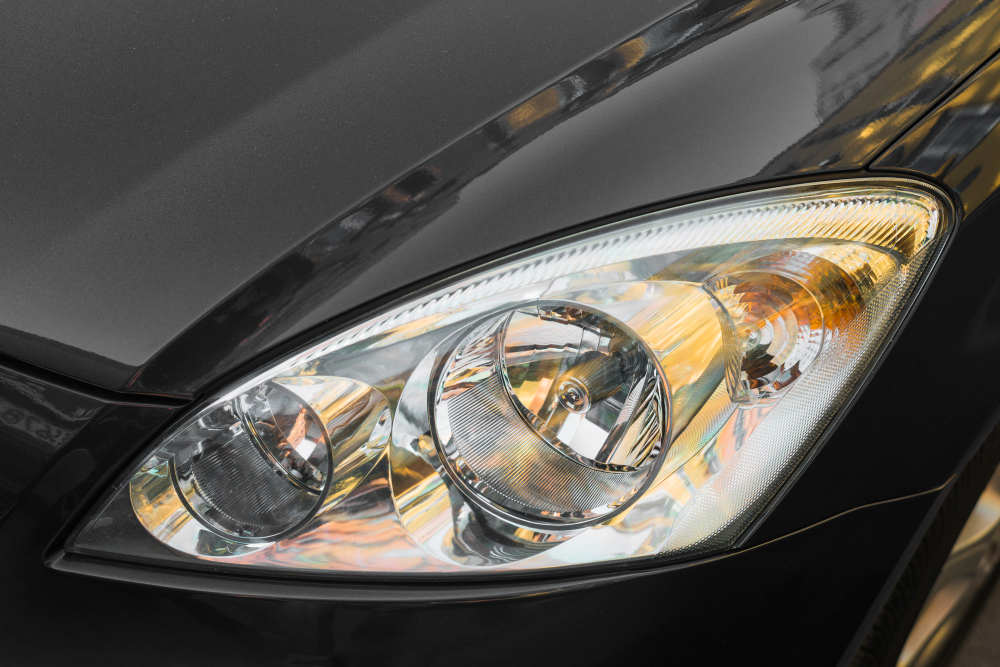
To modify safely, you must first understand the engineering. Most budget and mid-range cars in India come with reflector-type halogen setups. These use a 55/60W filament bulb that produces a “warm” yellow light. While reliable, they struggle with “light throw” on our increasingly complex roads.
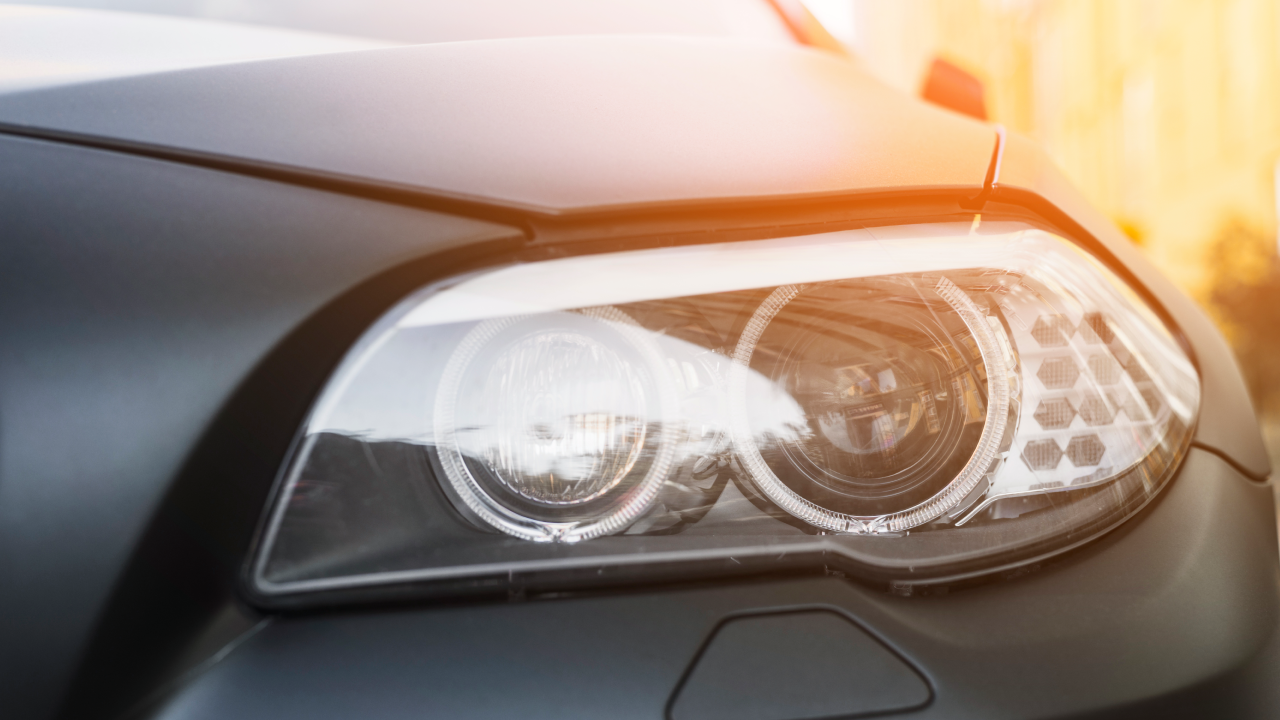
In the quest for “white light,” many owners fall into the aftermarket trap. They swap a halogen bulb for a high-intensity LED or HID kit. Here is the mechanical reality: a reflector housing designed for a 360-degree glowing filament cannot focus the linear, intense light of an LED chip. This results in “scatter”, where the light goes everywhere except the road. It’s not just poor car modification in India; it’s a design failure that creates a dangerous glare for oncoming traffic.
The Legality Spectrum: Is Your Setup at Risk?
The modification laws in India, specifically Rule 106 of the Central Motor Vehicles Rules (CMVR), are very clear about lighting. In 2026, the RTO categorised lighting into three zones based on the AIS-010 standards.
The Green Zone: RTO-Compliant Upgrades
- Wattage Limits: The maximum permissible wattage for a headlight bulb is 70W. If you stay within this, using “Performance Halogens” (like Osram Night Breaker or Philips X-tremeVision), you are 100% legal.
- OEM Replacements: If your car model has a higher variant with factory LEDs, swapping the entire assembly (housing + bulb) is legal as it maintains the intended beam pattern.
- White/Yellow Only: Only white or yellowish-white light is permitted. Any hint of blue, green, or red is an instant fine.
The Grey Zone: High-Wattage & Relays
- The 90/100W Setup: This involves using a ceramic relay and higher wattage bulbs. While technically “illegal” because it exceeds the 70W limit, it is often ignored if the beam is levelled correctly. However, the heat generated can turn your clear lens yellow, making a ceramic coating for the exterior plastics a necessity to prevent degradation.
The Red Zone: Strictly Prohibited
- LED/HID in Reflector Housings: If it causes “dazzle” or glare, it’s illegal.
- Roof-Mounted LED Bars: These are strictly for off-road use. Using them on public highways will lead to an immediate challan and potential seizure.
- Flashers & Strobes: Reserved only for emergency vehicles.
The Supreme Court Crackdown: The "Dazzle" Mandate of 2025
The most significant change for car owners came on October 7, 2025. The Supreme Court of India directed the Ministry of Road Transport and Highways (MoRTH) to strictly enforce luminance standards.
The court noted that “glare-induced blindness” is a leading cause of nighttime fatalities. Under the new 2026 enforcement drive, traffic police are equipped with “Lux Meters” to measure the intensity of your beams. If your headlight modification exceeds the prescribed luminance (roughly 3,000 lumens per bulb) or the beam angle is too high, you face a fine of ₹500 for the first offence and ₹1,500 for subsequent ones. In extreme cases, authorities are now authorised to remove the illegal fittings on the spot.
The Hidden Repercussions: Insurance, Warranty, and RC Cancellation
It’s not just about the police. The ripples of an illegal lighting setup reach your wallet in ways you might not expect.
- Warranty Voidance: Splicing wires to install a “HID ballast” is the easiest way to void your car’s electrical warranty. If your BCM (Body Control Module) fails, the manufacturer will blame the aftermarket “Chinese kit.”
- Insurance Rejection: In the event of a nighttime accident, if the surveyor finds illegal, high-intensity LEDs that could have blinded the other driver, your claim can be rejected under “unauthorised modification.”
- Fitness Certificate: For cars older than 15 years (or 10 for diesel in NCR), a non-compliant headlight setup means you will fail your fitness test, leading to the cancellation of your RC.
Why Choose CarzSpa to Protect Your Headlight?
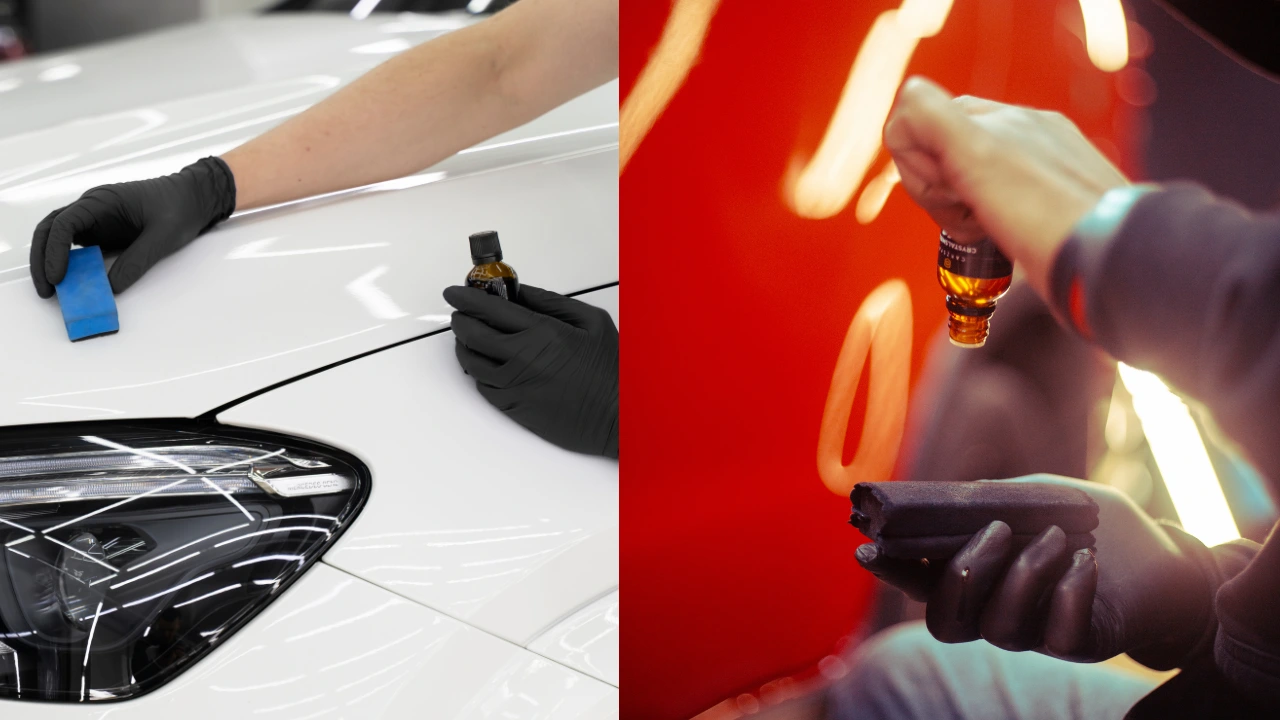
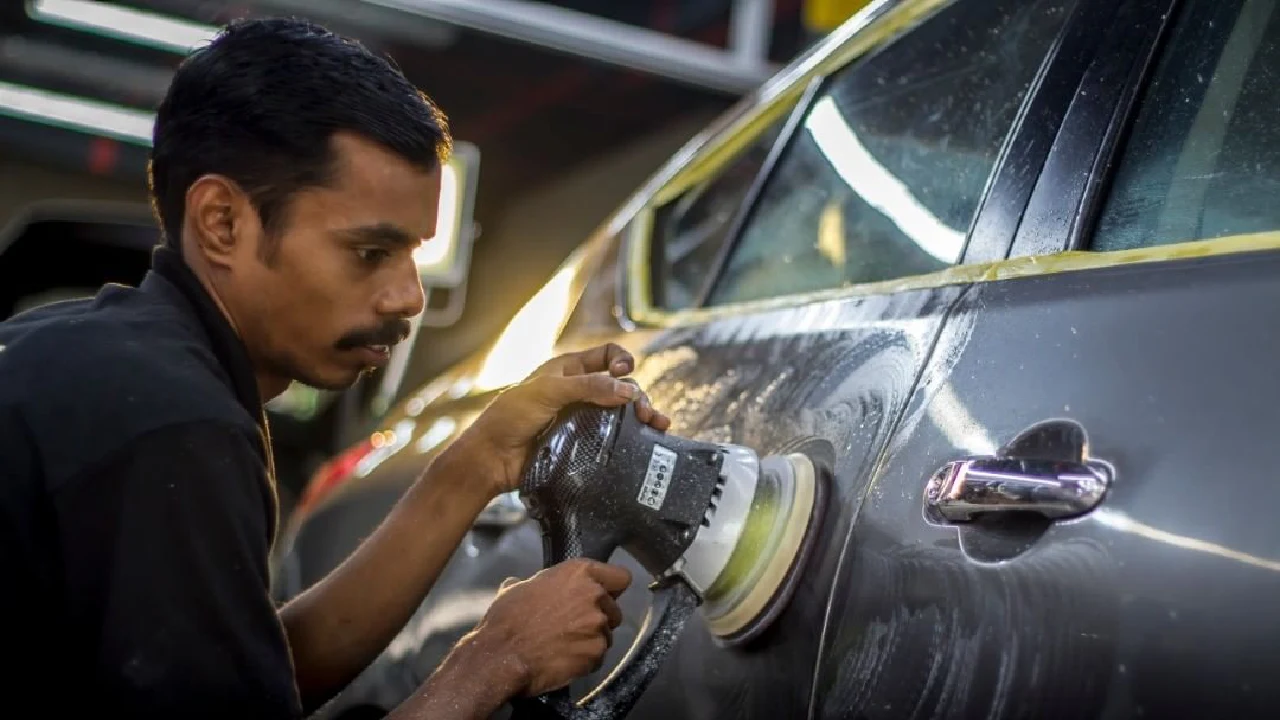
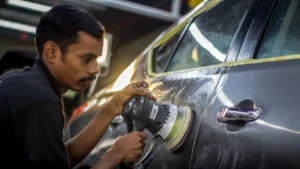
In the era of strict modification laws in India, the smartest way to upgrade your visibility isn’t through illegal high-wattage bulbs, but through professional restoration and protection. Over time, UV radiation and environmental exposure cause the plastic housing of your lamps to degrade, leading to a “cloudy” lens that severely hampers night safety. At CarzSpa, our expert detailers don’t just clean; they rejuvenate. Our Headlight and Tail Light Restoration service, a vital part of our comprehensive car detailing, uses a precision process of sanding and polishing to remove oxidation and restore crystal-clear transparency.
To level up this protection and ensure your lights stay “showroom new,” CarzSpa exclusively installs Aegis Films. Applying headlight PPF or tail light film provides a high-tensile (20 MPa) shield against stone chips and debris. These films feature self-healing properties and advanced UV protection, preventing the “yellowing” that often plagues older vehicles. Whether you are looking for a standard clear finish or the adaptive “Photochromatic” tint for glare reduction, CarzSpa ensures a bubble-free, factory-finish install that maintains maximum light transmission while keeping you fully RTO-compliant.
Headlight PPF Cost
| Protection Package | Estimated Cost (INR) | Key Benefits |
|---|---|---|
Headlight PPF (Pair) | ₹8,000 – ₹10,000 | Crystal-clear impact & UV protection |
Taillight PPF (Pair) | ₹6,000 – ₹8,000 | Rear assembly protection from scratches |
Photochromatic / Smoky PPF | ₹12,000 – ₹15,000 | Adaptive tinting & glare reduction |
Full Lighting Package (F+R) | ₹14,000 – ₹18,000 | Complete 360° lighting protection |
Final Thoughts
The transition toward stricter modification laws in India is a necessary evolution. As our highways get faster, “visual chaos” must end. Being a responsible car owner in 2026 means recognising that more light isn’t always better light.
Before you head to the local accessory shop for a “cool white” upgrade, check your beam alignment and the condition of your lenses. Protect your investment with a quality paint protection film, stay within the 70W limit, and ensure your “modifications” don’t become a liability for others. Drive smart, keep it legal, and let your car’s clarity speak for itself.
Frequently Asked Questions
1. Is it legal to replace my halogen bulb with an LED bulb?
Yes, only if the LED bulb is RTO-approved (BIS marked) and doesn’t exceed 3,000 lumens. However, fitting them in reflector housings often creates illegal glare.
2. Can the police seize my car for using an LED bar?
Yes. Under the 2026 enforcement guidelines following the Supreme Court’s 2025 directive, roof-mounted or bumper-mounted LED bars are considered a safety hazard.
3. Does applying PPF to headlights reduce light intensity?
No, high-quality paint protection film like that from Aegis Films is optically clear and does not reduce light output.
4. What is the maximum wattage allowed for car headlights in India?
According to the modification laws in India, the standard maximum wattage is 70W. Most factory cars come with 55/60W bulbs. Exceeding this limit can lead to fines.
5. How do I improve my night visibility legally?
Start by getting your headlights professionally aligned and cleaned. If the lenses are hazy, get a headlight restoration service. Use high-performance “legal” bulbs (like 60/55W +200% variants) and protect the lens with headlight PPF.
Share: