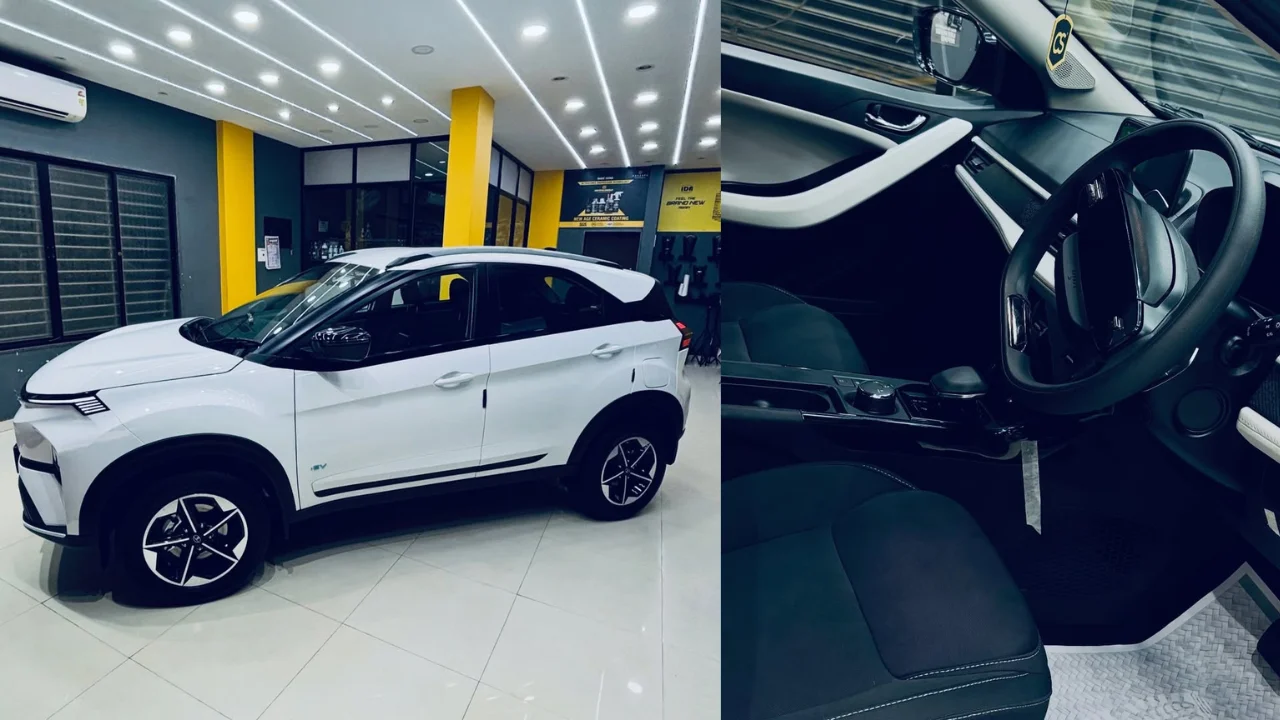
So you’ve made the switch. A shiny new EV is parked in your garage and you’re feeling great about the planet. But here is the question your showroom brochure probably skipped: How do you actually maintain it?
While your old petrol car could survive a basic wash at any local car service centre, your EV is a fundamentally different machine. With India’s EV market booming, from the Tata Nexon EV to the MG Windsor EV and BYD Atto 3, it’s time to rewrite the rules of car maintenance.
Here is exactly what changes and what doesn’t when it comes to keeping your electric vehicle showroom-fresh.
Table of contents
- Why EVs and Petrol Cars Age Differently
- The Underbody: Where the Real Danger Lies
- Exterior Detailing: The New Design Challenges
- The EV Wash Problem Nobody Talks About
- Interior Detailing: High-Tech Cabins Demand More Care
- Steam Washing: The EV Owner’s Best Friend
- PPF and Ceramic Coating for EVs
- Hybrid Cars: The Middle Child
- Why You Need an EV Specialist Studio
- Why CarzSpa for Your EV
- Frequently Asked Questions
Why EVs and Petrol Cars Age Differently
A petrol car is a machine of controlled explosions. Over time, engine bay grime, exhaust soot and oil residue become part of its wear and tear.
An electric vehicle has none of that. However, it introduces entirely new detailing challenges:
- The Underbody Battery: A massive, heavy lithium-ion battery pack sits millimetres from the road.
- Sensitive Electronics: Sealed electrical components and high-voltage wiring arrays do not mix well with high-pressure water.
- Aerodynamic Exteriors: Features like flush door handles, panoramic glass roofs and smooth panels require specific handling.
- The Bottom Line: EVs face the same external dirt and UV damage as petrol cars, but how you clean them and who you trust to do it must change.
The Underbody: Where the Real Danger Lies
The battery pack of an EV runs the entire length of the car’s floor. In Indian driving conditions, filled with potholes, monsoon flooding and construction debris, this area becomes a massive trap for moisture and grime.
The Risks:
- Casing Damage: Small stone chips can scratch the battery casing’s protective coating, inviting rust.
- Moisture Ingress: Standing water can seep into tiny seals over time.
A professional car detailing business will perform a careful underbody rinse using correct angles, ensuring high-pressure jets are never directed straight at sensitive electrical connectors.
Exterior Detailing: The New Design Challenges
Paint is paint. Whether it’s a Tata Punch EV or a petrol hatchback, the rules of fighting UV rays, bird droppings and hard water remain the same. However, modern EV styling requires specific automotive detailing adjustments:
- Uninterrupted Panels: Vehicles like the BYD Atto 3 feature long, smooth body panels. Without character lines to break up the view, swirl marks and micro-scratches stand out instantly.
- Flush Door Handles: These reduce aerodynamic drag but act as severe traps for grit, dirt and trapped moisture.
- Massive Panoramic Glass: Common on the Mahindra BE 6 and MG ZS EV, these massive glass roofs are highly vulnerable to mineral deposits and water spots, requiring dedicated glass-safe polishes.
The EV Wash Problem Nobody Talks About
Electric car maintenance requires rethinking the standard Sunday car wash. While EVs are perfectly safe in the rain, blunt force and high-pressure water jets are a different story.
- The Hazard: Directing high-pressure water straight into charging ports, battery ventilation points or door seals can compromise weather stripping over time.
- The Drying Issue: EVs trap water inside flush handles and complex panel gaps. Letting this dry under the Indian sun causes severe hard-water spotting.
- The Solution: Professional detailers use calibrated pressure levels, target safe angles and rely on forced-air blowers combined with plush microfibre towels for a spot-free dry.
Interior Detailing: High-Tech Cabins Demand More Care
Step inside a modern EV and you are greeted by an absolute detailer’s workout. Premium cabins feature expansive, delicate materials that require highly specific car detailing services:
| EV Interior Feature | Care Requirement |
|---|---|
Massive Touchscreens | pH-neutral, alcohol-free cleaners to protect coatings |
Vegan Leather Upholstery | Specialised conditioners to prevent cracking/stiffening |
Piano Black Accents | Ultra-soft microfibre & light polishing to prevent swirls |
Steam Washing: The EV Owner’s Best Friend
If one detailing method was practically tailor-made for electric vehicles, it is steam washing.
Why Steam is Superior for EVs:
- Zero Electrical Risk: It uses high-temperature, low-moisture vapour, cleaning deeply without risking water pooling near dashboard electronics or USB ports.
- Deep Sanitisation: It sanitises air vents, touchscreens and upholstery pores naturally, eliminating the need for harsh, greasy chemicals.
- Flawless Finish: It easily lifts oil and fingerprints from gloss-black plastics and touchscreens.
PPF and Ceramic Coating for EVs
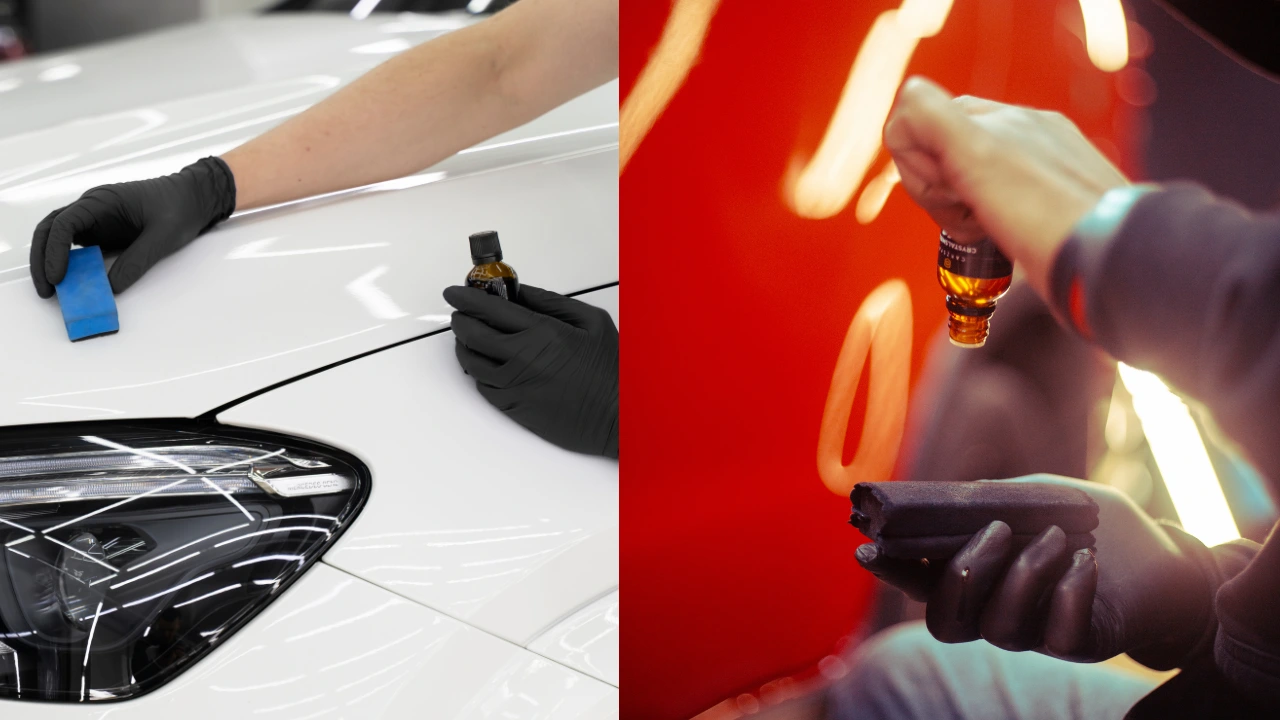
Paint Protection Film (PPF)
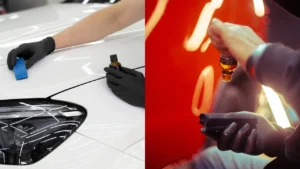
- What it does: Think of PPF as a high-quality mobile phone screen guard, but for your car’s paint.
- Why EVs need it: It absorbs stone chips, scratches and road debris. On the large, flat panels of an EV like the Kia EV6, a single deep scratch is incredibly glaring and expensive to repaint.
Ceramic Coating
- What it does: Creates a chemical, hydrophobic bond over the clear coat.
- Why EVs need it: Rainwater, mud and bird droppings bead up and roll off. It makes routine maintenance incredibly easy and protects the paint from severe UV oxidation under the harsh Indian sun.
Hybrid Cars: The Middle Child
If you drive a hybrid like the Toyota Innova Hycross or Maruti Grand Vitara Hybrid, your car sits right in the middle of both worlds:
- Under the Hood: You still have a petrol engine generating oil mist, heat and carbon grime.
- Under the Body: You have high-voltage cabling and battery packs requiring strict water-safety protocols.
Ensure your chosen car detailing business understands hybrid architecture. If a technician doesn’t differentiate between a standard petrol car and your hybrid, take it somewhere else.
Why You Need an EV Specialist Studio
The average roadside garage or local car service centre is optimised for petrol cars. Taking your EV there introduces unnecessary risks.
True EV care requires specialised training in high-voltage safety zones, material science for modern cabins and professional equipment like commercial steam extractors. Choosing a specialist ensures your vehicle’s warranty and delicate electronics remain fully protected.
Why CarzSpa for Your EV
At CarzSpa, we have spent over two decades evolving alongside automotive technology.
- EV-Trained Professionals: Our teams across India understand EV architectures, ensuring safe, flawless handling of your vehicle.
- Advanced Steam & Interior Tech: We utilise specialised low-moisture steam setups and screen-safe, pH-neutral interior care products.
- Exclusive Aegis PPF: Protect your EV’s large panels with premium Aegis Paint Protection Film, featuring a comprehensive pan-India warranty.
- Pan-India Presence: With over 125+ studios nationwide, your electric vehicle receives the exact same standard of expert care, wherever you go.
Frequently Asked Questions
1. Is detailing an EV different from a petrol car?
Yes. EVs feature sensitive underbody battery packs, delicate touchscreen displays, unique exterior aerodynamics and vegan leather interiors that require specialised detailing techniques and products.
2. Can I take my EV to a regular local car wash?
For a simple exterior rinse, yes. However, regular use of uncalibrated high-pressure water jets near charging ports and battery ventilation seals can cause long-term electrical damage.
3. Is steam washing safe for an EV’s high-tech interior?
It is the safest method available. Because professional steam cleaning uses minimal moisture, it safely sanitises tech-heavy cabins, touchscreens and electronics without any risk of water damage.
4. Should I get PPF or Ceramic Coating for my EV?
Highly recommended. EVs feature large, smooth body panels where scratches stand out easily. PPF acts like a protective screen guard against physical debris, while ceramic coating shields against severe UV damage and simplifies washing.
5. How often should an EV be detailed?
A comprehensive interior and exterior detail is ideal every 3 to 4 months to protect against harsh Indian weather and road pollution. An underbody inspection is highly recommended right after the monsoon season.