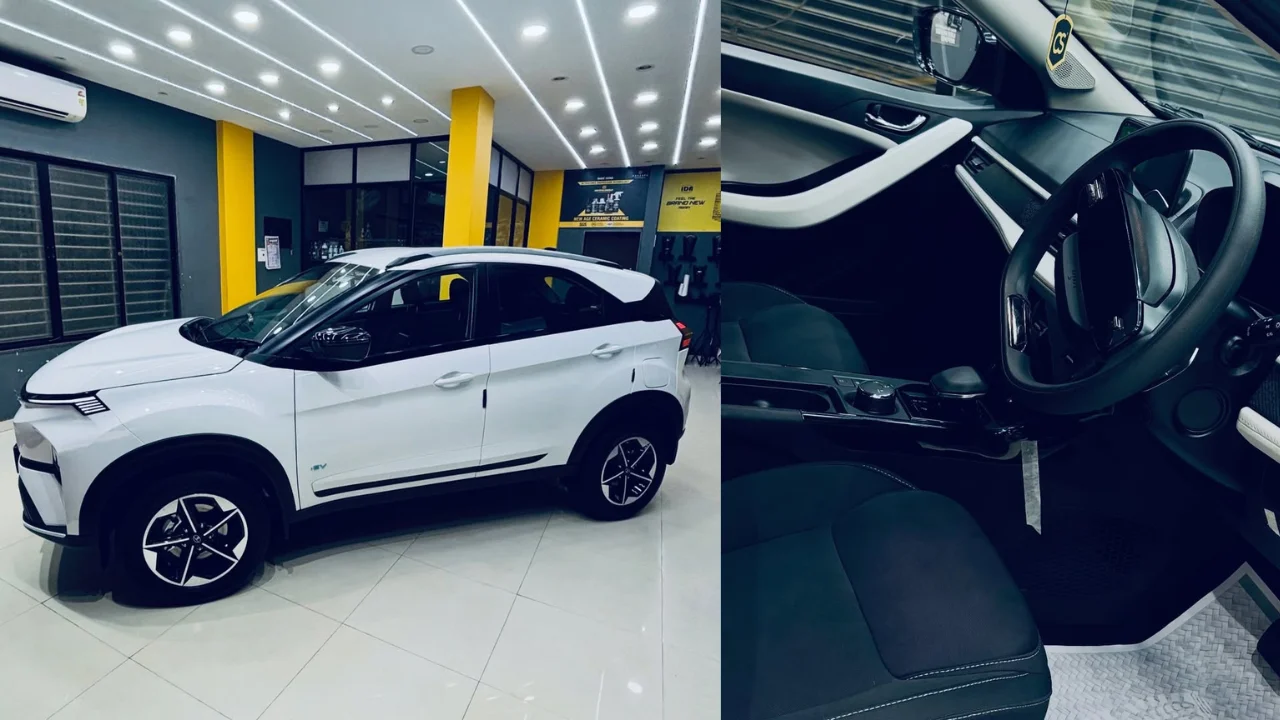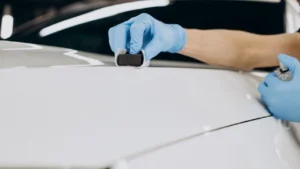
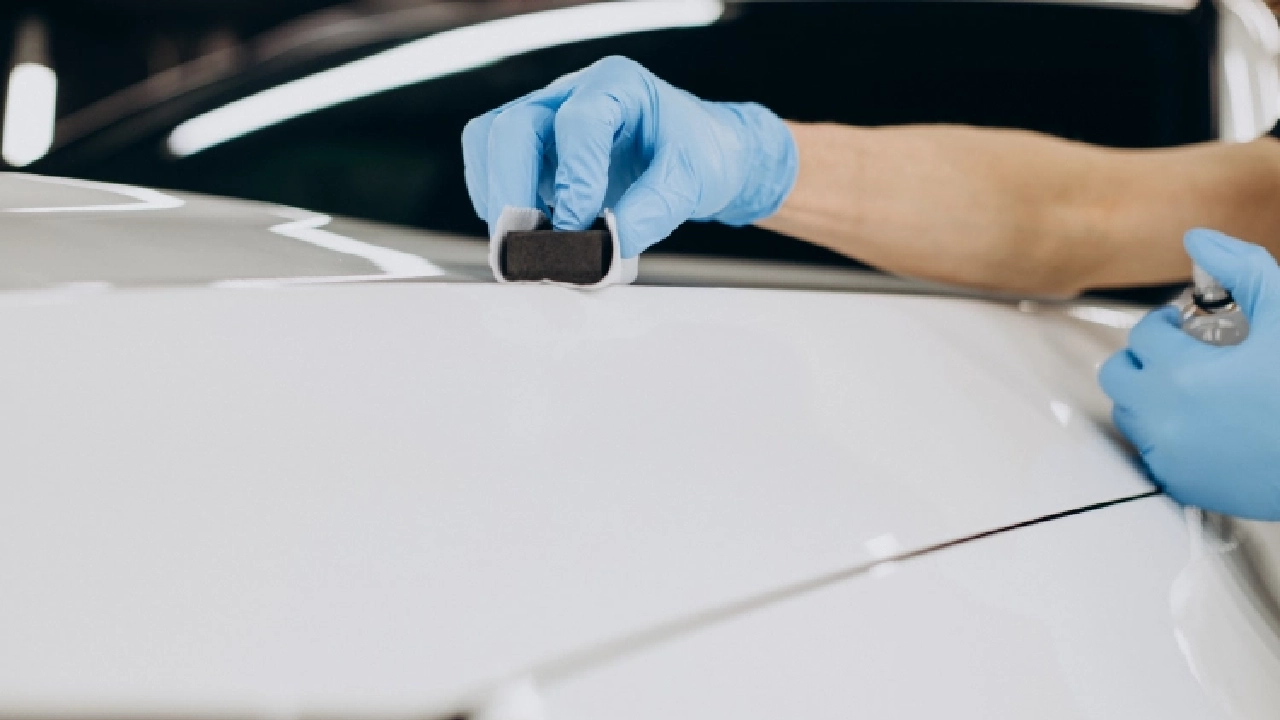
White is the most popular car colour in India. Walk into any housing society parking lot and count, you’ll find more Pearl Whites, Glacier Whites and Polar Whites than every other colour combined. And honestly, it makes sense. White looks clean, feels premium, hides minor dents surprisingly well and stays cooler in our punishing summer sun. The only problem? Keeping a white car actually looking white is a full-time job.
The yellowing after the monsoon season. The grey dust film that appears the morning after a wash. The bird dropping that etched itself into the paint while you were in a three-hour meeting. Every white car owner in India has a story. Which is why the question, ceramic coating for white cars and whether it really makes maintenance easier. It is one of the most searched, most debated and most important things you can ask before spending money on paint protection. Let’s answer it properly.
Table of contents
- Why White Cars Are a Maintenance Challenge in India
- What Ceramic Coating Actually Does (And What It Doesn’t)
- How Ceramic Coating Specifically Helps White Cars
- Graphene Coating vs. Ceramic Coating: Which One for White?
- How to Pick the Best Ceramic Coating Brand
- What Does Ceramic Coating Price Actually Buy You?
- The Honest Truth: What Changes and What Doesn’t
- Why CarzSpa for Your White Car
- Conclusion
- Frequently Asked Questions
Why White Cars Are a Maintenance Challenge in India
Before we get into coatings and chemistry, let’s get honest about something: white cars in India are not living their best life. The colour that looks so impossibly crisp on a showroom floor is up against an obstacle course the moment it hits our roads.
First, there’s the dust. India’s construction boom means that in virtually every metro, there is always a building going up somewhere near where you park. Fine construction dust settles on white paint and turns it a very unglamorous shade of grey within 24 hours of a wash. Then there’s the monsoon. The magic of Indian rain is that it doesn’t clean your car; it deposits mineral-rich water onto the surface that evaporates and leaves behind white chalky water stains on a white car. Yes, you read that right. White stains on a white car. It’s its own kind of invisible nightmare.
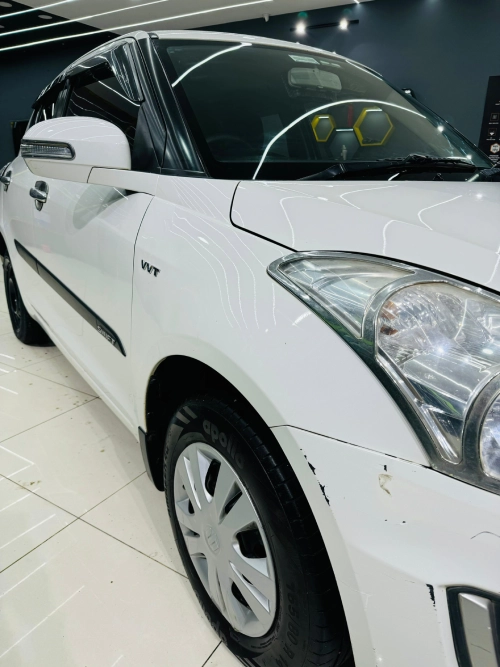
Add to that the bird droppings, which are mildly acidic and etch into clear coat faster in direct sunlight and the iron fallout from brake dust that can stain white paint a faint orange-brown over time. And then there’s UV oxidation. Unprotected white paint in India’s sun gradually loses its bright, sharp white and turns a dull, chalky yellowish tone over a few years. It’s the single most ageing thing that can happen to a white car’s appearance.
The result is that a white car that isn’t actively protected ends up looking perpetually older and dirtier than a darker-coloured car with the same level of neglect. The contrast is simply more visible on white. This is why ceramic coating for white cars isn’t just a detailing upgrade; it’s genuinely the most practical thing you can do for a white car’s long-term appearance.
What Ceramic Coating Actually Does (And What It Doesn't)
Let’s be upfront and clear about the one question we get a lot – Ceramic coating doesn’t protect your car from scratches. Any detailer or brand that promises you otherwise is selling you a fantasy. Here is what a professional-grade ceramic coating actually does:
- It creates a hydrophobic surface: The coating forms a chemically bonded layer over your car’s clear coat that causes water to bead up and roll off, taking most of the surface dirt with it. Imagine rain on a lotus leaf. That’s the physics at work.
- It hardens the surface against minor contamination: Bird droppings, tree sap and industrial fallout have a much harder time bonding to a coated surface than to bare paint. They sit on top rather than etching in, which means you can remove them with far less damage to the paint below.
- It provides UV protection: The coating acts as a semi-permanent UV barrier, significantly slowing down the oxidation and yellowing that destroy unprotected white paint over time. For white car owners in Indian summers, this is arguably the most valuable benefit of all.
- It enhances gloss: A properly applied ceramic coat gives white paint a depth and clarity that makes it look like it just rolled out of the showroom, a bright, crisp, sharp white rather than the faded, chalky look of unprotected paint.
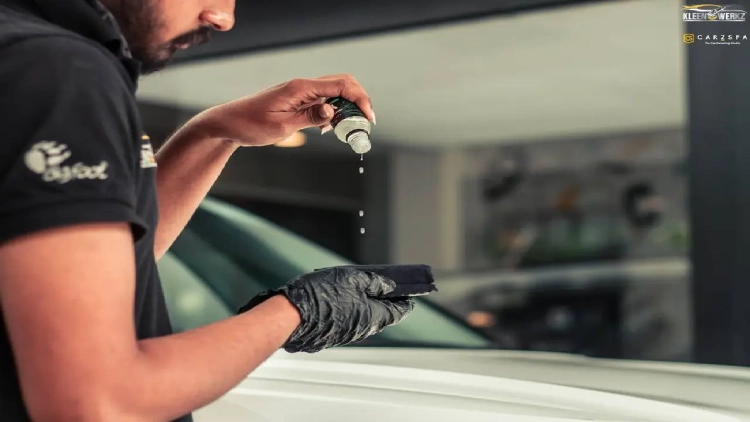
What it doesn’t do: prevent rock chips, deep scratches or dents. Doesn’t make the car self-cleaning. Doesn’t last forever without maintenance.
Also Read: Is Ceramic Coating Good for a Car?
How Ceramic Coating Specifically Helps White Cars
Here’s where the white car advantage really kicks in. While ceramic coating benefits every car colour, white cars get a disproportionately large return on the investment.
Here’s why, point by point.
- Water stains become almost irrelevant: The hydrophobic properties mean monsoon rain and mineral-heavy municipal water bead off the surface instead of sitting, evaporating and leaving chalky deposits. The white stain on white paint problem? Largely solved.
- Bird droppings lose their urgency: On unprotected white paint, a bird dropping baking in the sun can etch the clear coat within hours, leaving a dull patch that’s visible forever. On a ceramic-coated surface, the dropping sits on the coating rather than bonding to the paint, giving you enough time to safely remove it without lasting damage.
- Dust washes off cleanly: Construction dust and road grime on a ceramic-coated white car can often be rinsed off with a straightforward wash rather than a full scrubbing session. The smooth, slick surface simply doesn’t let particles grip the same way bare paint does.
- The white stays white: This is the big one. UV oxidation is the reason white cars go from showroom-bright to tired and yellowish. A quality ceramic coating puts a UV-blocking shield between the sun and your paint. Applied early in the car’s life, it can preserve that sharp, crisp white for years, which means your car looks newer for longer and holds its resale value better when it’s time to sell.
- Wash frequency drops significantly. Most white car owners in India wash their cars 2–3 times a week just to keep them looking presentable. With a quality ceramic coat in good condition, many owners comfortably extend that to once a week or even once in ten days, without the car looking neglected in between. In the long run, that’s also less water usage and less wear on your paint from repeated washing.
Graphene Coating vs. Ceramic Coating: Which One for White?
If you’ve been researching coatings recently, you’ve probably come across graphene coating as the newer, supposedly superior alternative to traditional ceramic. And there’s genuine substance to that claim; graphene is a fascinating material. But does it change the answer for white car owners specifically?
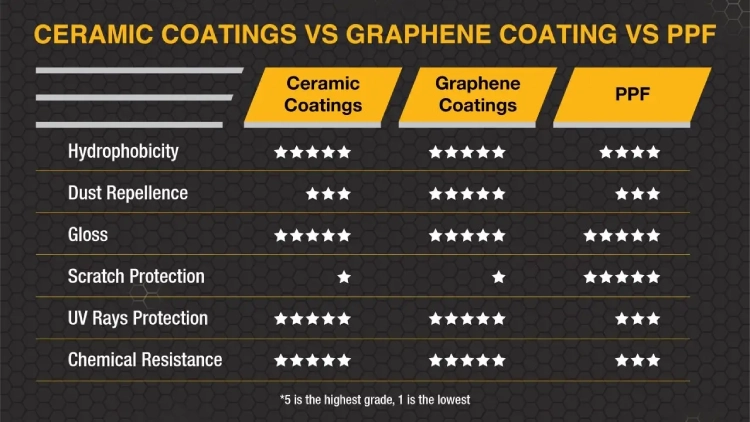
Traditional ceramic coatings are silicon dioxide (SiO2) based; they create a hard, glassy layer that excels at UV protection, hydrophobicity and chemical resistance. Graphene coating adds graphene particles to the formula, which improves heat dissipation, reduces water spot formation further and generally offers greater flexibility and hardness. On paper, graphene wins on almost every technical metric.
For white cars in India, this matters in two specific ways.
- Graphene coatings reduce water spot formation even more effectively than standard ceramics and we’ve established that water spots are a white car’s arch nemesis.
- The improved heat dissipation means the coating surface runs cooler under direct sun, which reduces the rate at which bird droppings and contaminants bake onto the surface.
The trade-off is the ceramic coating price. Graphene coatings typically sit at a higher price point than standard ceramic options. Whether the upgrade is worth it depends on where you live, how much the car is exposed to hard water and direct sun and how much you value that extra margin of protection. For a white car parked outdoors in Chennai, Ahmedabad or Nagpur, the answer is almost always yes.
For a side-by-side breakdown of both technologies, CarzSpa’s blog on ceramic coating vs PPF gives you a practical comparison to help you decide what’s right for your car and budget.
How to Pick the Best Ceramic Coating Brand
Walk into any detailing studio in India and ask what brand they use and you’ll get a different answer every time. Ceramic Pro, Gtechniq, IGL Coatings, GYEON, Nanolex, the list is long, the claims are louder and the prices swing wildly. So how does a white car owner cut through the noise and find the best ceramic coating brand for their needs?
Here are the things that actually matter, beyond the brand name on the bottle:
Longevity of the coating, not the warranty. Many brands offer 5-year or even 10-year warranties filled with conditions that make them nearly impossible to claim. What matters is the actual chemical durability of the product, how long does the hydrophobic effect and UV protection last under real-world Indian conditions of washing, heat and rain? Ask for this, not just the warranty period.
Installer certification. The best ceramic coating brand applied by an untrained hand will underperform a mid-range product applied by a certified expert. The prep work, decontamination wash, clay bar treatment and paint correction, if needed, accounts for 70% of the outcome. An uncertified detailer who skips steps is your biggest risk, not the brand of coating.
SiO2 concentration and layer thickness. Professional-grade coatings have higher SiO2 concentrations and cure into thicker layers than consumer-grade products. Thicker layers mean better durability and more sacrificial protection before the coating needs to be refreshed. Consumer products available online are significantly thinner and shorter-lived.
What Does Ceramic Coating Price Actually Buy You?
Let’s talk money, because ceramic coating price in India varies so dramatically that first-time buyers are understandably confused. You’ll see quotes starting from ₹5,000 at a roadside detailer and going up to ₹50,000+ at a professional studio. What’s the difference?
At the lower end, you’re typically getting a consumer-grade or heavily diluted product, minimal paint prep (often just a basic wash) and application by someone who learned from a YouTube video last week. The coating will look good for a few months, then fade. For a white car, this is almost worse than doing nothing; it gives you false confidence while providing inadequate protection.
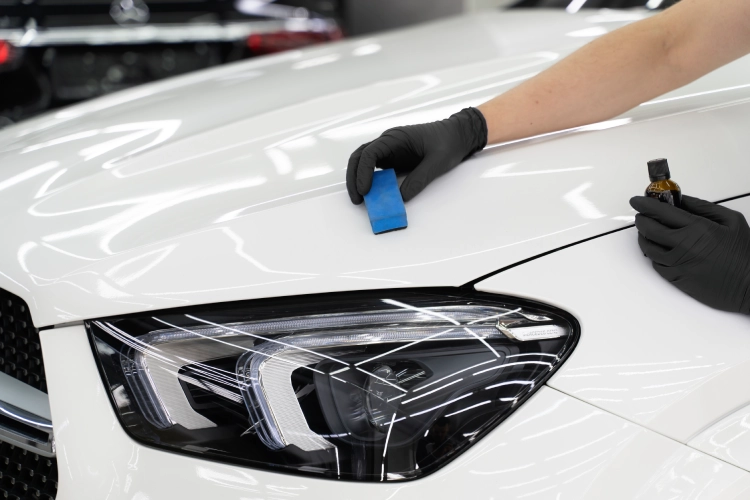
At the professional end, the ceramic coating price buys you: a full decontamination wash, clay bar treatment to remove bonded surface contaminants, paint correction (polishing out existing swirl marks and scratches) if needed and then a professional-grade coating applied in a controlled, dust-free environment with proper curing time. For white cars, the paint correction step alone is worth the premium, because a ceramic coat locked over swirl marks will preserve those swirl marks forever. You want to start with perfect paint before you seal it.
A realistic budget for a professional ceramic coating on a mid-size white car in India, inclusive of prep, paint correction if needed and a quality product, starts at around ₹15,000 to ₹20,000 for a good single-layer coating and goes up from there for multi-layer or graphene options. Think of it as an investment spread across 3–5 years of dramatically easier maintenance, not a one-time expense.
The Honest Truth: What Changes and What Doesn't
We promised to answer the original question honestly, so here it is: Does ceramic coating for white cars really make maintenance easier? The answer is yes, meaningfully and measurably. But with three important caveats:
You still need to wash the car. Just less often and with significantly less effort. Expect to go from washing every 2–3 days to once a week, with the car looking presentable in between. Dust and light grime will still settle, they just won’t stick as tenaciously and they’ll rinse away far more cleanly.
You still need maintenance coats. A ceramic coating is not a one-time deal. Every 6–12 months, a maintenance coat, sometimes called a top coat or booster, should be applied to refresh the hydrophobic properties and extend the life of the base coating. Factor this into your cost and scheduling. A good detailer will remind you; a great one will have a maintenance package built in.
Technique still matters. Ceramic-coated cars are actually more susceptible to swirl marks from improper washing than uncoated cars, because the coating’s gloss level makes any scratch more visible. This means using pH-neutral shampoo, microfibre wash mitts and the two-bucket wash method isn’t optional. It’s the price of having a car that looks this good.
The bottom line: with a quality ceramic coating, a white car in India goes from a high-maintenance headache to a manageable, rewarding ownership experience. The bird droppings no longer cause panic. The monsoon no longer leaves permanent watermarks. The UV oxidation yellowing stops in its tracks. That’s nothing, that’s actually quite a lot.
Why CarzSpa for Your White Car
India’s white cars deserve more than just a coat of something. They deserve the right coat, applied the right way, by people who’ve done it thousands of times. That’s what CarzSpa has been doing for over two decades across India.
- Expert Application, Every Time: Every CarzSpa detailer is trained in-house on professional coating application standards. The prep work, decontamination, clay bar and paint correction are never skipped because we know that what goes under the coating matters as much as the coating itself. Your white car’s paint is corrected to the best possible condition before a single drop of coating touches it.
- Professional Ceramic and Graphene Coating Options: CarzSpa offers both professional-grade ceramic coating and the more advanced graphene coating, so white car owners can choose the level of protection that matches their usage, parking situation and budget. Not a one-size-fits-all approach.
- In-House R&D Built for Indian Conditions: CarzSpa’s R&D team studies exactly the kind of aggressors your white car faces in India, hard water mineral deposits, UV intensity, monsoon effects and construction dust and formulates products engineered to handle them. Your coating isn’t designed for a British winter. It’s designed for Ahmedabad in May.
- Pan-India Network, Real Warranty: With 150+ CarzSpa Detailing Studios across India, your coating warranty actually means something. Whether you’re in Delhi, Bengaluru, Surat, Kochi or Bhopal, a CarzSpa studio can honour your coating maintenance, which is exactly the kind of support a long-term protection investment deserves.
- Transparent Advice, Not Upselling: White car parked indoors, low annual mileage, tighter budget? CarzSpa will recommend the right coating for your situation, not the most expensive one on the menu. That’s the kind of advice that builds a 20-year reputation.
Conclusion
White cars are India’s favourite and also India’s most high-maintenance. The dust, the monsoon stains, the UV yellowing, the bird droppings that age your paint faster than the odometer ages your car. It’s a lot to deal with and most white car owners deal with it by washing their car every other day and hoping for the best.
Ceramic coating for white cars changes that equation in a real, meaningful way. Not magically, you still need to wash, still need maintenance coats, still need proper washing technique. But the frequency drops, the effort drops, the panic-inducing bird dropping urgency drops and the slow creep of UV yellowing stops. Your white car stays brighter, cleaner and sharper for significantly longer.
The ceramic coating price for a professional job is an upfront investment, but spread across 3–5 years of easier maintenance and preserved resale value, it’s one of the smartest things a white car owner in India can do. Choose the right product, choose the right studio and let your white car finally look the way it was meant to.
Frequently Asked Questions
1. Is ceramic coating worth it, specifically for white cars?
Absolutely. White cars show water stains, dust and UV yellowing more dramatically than any other colour. Ceramic coating addresses all three directly, making it a higher-value investment for white car owners than almost any other colour.
2. How often will I need to wash my white car after ceramic coating?
Most white car owners go from washing every 2–3 days to once a week. Dust and light grime don’t bond as aggressively to the coated surface and when it’s time to wash, the effort is significantly less.
3. Is graphene coating better than ceramic coating for white cars?
Graphene coating offers better water spot resistance and heat dissipation, both highly relevant for white cars in India’s sun and hard water conditions. It sits at a higher ceramic coating price point, but the upgrade is worthwhile for cars parked outdoors in harsh climates.
4. Which is the best ceramic coating brand for white cars in India?
The best ceramic coating brand is less important than who applies it. Professional-grade products applied with proper prep by a certified detailer will always outperform a premium brand applied without paint correction or surface decontamination.
5. Will ceramic coating prevent my white car from turning yellow?
Yes, UV oxidation (the cause of yellowing) is significantly slowed by a quality ceramic coating’s UV-blocking properties. Applied on fresh white paint, it can preserve that bright, crisp white for several years longer than unprotected paint would last.
6. What is the disadvantage of ceramic coating in cars?
Ceramic coating isn’t scratch-proof, doesn’t last forever without maintenance and requires proper washing technique to avoid swirl marks. A poor application over unprepped paint will seal in existing defects permanently. The upfront ceramic coating price is also higher than basic alternatives.
7. How to make a white car really shine?
Start with a thorough decontamination wash and clay bar treatment to remove bonded surface grime. Follow with paint correction to eliminate swirl marks, then apply a professional ceramic coating to lock in the gloss. The prep work, not the product alone, is what delivers that deep, crisp shine.
8. How much should a 2-year ceramic coating cost?
A professional 2-year ceramic coating price in India typically ranges from ₹10,000 to ₹18,000, depending on car size, paint condition and studio. Factor in paint correction if needed, skipping prep to save money will always compromise the final result.
9. What is better than ceramic coating?
For paint protection against physical damage, PPF (Paint Protection Film) outperforms ceramic coating, as it absorbs stone chips and scratches that a ceramic coat cannot. For the best of both worlds, a graphene coating over PPF is the gold standard.
Share: