If you’re a car owner in India, you know the struggle is real. Our roads are filled with potholes, our summers are scorching, and our monsoons are relentless. Your car’s paint faces a lot more in a single day here than it would in a month elsewhere. This is exactly why paint protection film has become the shield every car owner needs.
But here’s where it gets interesting: not all PPFs are created equal. While almost every car protection film available in the market claims to safeguard the paint, if there is one scratch, the entire panel of film needs to be replaced. This is where self healing PPF comes into play.
So, what’s the difference, and why should you care? This is your guide to understanding everything about the difference between self-healing PPF and traditional PPF and why the former is always the better choice.
Table of Contents
The Evolution of Paint Protection Film (PPF) in India
The story of paint protection in India has been quite a journey. Back in the day, car owners had limited options, mostly traditional films made of PVC or basic plastic wraps that did little more than add a layer between your paint and the world. They’d yellow over time, peel at the edges, and honestly, sometimes looked worse than the scratches they were supposed to prevent.
The evolution from basic vinyl wraps to sophisticated PPF coating technology has been remarkable. What started as a simple protective layer has transformed into an intelligent material that doesn’t just protect, it heals itself. From PVC-based films that were rigid and prone to damage, the industry moved to advanced thermoplastic polyurethane (TPU) formulations that brought flexibility, clarity, and durability to a whole new level.
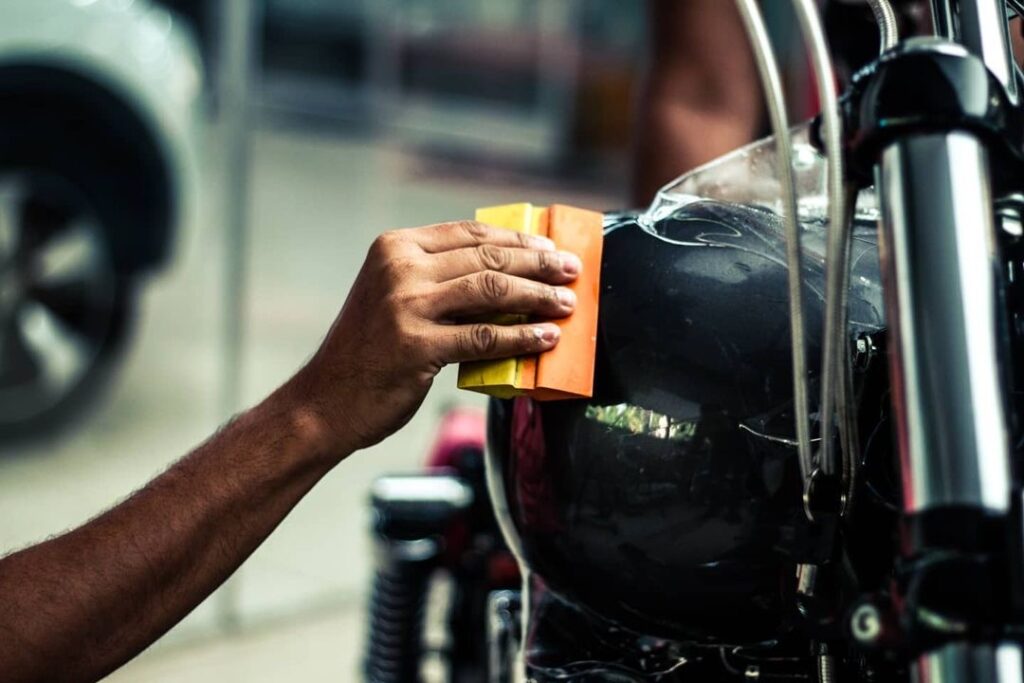
And India needed this evolution more than most countries. Why? Because our driving conditions are uniquely challenging – from the scorching 45-degree summers in Rajasthan to the humidity of Kerala, from the dust storms of Gujarat to the perpetual traffic chaos of Mumbai. Regular wraps just couldn’t cut it anymore.
Today, we’re living in the era of intelligent protection, where your car PPF doesn’t just take the hit; it bounces back.
Understanding Traditional PPF
These films were typically made from PVC (polyvinyl chloride) or TPH (thermoplastic polyurethane hybrid) materials. Now, don’t get us wrong – for their time, they were pretty decent. They created a physical barrier between your car’s paint and the outside world, which was better than nothing.
But here’s the catch.
Traditional PPFs were basically static protectors. Once they got scratched, dented, or marked, that damage was permanent. You’d see every swirl mark from washing, every light scratch from a careless parking neighbour, and every insect splatter that dried on too long. Over time, your car would look like it was wearing a bad plastic cover rather than an invisible shield.
The older PVC-based films had another annoying habit, they’d yellow and discolor under India’s intense UV exposure. These films also had limited elasticity. They couldn’t conform perfectly to complex curves and body lines, which meant bubbling, lifting edges, and a less-than-perfect finish. And when you wanted to remove them, they’d often leave behind adhesive residue that required aggressive solvents to clean.
What is a Self-Healing PPF?
Self-healing PPF sounds like something out of a sci-fi movie, doesn’t it? Your car’s protective film magically erases scratches on its own? But it’s not magic – it’s brilliant science. Self-healing films are made from advanced thermoplastic polyurethane (TPU) that’s been engineered with elastic memory properties. When the film gets scratched or marked, the molecular structure of the material is temporarily disrupted.
When heat is applied (and we’re talking about gentle heat, like what your car naturally gets from sitting in the sun or even from warm water), these TPU molecules get energised. They start moving around, rearranging themselves, and returning to their original formation. The scratch literally disappears as the material “heals” itself back to its smooth, unmarked state.
The science behind self-healing PPF
The science behind this involves polymer chains with high elasticity and memory retention. When these chains are displaced by a scratch, the heat energy allows them to snap back into their original configuration. The deeper the scratch (within the film’s thickness, of course), the more heat and time it needs, but surface scratches? They disappear in minutes under direct sunlight or any form of controlled heat.
For Indian conditions, this is absolutely revolutionary. Because between the aggressive car washes by potentially untrained workers, the tight parking spaces, and the sheer amount of time our cars spend baking under the sun, we needed a car paint protection solution that could keep up with the wear and tear.
Self-Healing PPF vs Traditional PPF
Let’s put these two head-to-head and see how they really compare. Because when you’re making an investment in protecting your car, you deserve to know exactly what you’re getting.
| Feature | Traditional PPF | Self-Healing PPF |
|---|---|---|
Material | PVC or basic TPH (Thermoplastic Polyurethane Hybrid) | Advanced TPU (Thermoplastic Polyurethane) |
Scratch Recovery | Permanent scratches and marks remain visible | Minor scratches and swirl marks disappear with heat |
UV Resistance | Yellows and discolors over time, especially under intense Indian sun | Superior UV stability, maintains clarity for years |
Flexibility | Rigid, difficult to conform to complex curves | Highly flexible, wraps smoothly around body lines |
Longevity | 2-3 years before visible degradation | 5-7 years or more with maintained clarity |
While traditional PPFs do provide a basic level of protection, self-healing PPF is playing an entirely different game. It’s not just about putting a barrier on your car – it’s about having an intelligent, self-maintaining protection system that adapts to Indian conditions.
Benefits of Self Healing PPF
Let’s talk about why car owners across India are making the switch to self-healing technology. Because once you understand these benefits, going back to traditional films feels like downgrading from a smartphone to a landline.
- The “New Car Look” That Lasts: Your car maintains that showroom shine year after year. Minor scratches simply vanish.
- Serious Cost Savings: No more frequent visits to the workshop for scratch removal, no replacing yellowed films every couple of years, and no expensive paint correction sessions.
- Superior Scratch Recovery: Self-healing PPF absorbs the daily assault of stone chips, road debris, and parking lot dings. Your original paint stays untouched underneath, preserving your car.
- Weather-Proof: From Rajasthan’s 47-degree summers to Chennai’s humidity and Bangalore’s unpredictable weather – self-healing PPF handles it all. The film is engineered to withstand extreme temperature fluctuations without losing its protective properties or optical clarity.
- Maintenance Made Simple: Washing your car becomes stress-free. You can actually enjoy having a clean car without worrying about the washing process damaging the protection.
Why Traditional PPFs Don’t Work?
- Starts yellowing quickly: This is probably the most frustrating issue. Traditional PPFs yellow within 18-24 months. Suddenly, your pristine white car has an amber tint. It’s especially bad on lighter-colored vehicles.
- Visible scratches: Every single mark stays forever. Your car starts looking like a scratched CD from the 90s.
- Starts peeling from edges: Traditional films lift at the edges in India’s humid and hot climate. Once that edge lifting starts, water gets underneath and dirt accumulates.
- Leaves glue marks: When removal time comes (and it always does, usually sooner than you’d like), traditional films leave behind a sticky residue that’s incredibly difficult to remove. You’ll need aggressive solvents.
And of course: IT NEVER SELF-HEALS. YOU HAVE TO REPLACE IT
Which PPF is Better for Your Car?
Self-healing PPF is unquestionably the superior choice for your car. For Indian car owners specifically, self-healing PPF addresses every single pain point that traditional films fail at. It’s designed for our climate, engineered for our roads, and built to withstand the unique challenges we face every day.
And here’s something worth considering, if you’re buying a premium car (and even if you’re not), you’ve already invested significantly in that vehicle. Protecting it with outdated technology is like buying a top-spec smartphone and using a cracked screen protector. It just doesn’t make sense.
The question isn’t really “which is better?” It’s “why would anyone choose traditional films when self-healing technology exists?”
Why Choose Aegis PPF?
Aegis PPF isn’t just another paint protection film, it’s the result of understanding exactly what Indian cars need and engineering a solution specifically for our conditions.
The foundation of Aegis PPF is premium TPU (thermoplastic polyurethane), not the cheap PVC or hybrid materials you’ll find in lesser films. This means superior clarity, better flexibility, and that crucial self-healing capability that makes all the difference. The film is crystal clear, maintaining your car’s original colour and shine without any haziness or distortion.
But here’s what really sets Aegis apart – the impact resistance. We’re not talking about basic protection; we’re talking about a film that’s been specifically engineered to handle the stone chips, road debris, and daily wear-and-tear that Indian roads dish out. The TPU construction absorbs impact energy and distributes it across the film, preventing damage from reaching your paint.
And the self-healing? It’s as simple as heat.
Minor scratches disappear with just heat treatment, whether from the sun, warm water, or a heat gun for deeper marks. The pressure-sensitive adhesive (PSA) technology in Aegis PPF is another game-changer. It’s strong enough to stay put through years of exposure but engineered for clean removal when the time comes. No residue, no paint damage
The Aegis XG Series - Levelling up protection
CarzSpa’s R&D team identified a crucial need: even greater impact resistance without compromising the self-healing properties. Their solution? Infusing Polycarbonate with TPU. The Aegis XG Series‘ innovative polycarbonate PPF composition creates a film that’s significantly tougher than standard TPU films while retaining all the benefits that made Aegis PPF great in the first place.
The Aegis XG Series has:
- Superior impact absorption: Handles harder impacts without damage
- Enhanced scratch resistance: Takes more abuse before the self-healing even needs to kick in
- Improved UV filtering: Even better protection against sun damage and paint fading
- Extended longevity: Outlasts even standard premium PPFs
- Maintained clarity: All this protection without compromising the invisible appearance
Concluding Thoughts
The choice between self-healing PPF and traditional films isn’t really a choice at all. It’s not an expense; it’s an investment that pays dividends every single day. If you’re serious about protecting your car with the best technology available, Aegis PPF by CarzSpa is your answer. Engineered for Indian conditions, backed by extensive research, and proven on thousands of vehicles across the country.
You can get Aegis PPF exclusively from CarzSpa Detailing Studios. Visit any of our 125+ detailing studios spread across 75+ cities in India and Nepal and experience the difference that intelligent protection makes.
Frequently Asked Questions
1. How long does the self-healing effect last?
The self-healing properties of a high-quality TPU film like Aegis generally last for the entire life of the warranty, provided the top coat isn’t punctured by deep debris.
2. Can I wash my car normally after getting PPF?
Yes! However, we recommend waiting 48 hours for the film to cure. Afterwards, use a pH-neutral shampoo and a microfiber mitt to maintain the film’s clarity and healing ability.
3. Does the sun really heal the scratches?
Absolutely. On a typical sunny day in India, the surface temperature of the car is often enough to trigger the molecules to “self-heal” light swirl marks and surface scratches automatically.
4. Will the PPF turn yellow over time?
Traditional PVC films yellow quickly, but our Aegis TPU-based films are UV-stable and engineered to remain crystal clear, even under the harshest sunlight, ensuring your car’s colour stays true.
5. Is PPF better than Ceramic Coating?
While ceramic coating offers great gloss and water repellency, only PPF provides physical protection against stone chips and scratches. For the ultimate protection, many enthusiasts choose to combine both!
Share: