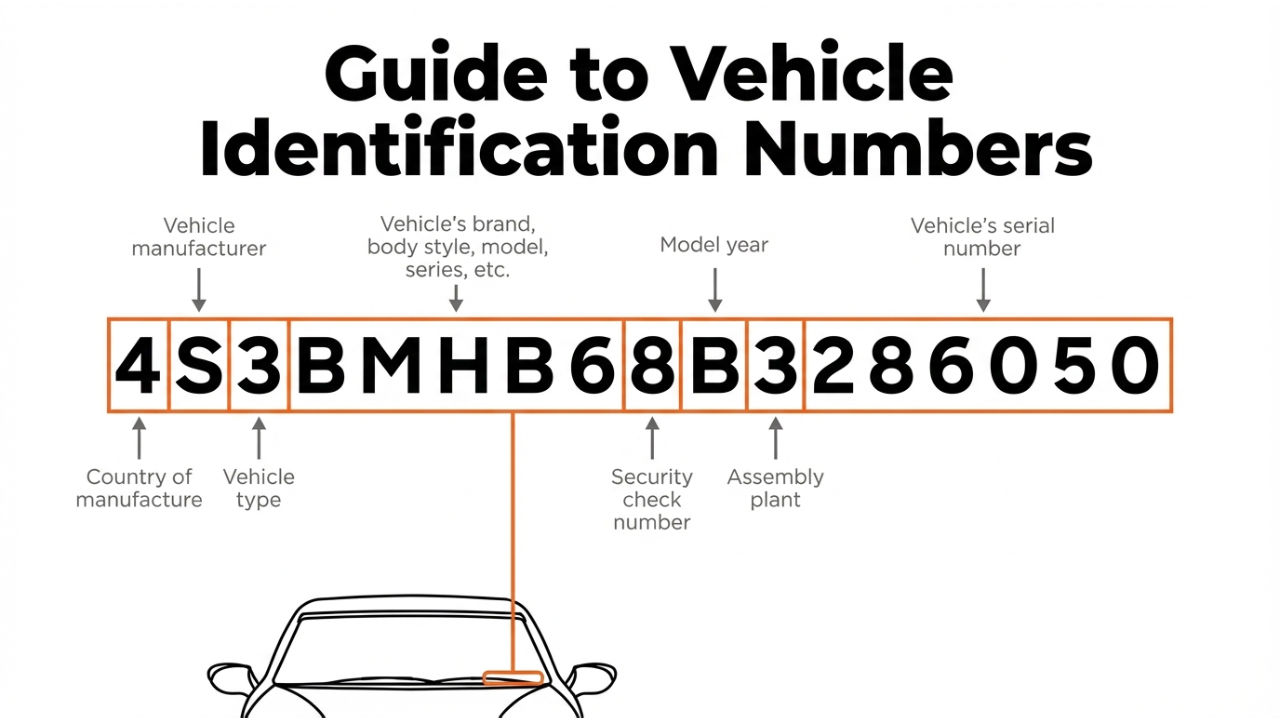
Ever wondered what that mysterious 17-character code on your dashboard actually means? That’s your car’s Vehicle Identification Number, and it’s way more important than most people realise. Think of it as your car’s unique fingerprint; no two are exactly the same.
Here’s the thing: whether you’re buying a pre-owned car, getting custom paint protection film or just verifying your vehicle’s history, the VIN is your ultimate source of truth. It tells you everything from where your car was made to what’s under the hood. At CarzSpa, we check the VIN before providing car detailing services to help us understand your vehicle’s exact specifications, from the factory paint type to precise body measurements.
In this guide, we’ll decode that 17-digit mystery together. You’ll learn what every character means, where to find it, and why it matters more than you think. Let’s get started!
Table of Contents
- What is a Vehicle Identification Number (VIN)?
- Where to Find Your Car’s VIN
- The Anatomy of a VIN: Breaking Down the 17 Digits
- World Manufacturer Identifier (WMI): The First Three Characters
- Vehicle Descriptor Section (VDS): Understanding the Specs
- Vehicle Identifier Section (VIS): The Unique Serial
- Why VIN Decoding is Crucial for Detailing and Maintenance
- Conclusion
- Frequently Asked Questions
What is a Vehicle Identification Number (VIN)?
A Vehicle Identification Number is a standardised 17-character code used by the automotive industry to identify individual motor vehicles. Established in its current format by the ISO in 1981, the VIN is more than just a serial number; it’s a comprehensive data packet. Before this standardisation, manufacturers used various formats, making car history tracking nearly impossible. Today, the VIN acts as a universal language for insurers, law enforcement and detailing professionals.
Understanding your VIN is essential when seeking car detailing services. It tells the technician exactly what year, make, and model they’re working with, which is critical when selecting the right products or the precise patterns for a paint protection film. Without a VIN, you’re essentially guessing the specifications of your vehicle. It records everything from the engine type to the assembly plant, ensuring that every part of the car’s lifecycle is documented and accurate.
Where to Find Your Car’s VIN
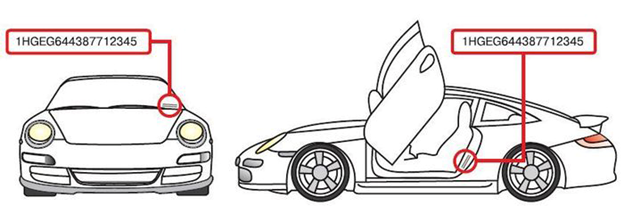
Finding your Vehicle Identification Number is the first step in VIN decoding. Manufacturers place the VIN in several strategic locations to prevent tampering and make it accessible for quick identification. Here’s where to look:
On the Vehicle:
- Driver’s Side Dashboard: The most common spot, visible through the windshield on a small metal plate permanently affixed to the frame
- Driver’s Side Door Pillar (B-Pillar): Open the door and you’ll find a sticker or plate with the VIN alongside tyre pressure information
- Under the Hood: In some cars, particularly older models or heavy-duty SUVs, the VIN or chassis number might be stamped directly onto the vehicle frame
- Near the Spare Tire Well: Another common location where the VIN may be stamped on the frame
On Official Documents:
- Registration Certificate (RC): Your VIN is always listed here
- Insurance Policy: Also contains your complete VIN
Knowing these locations is vital during a pre-owned car inspection to ensure the numbers match across all points, confirming the car’s legitimacy.
The Anatomy of a VIN: Breaking Down the 17 Digits
The 17 digits of a VIN aren’t random; they’re organised into three distinct sections that provide a tiered level of information. The first section is the World Manufacturer Identifier (WMI), the second is the Vehicle Descriptor Section (VDS), and the final part is the Vehicle Identifier Section (VIS). By understanding these segments, VIN decoding becomes a simple process of reading the car’s “birth certificate.”
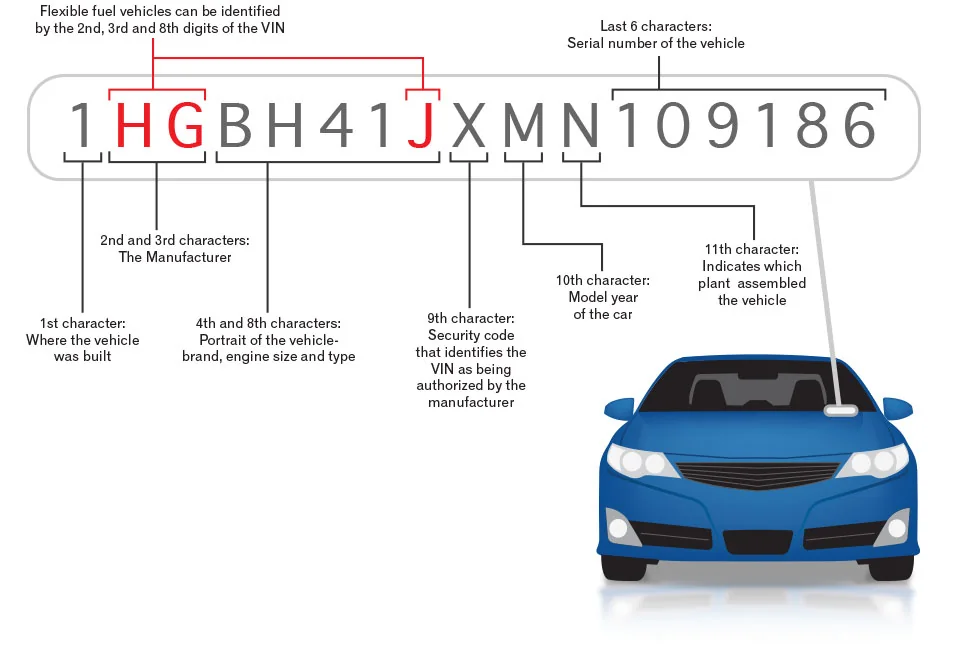
It’s important to note that VINs don’t use the letters I, O, or Q to avoid confusion with the numbers 1 and 0. This precision is what makes the VIN a foolproof method for car authentication. Sometimes, when car detailers and installers prepare a vehicle for a paint protection film installation, they often use the VIN to pull the exact digital templates for that specific chassis. This ensures a perfect edge-to-edge fit that manual measurements simply can’t match. Every character in that string of 17 has a specific job in defining the identity of your machine.
World Manufacturer Identifier (WMI): The First Three Characters
The first three characters of the Vehicle Identification Number tell you who made the car and where. Let’s break down what each position reveals:
Position 1 – Country of Origin:
- 1, 4, or 5 = United States
- J = Japan
- S = Great Britain
- M = India
- W = Germany
- K = South Korea
This is your first step in any VIN check to verify that the vehicle’s origin matches the seller’s claims.
Position 2 – Manufacturer (when combined with Position 1):
International Brands:
- JH = Honda (Japan)
- JT = Toyota (Japan)
- WBA = BMW (Germany)
- 1F = Ford (USA)
Indian Market Brands:
- MA3 = Maruti Suzuki (India)
- MAT = Tata Motors (India)
- MA1 = Mahindra & Mahindra (India)
- KMH = Hyundai (Korea, but widely sold in India)
- MA7 = Honda Cars India
Position 3 – Vehicle Type/Division: When combined with the first two characters, this identifies the specific division or vehicle type (such as an SUV, sedan, or passenger car).
Why This Matters: Understanding the WMI is especially helpful when tracking the quality and build of a car. Certain manufacturing plants are known for specific paint finishes, which allows our experts in car detailing services to choose the best buffing compounds and ceramic coating formulas tailored to that specific factory’s paint hardness.
Vehicle Descriptor Section (VDS): Understanding the Specs
Characters four through nine make up the Vehicle Descriptor Section (VDS). This is the “flesh and bones” of the Vehicle Identification Number. These digits describe the vehicle’s general attributes, such as the body style, engine type, and the specific model platform. For a car enthusiast, this is the most interesting part of VIN decoding, as it reveals exactly what’s under the hood and how the car was configured at the factory.
The ninth digit is particularly special; it’s known as the “Check Digit.” This is a mathematical security feature used to verify the authenticity of the entire VIN. By using a complex formula, the check digit ensures the VIN is valid and hasn’t been altered. This is a crucial step in a pre-owned car inspection. If the ninth digit doesn’t align with the rest of the code, it’s a major red flag that the vehicle’s identity may have been compromised.
Vehicle Identifier Section (VIS): The Unique Serial
The final eight characters (10 through 17) are known as the Vehicle Identifier Section (VIS). This is what makes your car unique from the thousands of others of the same model. The 10th digit is the most widely used by owners; it indicates the “Model Year.” For example, “L” might represent 2020, and “M” represents 2021. This is the ultimate truth-teller when a seller claims a car is a newer model than it actually is.
The 11th digit indicates the specific assembly plant where the car was put together. The remaining digits (12 through 17) are the actual production sequence or serial number. For limited edition vehicles or high-end sports cars, these numbers are highly prized by collectors. When applying paint protection film, knowing the exact production year ensures we’re using the most updated design patterns, as manufacturers often make subtle changes to bumper shapes or sensor placements between model years.

Why VIN Decoding is Crucial for Detailing and Maintenance
VIN decoding allows us to provide a level of service that goes beyond a standard car wash.
For Precision Paint Care:
- Identifies exact paint types used by the manufacturer during that specific production year
- Ensures perfect ceramic coating application that bonds correctly with your factory clear coat
- Helps select the right buffing compounds matched to your paint’s hardness and finish
For Accurate Vehicle Assessment:
- Detects non-factory panels from previous repairs that might react differently to detailing chemicals
- Reveals modification history so we can adjust our approach accordingly
- Ensures PPF templates match perfectly with your exact chassis specifications
For Long-Term Value Protection:
- Creates a documented maintenance record tied to your VIN – a significant asset for resale value
- Provides professional care by specialists who understand your vehicle’s unique requirements
- Builds trust with future buyers through verifiable service history
In short, the VIN is the bridge between factory engineering and professional car care, and at CarzSpa, we use it to deliver results that are as precise as your vehicle deserves.
Conclusion
So, there you have it, the complete breakdown of that mysterious 17-digit code on your dashboard. Your Vehicle Identification Number isn’t just a random string of characters; it’s your car’s unique identity, its documented history, and the key to giving it the precise care it deserves.
Whether you’re buying a pre-owned vehicle, verifying your car’s authenticity, or simply want to ensure you’re getting the best possible detailing service, understanding your VIN puts you in control. It’s the difference between guessing and knowing exactly what your car needs. Because when you know your car’s DNA, you can protect it the right way.
Next time you glance at that 17-character code through your windshield, remember – you’re looking at your car’s complete story. Keep it safe, keep it documented, and most importantly, keep it protected with care that’s as unique as the VIN itself.
Frequently Asked Questions
1. Can two cars have the same VIN?
No. Each Vehicle Identification Number is unique to a single vehicle globally. The ISO standards ensure that no two cars produced within 30 years share the same VIN, making it the ultimate tool for car authentication.
2. Is the chassis number the same as the VIN?
In modern cars, yes. The chassis number is essentially the final 6 to 8 digits of the VIN. However, the term is often used interchangeably with the full 17-digit code in many regions, including India.
3. Why do I need the VIN for buying a pre-owned car?
The VIN allows you to perform a car history check. This reveals if the car was ever in a major accident, if the odometer has been rolled back, or if any outstanding recalls need to be addressed.
4. Can a VIN be changed?
Legally, no. Tampering with or changing a Vehicle Identification Number is a serious criminal offence. If you see signs of scratching or “re-stamping” on a VIN plate during an inspection, avoid that vehicle entirely.
5. Does the VIN tell me the car’s colour?
While the VIN itself doesn’t explicitly contain a “colour code” in the 17 digits, a professional VIN check through the manufacturer’s database will reveal the exact factory paint code and interior trim options.
Share: