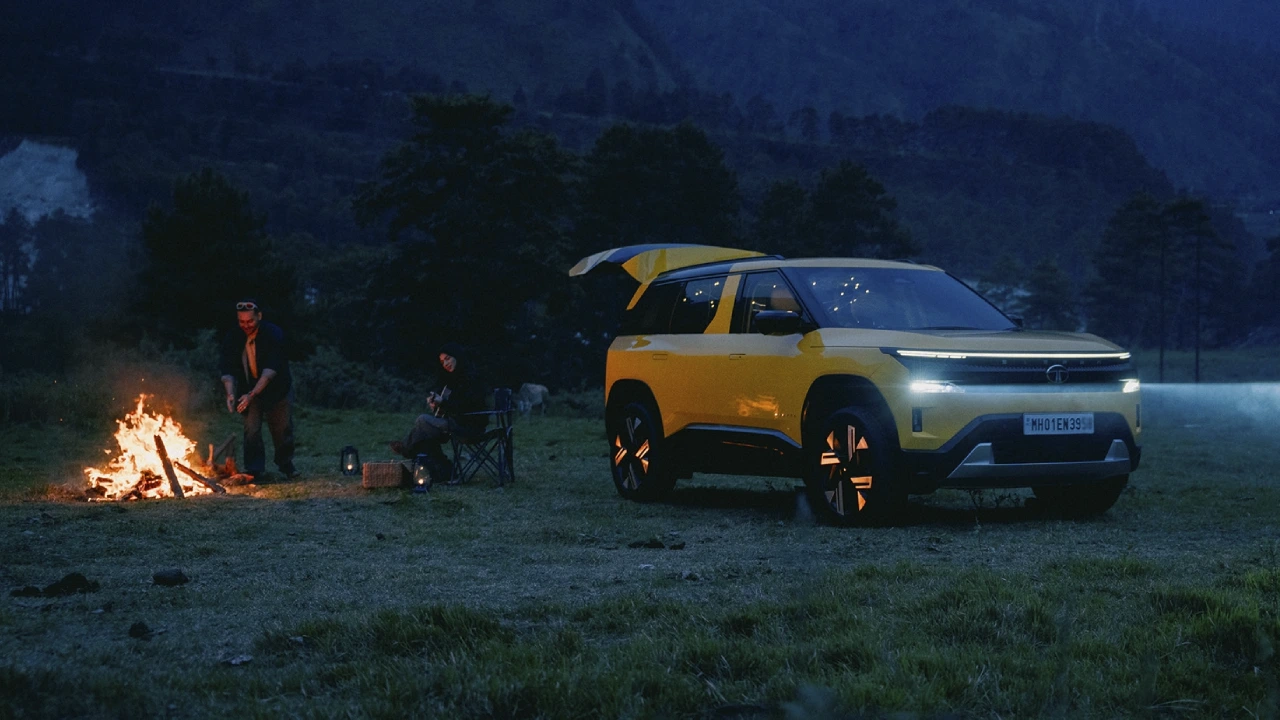
The Indian automotive landscape has seen many vehicles come and go, but few have left an indelible mark quite like the Tata Sierra. Launched in 1991, it was a bold experiment that defied the conventions of the time, offering a “lifestyle” experience long before the term was even coined. It wasn’t just a machine; it was a statement of aspiration, adventure, and indigenous engineering prowess. As we stand at the threshold of its rebirth in 2025, the excitement is a testament to the Sierra’s enduring legacy. This blog explores the remarkable journey of the SUV that taught India to dream bigger, mapping its history from the rugged diesel era to the high-tech, electrified future that awaits it on our roads today.
Table of Contents
The Origin of the Sierra
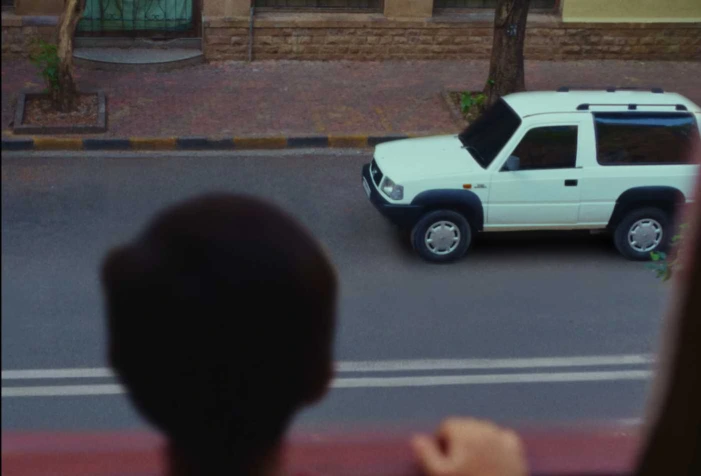
The Tata Sierra was born in 1991, emerging from the workshops of Telco (now Tata Motors) as India’s first truly indigenous passenger car. Built on the rugged Tata Mobile (Telcoline) pickup platform, it was a masterclass in utilising existing architecture to create something entirely new. While the rest of the country was driving utilitarian hatchbacks, Tata Motors dared to create a three-door lifestyle SUV. It shared its DNA with the Tata Estate, but the Sierra was designed for the individualist—the driver who wanted the command of a truck with the comfort of a luxury sedan. It was the first step in Tata’s journey to becoming a global SUV powerhouse.
Why India Fell in Love with the Sierra
India fell in love with the Sierra because it offered a “cockpit” experience unlike anything else. Its most defining characteristic was the massive, fixed rear Alpine windows that wrapped into the roof, flooding the cabin with light and giving rear passengers a panoramic view of the world. For a generation raised on Ambassadors and Padminis, the Sierra felt like a spaceship. It offered “first-in-class” luxuries like power windows, power steering, and a tachometer. It wasn’t just a car; it was a status symbol that signalled its owner was a modern, adventurous spirit who valued design as much as durability.
Unique Features of the Classic Sierra
The classic Sierra was defined by its quirky yet bold design choices:
- The Three-Door Layout: A brave move in a family-centric market, emphasising its “personal” SUV status.
- Peugeot-Sourced Engine: Initially powered by a 2.0L naturally aspirated diesel, later upgraded to a 90 hp turbocharged unit in 1997.
- The “Lounge” Cabin: The rear seat was a continuous bench that felt more like a sofa than a car seat, surrounded by that iconic glass.
Was it competing with anyone?
In 1991, the Sierra had no direct rivals. Its closest “competitors” were the Maruti Gypsy (which was too utilitarian) and the Mahindra MM540 (which lacked any luxury). Later, it faced internal competition from the Tata Sumo and the legendary Safari, which eventually took the “lifestyle SUV” mantle forward.
Sierra in Indian Pop Culture
The Sierra’s cultural reach was immense. It was the choice of the elite and the eccentric. Ratan Tata himself has a deep personal connection to the vehicle, often seen as the driving force behind its unique “Alpine” aesthetic. In the 90s, it became a Bollywood staple, frequently appearing as the ride of choice for the “cool” protagonist or the sophisticated villain.
Perhaps its most prestigious role was within the Indian Government. In the 1995 Republic Day Parade, the Tata Sierra was famously used in the Prime Minister’s convoy (P.V. Narasimha Rao), marking a rare moment where an indigenous SUV replaced the usual foreign imports or Ambassadors for high-security detail.
The Sierra also carried India’s flag abroad. It was exported to Europe (Spain, Italy, France) where it was known as the Tata Sport or Tata Telcosport. In the United Kingdom, it was interestingly marketed as the Tata Gurkha, long before that name became associated with Force Motors in India. Its international presence proved that Indian design could hold its own on the global stage.
Why was the Sierra Revived?
Tata Motors recognised that in a market saturated with “me-too” mid-size SUVs, nostalgia is a powerful differentiator. The Sierra nameplate carries a “legacy value” that brands like the Creta or Seltos cannot replicate. By reviving the Sierra, Tata isn’t just selling a car; they are selling a piece of Indian history, updated for the modern era.
The New Tata Sierra 2025
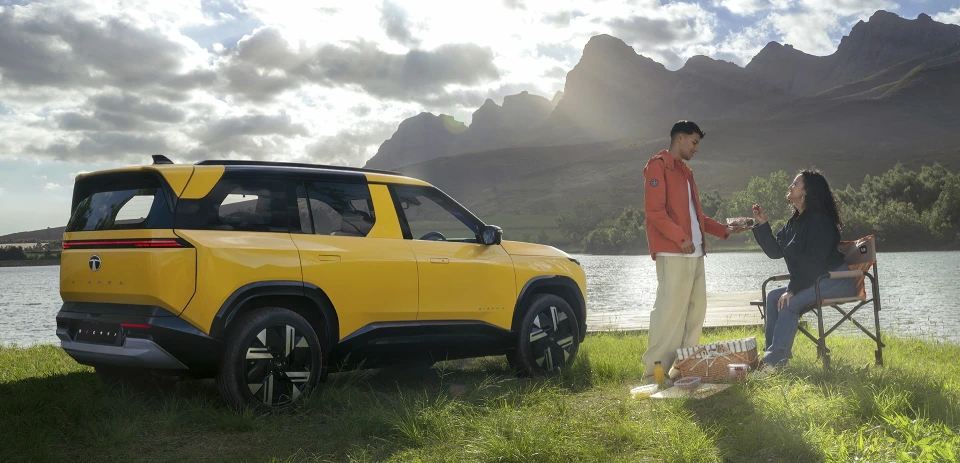
The new Tata Sierra, launched on November 25, 2025, is a masterpiece of “retro-futurism.” It retains the iconic boxy silhouette and the signature Alpine glass look but adds a much-needed layer of practicality.
What is different?
- 5-Door Layout: The new variant finally adds rear doors, making it a viable family SUV while cleverly hiding the B-pillar to maintain the “single glass” look.
- Triple-Screen Interior: A “Horizon View” dashboard featuring three massive screens for the driver and passengers.
- Powertrains: Unlike the diesel-only original, the 2025 model comes in Petrol, Diesel, and EV variants.
Is the EV variant a good idea?
Absolutely. The Sierra.ev is built on the advanced Acti.ev platform. Given Tata’s dominance in the Indian EV space, the Sierra.ev serves as the “halo” product, combining the silence and torque of an electric motor with the nostalgic design of a legend.
The Cost: Then vs. Now
- 1991 Original: Launched at approximately ₹5.00 Lakh, reaching ₹8.00 Lakh for the Turbo version.
- Collector’s Market: Today, a well-restored 90s Sierra can fetch anywhere between ₹10 Lakh to ₹25 Lakh among enthusiasts.
- 2025 Launch: The new Sierra was launched at an introductory price of ₹11.49 Lakh (ex-showroom).
The highlight of the 2025 launch was the price announcement. In a theatrical move that went viral on social media, Tata used a digital price counter on the main stage screen.
As the presentation reached its climax, the numbers on the screen began to spin rapidly, starting high and dropping fast. The audience held its breath as the counter ticked down past the 15-lakh and 13-lakh marks, eventually slowing down and dramatically stopping at ₹11.49 Lakh (for the Smart+ variant). This “falling price” stunt was a direct nod to Tata’s commitment to making this icon accessible to a new generation of Indian drivers.
How to Maintain the New Sierra
The new Sierra features complex glass areas and premium “Persona” paint finishes that deserve protection from day one. To ensure those modern Alpine windows and the high-gloss bodywork remain pristine in India’s harsh conditions, Aegis PPF is the ultimate solution.
- Aegis XG Series: Perfect for the Sierra’s unique curves, providing $5$-star stain resistance and self-healing.
- Aegis Matte: If you want to give your 2025 Sierra a “Stealth” look, the Matte PPF transforms the vehicle while shielding it from rock chips.
Protecting your Sierra from the first kilometre ensures that this modern legend stays showroom-ready for years.

Conclusion & Availability
The evolution of the Tata Sierra is a full circle, from an ambitious 90s dream to a 2025 reality. It bridges the gap between our childhood memories and the future of mobility.
When can you get one?
Official bookings for the new Tata Sierra open on December 16, 2025, with customer deliveries scheduled to hit Indian roads on January 15, 2026. The legend is back, and this time, it’s here to stay.
Frequently Asked Questions
1. Will Tata Sierra have 4×4?
Yes, the new Tata Sierra is confirmed to get an All-Wheel Drive (AWD) option, with the electric (EV) version expected to launch first (around 2026) with AWD, followed by an Internal Combustion Engine (ICE) AWD model, leveraging its new ARGOS platform which supports both powertrains and AWD systems, bringing back true 4×4 capability to Tata’s SUV lineup.
2. Is Tata Sierra 2025 EV or petrol?
The 2025 Tata Sierra comes in both petrol/diesel (ICE) and electric (EV) versions, with the traditional engine models launching first in late 2025 (petrol and diesel options available with manual/automatic transmissions), followed by the all-electric Sierra EV expected in early 2026
3. Is Tata Sierra bigger than Tata Safari?
No, the Tata Safari is bigger than the Tata Sierra; the Safari is longer, wider, and taller, offering three rows of seating compared to the Sierra’s five seats, positioning the Safari as a larger mid-size SUV and the Sierra as a compact SUV.
Share: