The short answer is: Yes, it can be removed perfectly! But there is a massive “but” attached to that statement. Many car owners in India worry that after investing in a paint protection film, the removal process might actually end up stripping the very paint they were trying to protect. You might have seen horror stories online of paint peeling off or stubborn glue ruining a car’s finish.
So, our paint protection experts decided to clear the air. If you have high-quality PPF on car surfaces, removing it should be a seamless transition back to your original factory paint, provided it’s done right. Just like installing the film is a high-skill art form, removing it requires the same level of precision, the right tools and a deep understanding of adhesive science. In this guide, we’ll take you behind the scenes of how the experts do it and why taking the DIY route could be a mistake costing you thousands of rupees.
Table of Contents
- Can we remove PPF without damage?
- The science behind PPF adhesives
- Step-by-Step PPF Removal Process
- Why you shouldn’t do PPF removal by yourself
- Quality Matters: TPU vs. Cheap PVC Removal
- Post-Removal Care: Transitioning to New Protection
- Why Choose Aegis PPF at CarzSpa?
- Conclusion
- Frequently Asked Questions
Can we remove PPF without damage?
One of the most common questions we get is whether car paint protection is permanent or if it leaves a “ghost” of the film behind. When you choose a reputable brand and a professional installer, the film is designed to be “semi-permanent.” This means it stays bonded for years but can be lifted without leaving a trace.
The “scam” stories usually come from two scenarios: either the car had a low-quality aftermarket repaint that didn’t bond well to the metal, or the owner used a cheap, non-breathable film with industrial-grade glue. For a factory-painted car with a high-quality paint protection film, the removal process is actually a testament to how well the paint was preserved. Underneath that old, weathered film, you’ll often find paint that looks exactly as it did the day the film was applied, glossy, swirl-free, and untouched by the Indian sun.
The science behind PPF adhesives
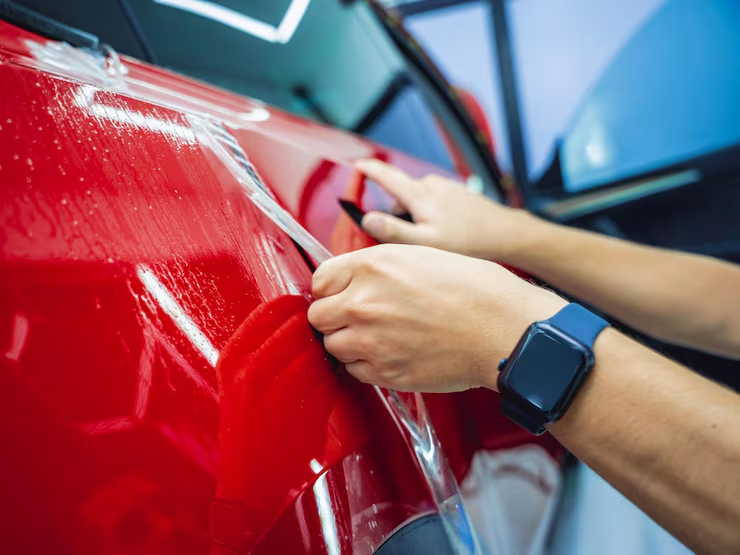
To understand removal, you have to understand the bond. A PPF for cars uses a pressure-sensitive adhesive (PSA). Over time, especially with the extreme heat cycles we experience in India, this adhesive can undergo a process called “cross-linking,” where it bonds more tightly to the clear coat.
If the film has been on the car past its intended lifespan, say 7 to 10 years, the adhesive can become brittle. This is where the risk lies. If you simply “rip” the film off like a band-aid, you risk “delamination,” where the adhesive pulls the clear coat right off the base paint. This is why professionals monitor the surface temperature meticulously. We aren’t just pulling; we are using heat to “soften” the chemical bond of the adhesive so it stays on the film and doesn’t stay on your car.
Step-by-Step PPF Removal Process
When you bring your vehicle to a professional studio for car PPF removal, we follow a rigorous protocol:
- Surface Decontamination: We start by washing the car to ensure no grit or dirt gets trapped under the edges as we lift them, which could scratch the paint.
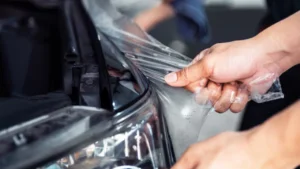
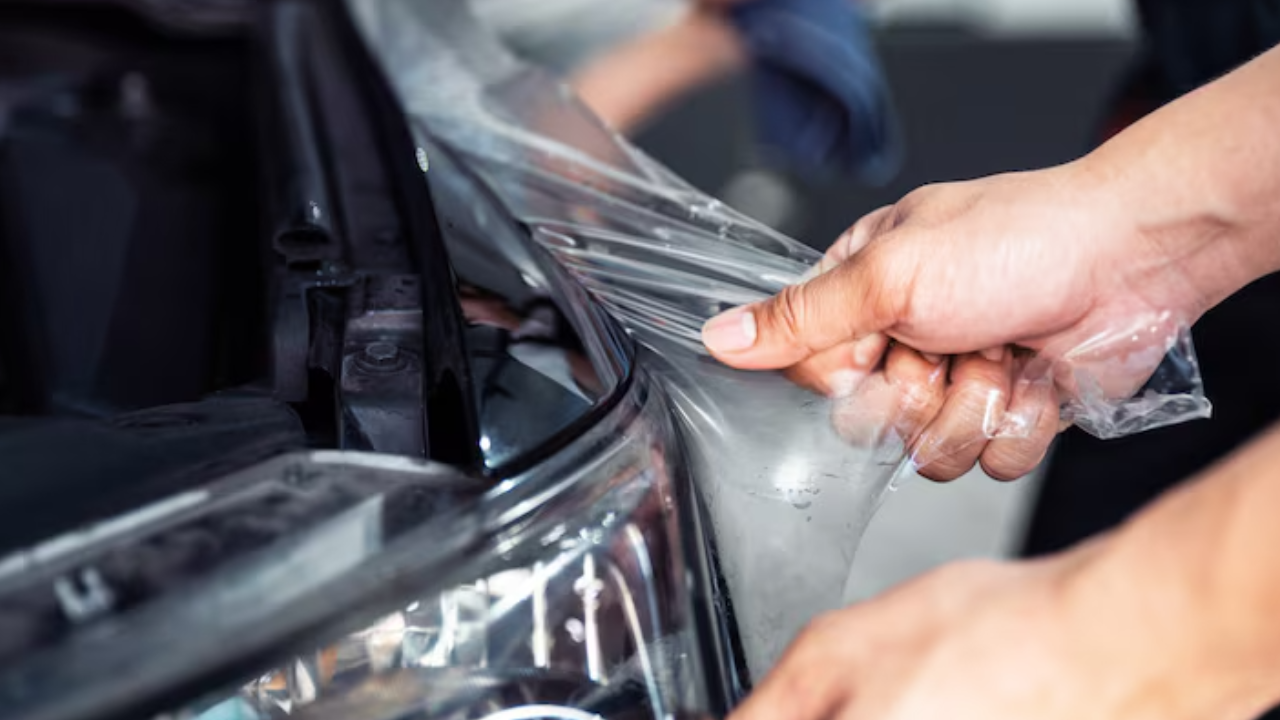
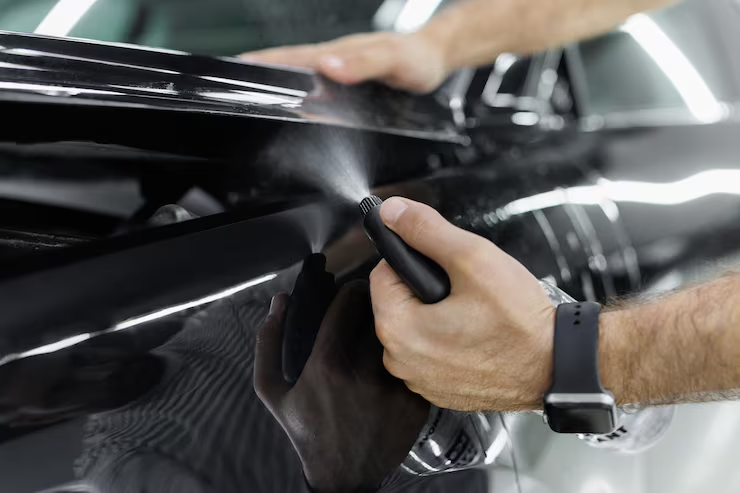
- Controlled Heating: We don’t use high-heat blow torches. We use industrial steamers. Steam is the “secret sauce” because it provides consistent heat while keeping the film hydrated, preventing it from tearing into tiny, frustrating pieces.
- The 45-Degree Pull: There is a specific angle to removal. Pulling the film back over itself at a shallow angle reduces the tension on the paint’s clear coat.
- Adhesive Management: Even with the best technique, some residue might remain. We use specialised, paint-safe adhesive removers that dissolve the glue without softening the paint underneath.
- Final Inspection: We treat the bare paint to a light polish to ensure any “edge marks” (where dirt collected at the seam of the film) are completely gone.
Why you shouldn’t do PPF removal by yourself
It’s tempting to think you can save money by doing the removal yourself in your garage. However, the risks far outweigh the savings. Common DIY disasters include:
- Paint Stripping: Without a steamer to regulate temperature, you can easily pull off chunks of clear coat, especially on plastic bumpers.
- Surface Scratches: Using plastic scrapers or fingernails to dig at the edges of the paint protection film will leave permanent gouges in your paint.
- Incomplete Removal: Many DIYers manage to get the top layer of the film off, but leave a “shattered” layer of adhesive behind that becomes nearly impossible to remove without harsh chemicals that can dull your paint. Repairing a ruined hood or door panel can cost five times what a professional removal service would have charged.
Quality Matters: TPU vs. Cheap PVC Removal
Not all films are equal. When you look at the best PPF brands, they almost exclusively use TPU (Thermoplastic Polyurethane). TPU is flexible and “stretchy,” making it much easier to peel off in large, clean sheets even after years of use.
On the flip side, cheap PVC or TPH films (often sold at “too good to be true” prices) tend to become “crispy” after just two years in the Indian climate. Removing these is a nightmare; they break into thousands of small flakes, and the adhesive often turns into a yellow, gummy mess that requires aggressive solvent use. This is why we always tell our customers: the quality of the film you buy today dictates the safety of your paint tomorrow.
Post-Removal Care: Transitioning to New Protection
Once the film is off, your car is vulnerable. The paint underneath is “virgin” paint; it hasn’t seen a pebble or a bird dropping in years. This is the perfect time to decide on your next move.
Many owners choose to immediately install a new Aegis PPF to continue that “armoured” protection. However, if you feel your driving habits have changed and you want something different, a high-grade
is the next best step. While a ceramic coating won’t stop stone chips like PPF does, it will provide that hydrophobic, easy-to-clean surface you’ve grown used to. Whatever you choose, leaving the paint “naked” after removal is rarely a good idea if you want to maintain your car’s resale value.
Why Choose Aegis PPF at CarzSpa?
At CarzSpa, we don’t just “stick and peel.” We understand the chemistry behind car paint protection.
Expertise: With 125+ studios across the region, our detailers have removed thousands of films from every type of vehicle, from budget hatchbacks to multi-crore supercars.
The Aegis Advantage: If you are replacing your film, Aegis PPF offers the best balance of longevity and “clean removal” technology. Our adhesives are engineered to stay put when you need them and let go when you don’t.
Advanced Tools: We use specialised steamers and non-marring tools to ensure that your car’s factory finish remains 100% intact. We treat your car like our own, ensuring the removal is as stress-free as the day you first got it protected.
Conclusion
Removing a paint protection film shouldn’t be a source of anxiety. When done by professionals, it’s a simple process that reveals the beautiful, preserved paint underneath. It is the ultimate “reset button” for your car’s aesthetics. However, remember that the “DIY” route is a gamble with your car’s most expensive component, its paint.
Don’t let a “cheap” removal job turn into an expensive repainting project. Trust the experts who understand the nuances of heat, adhesive, and paint safety. Whether you’re looking to refresh your protection or just want to see that factory shine again, CarzSpa is here to help.
Frequently Asked Questions
1. Can you remove PPF without damaging paint?
Yes, absolutely. If the film is high quality (such as TPU) and the paint is the original factory finish, a professional using controlled steam and proper technique can remove the film without leaving any marks or damage on the paint surface.
2. How to remove PPF quickly?
There is no “fast” way that is also safe. The safest “quick” method is using an industrial steamer to soften the adhesive, allowing the film to be pulled in large sections. Rushing the process usually results in tearing and adhesive that sticks.
3. Does removing PPF cause paint damage on a bike?
The risks are the same. Since bike tanks often have thinner paint or more complex curves, professional removal is even more critical to avoid lifting the clear coat from the edges or tight contours.
4. Is the PPF wrap hard to remove?
It depends on the quality. High-end TPU films are relatively straightforward for professionals to remove. However, cheap PVC films that have been “baked” in the sun for years can become brittle and extremely difficult to remove.
5. Should I polish my car after removing PPF?
Yes, we highly recommend a light “finishing polish.” This removes any minor adhesive shadows or dirt lines that may have accumulated around the edges of the film, ensuring the paint looks perfectly uniform.
Share: